
Why so sensitive?: Taiwanese independence and Chinese censorship
By Sara Rossmann and Lily Stiven
A panda wanders around an idyllic pastel pink set while a couple apologises for hurting each other’s feelings. Listening to the catchy tune backed by a xylophone, you would think the whole thing perfectly innocuous. Yet, this song was quickly banned from multiple Chinese websites, and the creators’ accounts blocked on the Chinese social media platform Weibo (Sng, 2023).
The mandopop song ‘Fragile’ was released in October 2021. It was written by Malaysian hip-hop artist Namewee and features Australian singer Kimberly Chen – both based in Taiwan. Created to test Chinese censorship (Sng, 2023), the lyrics satirically allude to several political issues without directly naming any names – ironically coherent with Chinese methods of diplomatic evasions. While subtly endorsing Taiwanese independence, the song acts as a critique of China’s current regime, their propaganda, and nationalism.
The history of Taiwan’s struggle to define itself in relation to China has been long and complex. The region was ceded to China at the end of World War II, following 50 years of Japanese control (Copper, 2025). Taipei became the seat of the Kuomintang-led ROC after the PRC took control of most of the mainland China in the civil war. The islands were under martial law for decades, a period called the White Terror, during which thousands were executed for opposing the Kuomintang. This was ended in 1987, and the process of democratisation began. During this period, the UN formally recognised the PRC as representing China over the ROC. In the years since, moves toward Taiwanese independence have consistently been met with military threats and political pressure from China, which vows to take the region back (despite never having controlled it) and refers to it as a breakaway province. The currently leading Democratic Progressive Party demands the recognition of Taiwan as an independent state, country, and democracy (BBC, 2024). China regularly conducts massive naval and air force ‘training exercises’ in the Taiwan Strait (Davidson, 2025) that are cause for political tension. In light of this context, Namewee speaks out for Taiwan’s right to exist as an independent nation and criticises China’s pressuring tactics and ownership claims.
Namewee is known for creative provocative texts and states that he does not regret anything about the song. He has been arrested multiple times in Malaysia, including in 2016 for realising a music video deemed insulting to Islam (Guardian, 2016). He also denied a contract with a Chinese agency due to their limitations on his freedom of expression (Lo, 2021). Since freedom of the press is essential to the democratic ideals the artist upholds, censorship is of major concern in the song.
The warning “please be cautious if you are fragile pink” at the beginning of the music video refers to the movement of young nationalists who aggressively defend the authoritarian Chinese government online, called xiǎo fěnhóng (literally ‘Little Pink’) (Jing, 2019). The lyrics and music video aim to ridicule and satirize president Xi Jinping, his government, and these cybernationalists for their weak self-esteem, exemplified by hasty outbursts and automatic rejection of any and all criticism. Through various allusions, Namewee addresses social issues in China, the political status of Taiwan, the Xinjiang internment camps (Smith Finley, 2021), the Little Pink, and rampant censorship.
The video features an overwhelming amount of pink, with the singers wearing heart-shaped glasses and the panda (chronically insulted and representing the Chinese regime) clad in pastel dungarees. The song starts with birds chirping and xylophone-like tones, creating a sugar-coated impression that makes the song seem shallow and innocent.
The harsh satirical content of the lyrics is in sharp contrast. The catchy chorus centres around apologising to someone who is fragile and can’t take any criticism, calling out their “heart of glass” and showing the panda shatter a set of wine glasses. This metaphor implies that this person is easily hurt by what others say. Applied to China, it emphasizes the regime’s extreme sensitivity to negative comments.
Namewee uses image-damaging stereotypes and rumours about China to provoke a response from the regime and its supporters. In one scene, he wrestles with the panda in a swimming pool while singing “You say NMSL to me when you get angry”. NMSL stands for nǐ mā sǐle (‘your mum is dead’). Chinese nationalists stormed comment sections with this bland insult in a flame war over a Thai celebrity’s comments about the coronavirus (Fang, 2020). This event prompted viral memes portraying the nationalists as automatons who instantly type “NMSL” whenever they disagree with something instead of engaging with it critically. Namewee picks up on this and mocks the panda (China) for their angered response. The coronavirus is referenced in the line “desiring for dogs, cats, bats and civets”. In the video, the panda offers Namewee a pot of soup with a cuddly bat toy stuffed inside. This refers to the popular rumour that the pandemic started with a bat consumed from one of China’s food markets (Kalkhof, 2022).
He also takes a direct jab at Xi Jinping by using a common mocking comparison for the president. Winnie-the-Pooh has been used to mock him to such an extent that China’s censors started removing online references to the character (Haas, 2018). The lyrics revolve around how Winnie-the-Pooh might disappear people who breach China’s internet restrictions, and name checks Xi’s “common prosperity” drive.
Other references point to the oppression in forced labour camps of Uyghurs (a Muslim minority group), as well as the political pressure China exerts on Hong Kong and Taiwan (Kalkhof, 2022). Through the lyric “swallows the apple, cuts off the pineapple”, Namewee draws attention to Hong Kong’s Apple daily newspaper. After its assets were frozen and multiple executives detained under a national security law, the pro-democracy tabloid collapsed (ibid.). Simultaneously, he mentions the cutting off of pineapple imports from Taiwan to China. The ban was an attempt to exert economic pressure, but backfired, as all the goods were consumed by Taiwan and its other trade partners (McDonald, 2021).
After its release, the song quickly gained popularity and sits at 75 million streams today. It was especially high up in the music charts in Hong Kong, Taiwan, Malaysia, and Singapore (Lo, 2021). As expected, the Little Pink attacked him after the release, and China retaliated with propaganda. The Chinese party paper Global Times called the song “malicious” (Kalkhof, 2022) and accused him of insulting the Chinese folk. In Namewee’s case, censorship was the best advertisement, the banning ironically contributing to an increase in visibility and fame for him. As a response to getting banned from multiple platforms in China, he stated in a post that he does not think that he is the one banned: The ones who are truly banned are those who have been denied the right to listen to songs freely.
‘Fragile’ demonstrates how joyous melodies and humorous satire can be used to convey deeper messages and controversial ideas. Humour and lighter tones reach a wider audience that can engage critically with the song after a second listen. Not only is it easier to confront people with these ideas, the paradox additionally intrigues and draws in more people. Joy in resistance is important for maintaining peace and hope in resisting.
Smith Finley, Joanne. “Why Scholars and Activists Increasingly Fear a Uyghur Genocide in Xinjiang.” Journal of Genocide Research 23, no. 3 (2021): 348–70.https://doi.org/10.1080/14623528.2020.1848109.
Folk Music and Komitas in Armenian Cultural Identity
By Takaaki Iwai
Introduction
Located on the boundary of Eastern and Western worlds, Armenia has a rich diversity of culture. However, behind this culture is the struggle of establishing its identity, due to its complex history. Many have tried to answer this question for centuries, and one of them was Komitas, who was a priest, composer and musicologist.
Komitas, or Soghomon Soghomonian (1869-1935), was born in Kutais (present day Kütahya). His parents were both musical: his father was known for singing and playing the lute, while his mother was talented in composing songs (Church 2021, 55). Since his teenage years, he had been interested in rural folk songs in Armenia and spent many years in his life collecting them, reaching over 4000 pieces (Sirvart 1972, 83-84). This collection strongly influenced his style of composition, preserving the Armenian culture, which later became crucial in the establishment of Armenian identity (Holslag 2018, 189). Here, we will explore Komitas and his ‘Manushaki’ from Seven Dances to examine how he is relevant to today’s Armenian cultural identity.
The Tragedy of an Armenian Composer
There are two main factors that make Komitas a significant figure in Armenian history and culture, and his biography is the first of these factors. Inheriting musical talent from his parents, he began his musical career from the Gevorkian Seminary in Etchmiadzin, at the centre of Armenian religious culture (Holslag 2018, 188). While collecting and researching folk music, Komitas tried solving the khaz, neume, which was developed for liturgical hymns in the 13th and 14th centuries, but the methods of reading it were lost in history (Agota 2020, 45). His contribution was not only in Armenian music but also in the development of ethnomusicology, and this was well recognised in Europe. He was a member of the International Music Society since its establishment, while delivering lectures in France and Turkey too (Davidjants 2015, 184-85). The composition and works Komitas brought to the world of music influenced key figures in the field at the time, including Claude Debussy (Shakhkulyan 2016, 201).
Although he was successful as a musicologist and his achievements go beyond those mentioned here, this suddenly halted. The basis of the life of Komitas moved to Constantinople in the early 1910s, where he created a 300-voice choir group (Church 2021, 58). Although the Turkish were welcoming to his musical activities at first, the Armenian genocide was launched in 1915 by the government (Kuyumjian 2001, 31-32). The genocide formed one of the most tragic parts in Armenian history, and some claim that over 1.5 million became victims (Al-Rustom 2013, 484). Like others, Komitas was arrested and sent to the prison camp of Chankeri, but he was released in 1916. However, his house, research and archive in Constantinople were all destroyed, and he suffered from post-traumatic stress disorder, which he never recovered from. He spent almost 20 years until the end of his life in a psychiatric hospital and sanatorium near Paris (Holslag 2018, 189), without returning to a career in music.
The Armenian genocide is an important history of Armenia and has led the diaspora around the world. Therefore, the life of Komitas represents the complexity of Armenian cultural identity: the survival of the genocide and Armenian communities abroad. Hence, his tragedy is remembered by Armenians all over the world.
Armenian Folk Culture in ‘Manushaki’ from the Seven Dances
The second factor was his devotion to the folk culture in which the true Armenianness lies. Komitas (2018) says, ‘Work is the part that belongs to the Armenian peasant, so through his work songs we must weigh and measure all the songs that are called Armenian’ (Bodurian 2020, 47), and he devoted his life to the music which would have been forgotten otherwise. This music could often involve a sense of joy, such as festivity and the beauty of nature. One of the examples of works by Komitas is Seven Dances. This is a collection of seven dances (‘Manushaki’, ‘Yerangi’, ‘Unabi’, ‘Marali’, ‘Shushiki’, ‘Yed u arach’ and ‘Shoror’) from different Armenian regions: Vagharshapat, Yerevan, Shusha and Erzurum (Atayan 1982, 47-66). The Seven Dances were composed for piano performance and involve imitations of folk music elements. Komitas studied at the Gevorkian Seminary in Vagharshapat, so Vagharshapat is a significant place for him. Here, ‘Manushaki’, a beautiful dance by a female solo dancer in Vagharshapat (Bagdasaryan 2017, 96-97), will be discussed briefly.
Like other dances in the Seven Dances, Komitas added imitations from the folk music in ‘Manushaki’. The first example is the imitation of the instrument. The score clearly indicates ‘In the style of dap (a traditional drum)’ (Atayan 1982, 47), as the dance was originally accompanied by dap. The left-hand melody of ‘Manushki’ mainly consists of tremolo, and this evokes the sounds and technique of the dap too. The imitation of Armenian folk musical instruments, such as pogh (traditional flute) and duduk (traditional oboe), is also evident in other dances in the Seven Dances (Church 2021, 61).
Looking at the music in-depth, Komitas used the techniques from the traditional Armenian music ensemble (Bagdasaryan 2017, 102). In call and response, the call stops progressing and simply plays a sustained note, while the response develops (Bagdasaryan 2017, 100-101). In terms of tonal mode, the dance imitation can be seen. The foundations of the melody in the piece are G and C, and this is a reference to cadence in the dance melody (Bagdasaryan 2017, 97-98).
There are further characteristics in ‘Manushaki’ which involve the imitation of the traditional dance. However, from above, we can see the attempt of Komitas to understand the Armenian folk culture and implement its elements, which could be related to joy, in his compositions for preservation. Hence, his works are valuable sources for studying the Armenian cultural identity, not only a source of inspiration for later Armenian composers such as Aram Khachaturian (1903-1978) (Church 2021, 60), who is internationally recognised.
Komitas Today
Overall, from the biographical perspective and the musicological perspective, Komitas and his works related to joy, including ‘Manushaki’ in the Seven Dances, are relevant to the present Armenian cultural identity. Komitas is remembered by people in many cities, such as Yerevan and Paris, and his compositions, which preserve the Armenian folk music, are performed by musicians around the world. Particularly, dances in the Seven Dances were interpreted and arranged by later musicians to further explore the Armenian folk music (Church 2021, 61).
However, not much research was previously done on his biography and music, compared to another Armenian composer, Aram Khachaturian, who was heavily influenced by Komitas. This implies the need for more in-depth research into his works by Western scholars to understand the key country which lies between the Western and the Eastern worlds.
Acknowledgement
I would like to thank the Komitas Museum-Institute, especially Lilit Harutyunyan, the Deputy Director, for supporting this research.
Bibliography
Al-Rustom, Hakem. 2013. ‘Diaspora Activism and the Politics of Locality: The Armenians of France’. In A Companion to Diaspora and Transnationalism, edited by Ato Quayson and Girish Daswani, 473–93. Companions in Cultural Studies 16. Chichester: Blackwell Publishing Ltd.
Apoyan, Sh. A. 1959. ‘Армянская фортепианная музыка в досоветский период развития’. Historical-Philological Journal 2 (3): 149–61.
Arevshatyan, Anna. 2015. ‘Komitas and Grigor Gapasakalian. Neumological Connections’. Musicology Today: Journal of the National University of Music Bucharest 24:21–31. https://www.ceeol.com/search/article-detail?id=983837.
Atayan, R. A., ed. 1982. Комитас: Собраниесочинений. Vol. 6. Yerevan: Sovetakan grokh.
Bagdasaryan, Anait. 2017. ‘An Attempt to Analyze the Imitations in Komitas’s Piano Dance “Manushaki”’. Komitas Museum-Institute Yearbook, 95–110.
Davidjants, Brigitta. 2015. ‘Identity Construction in Armenian Music on the Example of Early Folklore Movement’. Folklore: Electronic Journal of Folklore 62:175–200. https://www.ceeol.com/search/article-detail?id=304264.
Gasparyan, Khachatur, and John Saroyan. 2019. ‘The Armenian Genocide and Its Intergenerational Effects’. In An International Perspective on Disasters and Children’s Mental Health, edited by Christina W. Hoven, Lawrence V. Amsel, and Sam Tyano, 273–300. Integrating Psychiatry and Primary Care. Cham: Springer Nature Switzerland AG. https://doi.org/10.1007/978-3-030-15872-9.
Holslag, Anthonie. 2018. The Transgenerational Consequences of the Armenian Genocide. Palgrave Studies in the History of Genocide. Cham: Springer International Publishing AG. https://doi.org/10.1007/978-3-319-69260-9.
Kuyumjian, Rita. 2001. ‘Impending Death as a Catalyst in Reconnection: Case Study of a Historic Artist-Survivor’. International Journal of Mental Health 30 (2): 27–40. https://www.jstor.org/stable/41344971.
‘Le R. P. Komitas Vartapet 1871-1935’. 1936. Revue de Musicologie 17 (57): 64. http://www.jstor.org/stable/926481.
Poladian, Sirvart. 1972. ‘Komitas Vardapet and His Contribution to Ethnomusicology’. Ethnomusicology 16 (1): 82–97. https://www.jstor.org/stable/850444.
Shakhkulyan, Tatevik. 2016. ‘Komitas and Bartók: From Ethnicity to Modernity’. International Journal of Musicology 2:197–212. https://www.jstor.org/stable/43858439.
To Feel Mighty Real: Queer Joy as Resistance during the 1980s AIDS Epidemic
By Zoe Bremner
In the early 1980s, silence killed. As the AIDS epidemic swept across America, it devastated already marginalised people, particularly those in the LGBTQ+ community. Amid the fear, stigma, and government inaction, joy became more than a coping mechanism; it became a political act. Songs like Sylvester’s 1978 disco anthem, “You Make Me Feel (Mighty Real),” took on renewed meaning, not just as dancefloor classics, but as declarations of life and self-love. This article explores how a 1978 disco track became a symbol of defiant survival during one of the darkest periods in queer history and what it tells us about the enduring, transformative power of queer joy.
The Early Years of AIDS
The turn of the 1980s was a time of growing visibility for LGBTQ+ people in cities like New York and San Francisco. After decades of activism, many gay men began to experience a new sense of freedom, finding community in clubs, bars, and pride events (Queens of Disco 2016).
That fragile optimism shattered in 1981 when a mysterious illness began killing otherwise healthy people. Initially labelled GRID (Gay-Related Immune Deficiency), AIDS quickly became sensationalised as the “gay plague” in the media (King 2020). Misunderstood and heavily stigmatised, the virus spread while the government were wilfully negligent. President Ronald Reagan did not publicly address the crisis until 1985, by which time thousands had died (King 2020). LGBTQ+ individuals, particularly gay men, people of colour, and those living in poverty, were scapegoated, denied care, and left to die. The mainstream press mocked the crisis or ignored it altogether, reinforcing the message that queer lives were expendable. But amid this void, resistance emerged, not only through marches and protests, but through art, performance, and especially music. From pop icons like Madonna and Elton John to grassroots activism by collectives like ACT UP (AIDS Coalition to Unleash Power) music became a platform for memorialization and celebration (San Francisco Gay Men’s Chorus 2024).
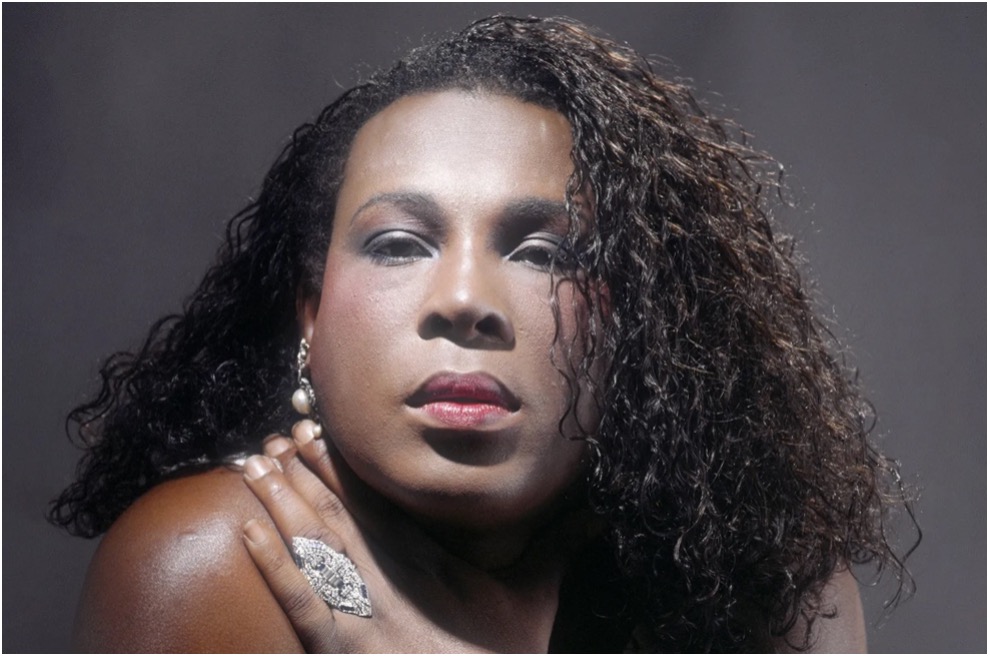
Sylvester’s life
Sylvester poses for a portrait Session – November 4th, 1984, Los Angeles, California. (Photo by Eric Blum/ Micheal Ochs Archives/ Gerry Images).
Before he became a disco icon, Sylvester James Jr. was a Pentecostal choirboy in South Central Los Angeles. Born in 1947, he was raised in a strict church community that rejected his gender nonconformity (Mighty Real 2016). By 15, Sylvester had left home and eventually found his way to San Francisco, where he discovered a vibrant queer culture (Queens of Disco 2016).
With his gospel-trained falsetto, glamorous style, and unapologetic genderfluidity, Sylvester stood in bold contrast to the other pop stars of his time. His breakout hit, “You Make Me Feel (Mighty Real),” co-written with James Wirrick and produced with Patrick Cowley, soared to the top of the Billboard dance charts in 1978 (Baume, 2020). However, the song’s legacy extended far beyond commercial success. At first listen, it is euphoric: a mix of synthesisers, pulsating beats, and Sylvester’s signature high-pitched voice soaring over the top. The lyrics are deceptively simple: “You make me feel mighty real.” But in that phrase lies something more profound: a radical affirmation of identity, connection, and desire. Sylvester reportedly improvised the words during a rehearsal, later saying: “They said exactly what was going on – to dance and sweat and cruise and go home and carry on and how a person feels.” (Gamson 2005a, 142)
As Joshua Gamson, biographer of The Fabulous Sylvester, writes, this was a turning point in gay pop music. Rather than coding queer life in metaphors, Sylvester sang about it openly. “This is my life,” Gamson paraphrases him. “I go out on the dance floor, and within 10 seconds, I’ve identified someone—and by the end of the song, you’ve made me feel God.” (Petridis 2018). In doing so, “Mighty Real” didn’t just describe gay liberation, it enacted it.
Disco and Resistance
Sylvester–1985 (Photo by Anthony Barboza/ Gerry Images).
Sylvester doesn’t abandon the spirituality of his church upbringing; instead, he reclaims it – as one critic notes, “He queers it.” (Petridis 2018). He channels the emotional release of gospel into high-energy disco, fusing a churchlike transcendence with unapologetically queer aesthetics. His collaborator Patrick Cowley’s synth-heavy production added another layer to this; as scholar Louis Niebur points out, electronic music in 1970s America was often coded as queer, feminine, and foreign, antithetical to the masculine ideal represented by the electric guitar (Petridis 2018) The repeated declaration “real” carries weight in a society that criminalised and attempted to police queer intimacy. Sylvester sang that he felt most himself, most real, in the act of queer erotic connection. It was fearless and without apology.
While “You Make Me Feel (Mighty Real)” predates the AIDS crisis, it became inextricably tied to it in memory and meaning. In the 1980s, the dancefloor transformed into a sacred space for a grieving community. Clubs became places where queer people could experience release, connection, and joy amidst loss (Queer as Pop 2015).
As writer and activist Dan Savage later recalled:
“During the darkest days of the AIDS crisis, we buried our friends in the morning, we protested in the afternoon, and we danced all night… The dance kept us in the fight because it was the dance we were fighting for.” (Savage 2025)
Sylvester’s Activism and Legacy
Sylvester at the Gay Freedom Parade on June 26, 1988, a month after being diagnosed with AIDS. Sylvester died six months later at the age of 41 on December 16th, 1988.
By the early 1980s, disco’s popularity had begun to decline, dismissed by the “Disco Sucks” movement, a racist and homophobic backlash against music associated with Black, queer, and female artists (Herzog 2020). However, Sylvester never retreated; he left his mainstream label, Fantasy Records, and joined Megatone Records, a smaller label that created music by and for gay audiences (Mighty Real, 2016). Megatone gave him the creative freedom to craft explicitly queer, sexually liberated tracks aimed directly at the dance floors of gay clubs.
At the same time, the AIDS crisis ravaged the city Sylvester lived in. San Francisco saw an overwhelming number of cases (Mighty Real 2016). and Sylvester watched friends, lovers, and colleagues fall ill. Nevertheless, through this despair, he performed at countless benefit concerts, distributed safe-sex information at shows, and spoke openly about the epidemic, making him one of the first prominent gay performers to do so (Karr 2018).
His personal losses were immense as his longtime partner died of AIDS-related
complications, and in 1988, Sylvester himself succumbed to the virus (Gamson 2005b). In one of his last public appearances, he rode in a wheelchair through the San Francisco Gay Pride Parade, frail and emaciated, which as Gamson wrote:
“This is mighty real… people, knowing that they’ve seen this icon of their freedom, they see him as a symbol of the devastation AIDS took on the community.” (Karr, 2018)
Even in death, Sylvester refused erasure. In his will, he directed the future royalties from “You Make Me Feel (Mighty Real)” to two San Francisco-based organisations: the AIDS Emergency Fund and Project Open Hand, which still serve people living with HIV/AIDS today (Herzog 2020).
Today, Sylvester’s voice still echoes in clubs, parades, and queer spaces around the world. “You Make Me Feel (Mighty Real)” is featured on countless Pride playlists, remixed for new generations, and lip-synced on groundbreaking shows like RuPaul’s Drag Race (Season 8, ep. 8.). Not only was it selected for preservation by the Library of Congress (Library of Congress 2019), but Billboard ranked it among the “100 Greatest Dance Songs of All Time.” (Billboard 2011). Its enduring power lies in its message: that joy, especially queer joy, is not frivolous – it is vital. Today, as queer rights face renewed threats of drag bans, anti-trans legislation, and censorship (American Civil Liberties Union 2025), Sylvester’s anthem remains an important reminder that to dance, to love, to feel mighty real, is in itself, an act of resistance.
This is a student-led research project exploring how music has shaped, supported, and sustained protest and resistance movements around the world. Through case studies ranging from Armenian composer Komitas to queer disco icon Sylvester, we examine how music functions not only as a cultural artefact but also as a powerful tool for defiance, healing, and identity formation.
Music and liberation struggles have always gone hand in hand, whether as a means to preserve the culture of the oppressed, find strength and comfort, or actively oppose oppressors. Our central theme is joy as resistance. At first glance, joy might seem like the opposite of protest. But in situations of displacement, censorship, systemic violence, or even genocide, moments of joy can be truly radical. Dancing, singing, celebrating who you are or where you come from can serve as acts of resistance, both refusing to be erased and refusing to stay silent.
In this project, we explore songs that became anthems of liberation; some are recognised internationally while others stem from histories that may have been overlooked. Each case study provides historical and cultural context, showing how these songs came to carry such profound meaning and how they still resonate today. Ultimately, our aim is to honour not only the pain of resistance but also the joy, beauty, and resilience people find through music.