Categories
Latest from the Lab Projects Where Earth Ends

Where Earth Ends: Rediscovering and reimagining Scotland’s urban green spaces (Benjamin Ong)

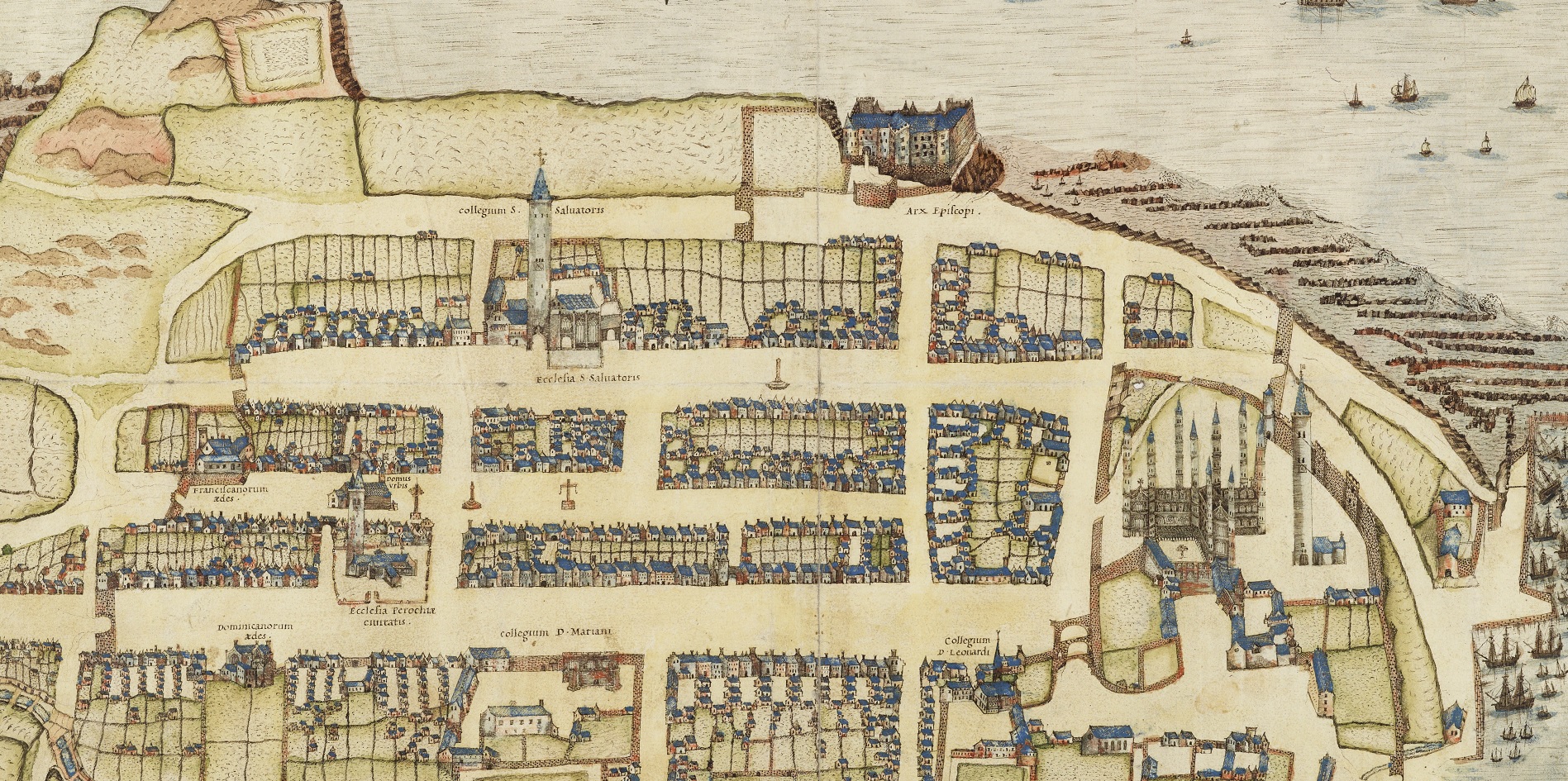
 Map of St Andrews in the early 1580s, probably drawn by John Geddy (or Geddes)


While various sustainable landscape approaches are in motion — from edible gardens to wildflower meadows — biodiversity conflict (e.g., different expectations of landscape) remains a key obstacle to imagining and realising these alternatives. This conflict is evident around us, from so-called pigeon spikes to the debate around manicured vs. messy gardens. There is a fundamental need for reconciliation and a transformation of the human-nature relationship.

The University recently awarded School of Geography and Sustainable Development PhD student and RUL member Benjamin Ong a Scotland’s Future Series grant for a project titled ‘Where Earth Ends: Rediscovering and reimagining Scotland’s urban green spaces’.

This project aims to spark alternative, ecologically regenerative imaginations of future (urban) green space by exploring the deep(er) past and drawing on place-based approaches, alongside perspectives from history, literature, culture and heritage.

It ponders questions like:

  • How can attentiveness to nature be more strongly interwoven with(in) the urban fabric?
  • How can history and culture be brought to bear upon contemporary landscape practices?
  • What does it mean to be place-based in Scotland’s increasingly cosmopolitan urban spaces?
  • What might (urban) green space look like if informed by “multi-” — e.g., multifaith, multispecies, multisensory? How can we better honour our relationships with each other and with the “other”?

This project is expected to stimulate and facilitate interdisciplinary conversation and creation across geography, literature/language, history and theology, to name a few. It will involve “town and gown” collaboration with artists and community groups in St Andrews and beyond, culminating in an exhibition and/or installation (broadly speaking, and open to redefinition/reinterpretation), tentatively scheduled for Spring 2024.

This project takes inspiration from Ben’s past creative/participatory work (see The Kampung City / ImagiNasi), the philosophy of Patrick Geddes, concepts like ecosophy, and recent efforts to “time travel” and bring the past to life (such as the National Trust for Scotland’s Glencoe Turf House).

For more information, or to explore partnership opportunities (including loaning us a TARDIS), write to [email protected].

See project updates and resources here.

About the Scotland’s Future Series

The Scotland’s Future Series demonstrates the University of St Andrews’ commitment to playing an active role in developing Scotland’s future by enabling our staff and students to contribute to and facilitate wider discussions, helping to shape informed, respectful and productive discussion and debate. It will also enable the University to take a position of ideas leadership on how to meet the challenges of the future.
Relevant Posts

Categories
Blog Featured Latest from the Lab Reports

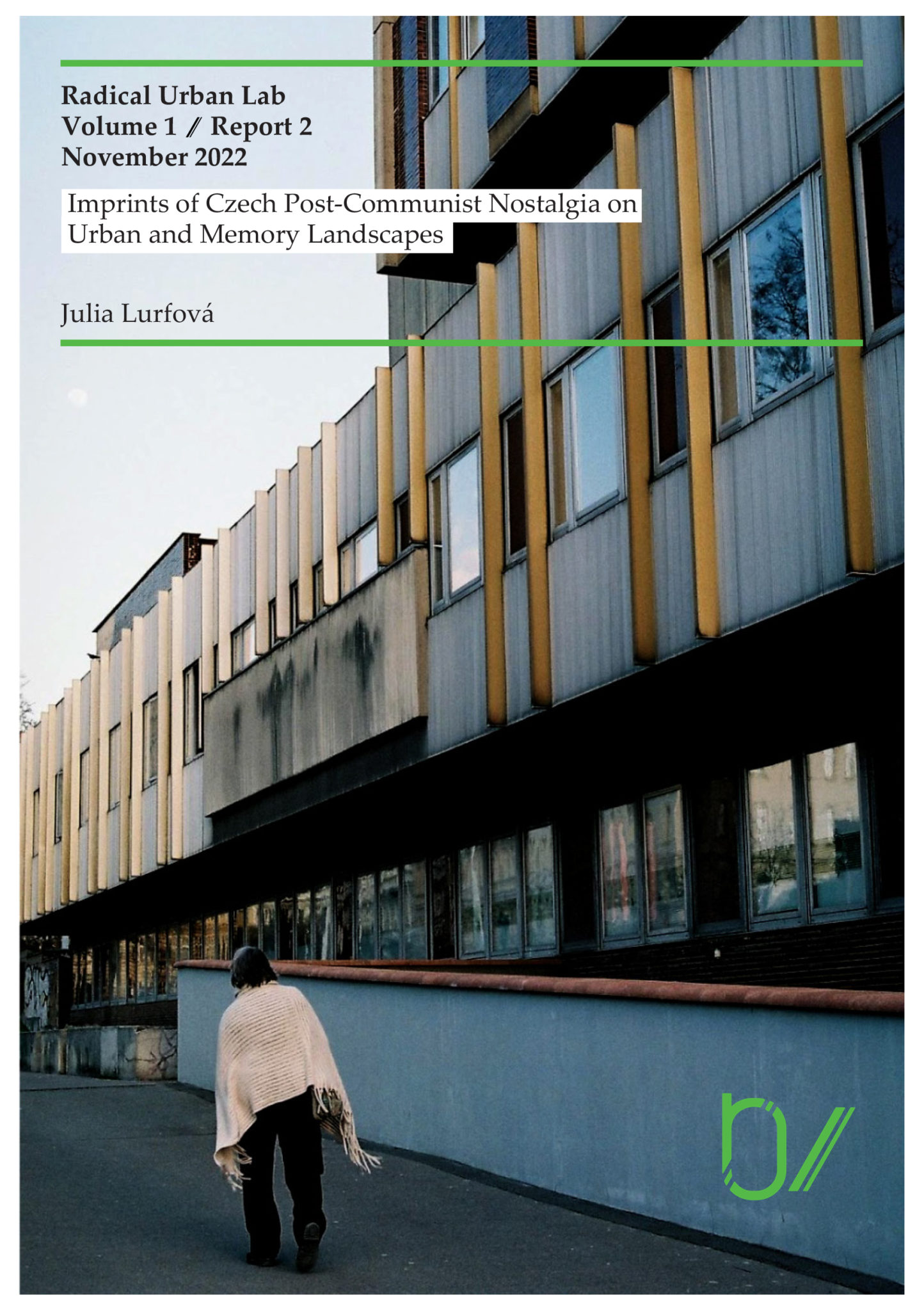
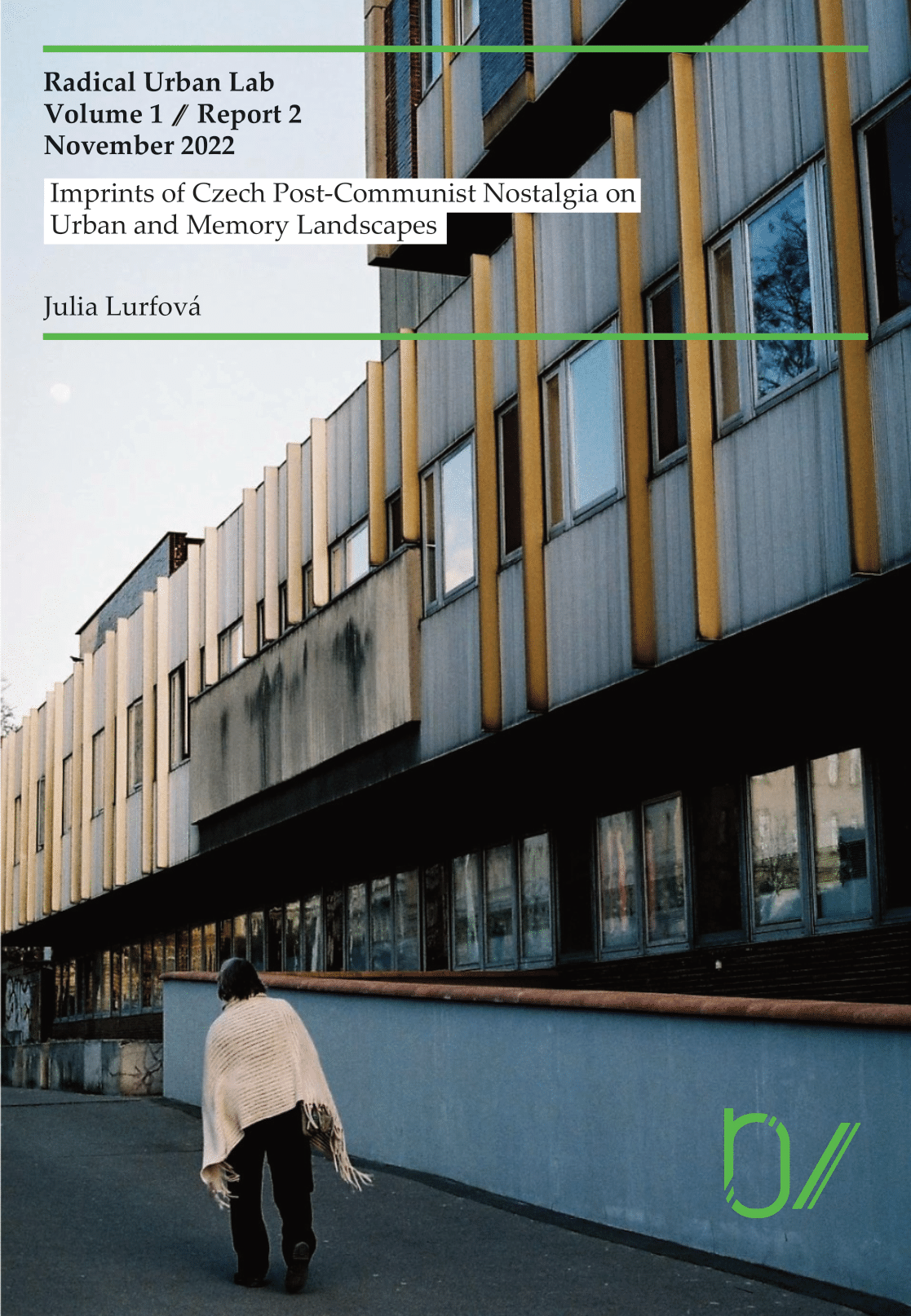
RUL Report#2: Imprints of Czech Post-Communist Nostalgia on Urban and Memory Landscapes

Foreword (Antonis Vradis)

At the time when the so-called “first place” (the home) and the “second place” (the workplace) merge, the future of third places is thrown wide open: anything and anywhere that is not private or corporate is severely questioned and pushed to become at least one of the two. It is in this context that Lurfova’s report has a rare urgency. Her perambulation starting with the Stalin Plaza in Prague and her drawing of lessons on what post-communist nostalgia might signal for the current state affairs in the Czech society (and beyond) is an apt reminder of a cunning ability of third places: the ability not only to preserve public memory and emit nostalgia but to tell us, in the process of so doing, much about the current status quo. And Lurfova’s report has become even more urgent and timely as Russian imperialism is invading Ukraine and as Western imperialism is fanning the flames of the present war while confronting the spectres of its own imperialist past. From the toppling of slave trader statues in Bristol to the struggle against the regeneration of public spaces in Athens, people are fighting for their right to representation in third place present and past. This report is an apt reminder of what is at stake in this struggle.

Julia Lurfová’s report is the final product of her engagement with the St Andrews Research Internship Scheme (StARIS) and her collaboration with all other RUL members, which is ongoing. The StARIS Scheme offers the opportunity for undergraduate students to enhance their learning experience by working on academic research projects. Julia’s report also ties into a broader exploration of Third Place under the auspices of the Radical Urban Lab.

Introducing the case of the Stalin plaza

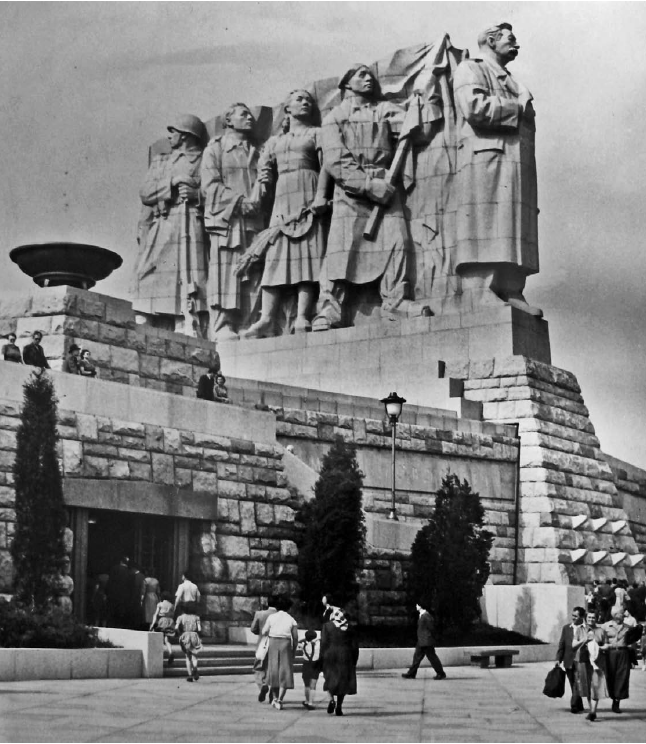
For a brief period of seven years, an imposing granite monument of the Soviet Union’s Generalissimo, Josef Vissarionovich Stalin, surrounded by archetypes of Soviet and Czechoslovak citizens, towered over the city of Prague. The statue was the winner of a 1949 competition honouring Stalin’s 70th birthday, commissioned by the Czechoslovak communist political party chaired by Klement Gottwald. At the time, Stalin – as Czechoslovakia’s “liberator” from Nazi Germany – was becoming a near-sacred and hence frequently monumentalized figure among communist countries of Central and Eastern Europe. Eventually finished in 1955, the socialist realist monument of Stalin in Prague became the world’s largest depiction of the Soviet leader. But it did not loom for long. As a result of Khrushchev’s 1956 confidential speech “On the Cult of Personality and Its Consequences” that heavily criticized the Stalinist regime and provoked a gradual wave of de-Stalinization, the monument was toppled in 1962.

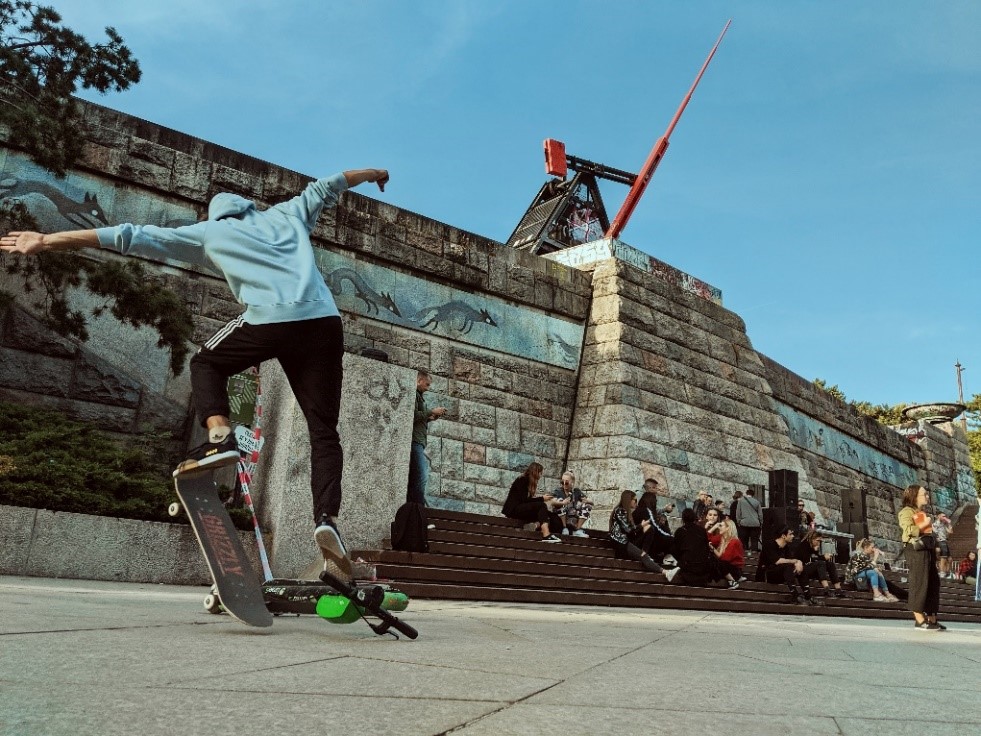
In 1991, a giant red Metronome was erected on the pedestal left bare after Stalin’s statue was demolished by explosives. The Metronome, as a reminder of time’s passage and finiteness, mocks the propagandist narrative of a Soviet-Czech partnership “for all eternity”. Ticking from East to West, the symbol of freedom bridges the two worlds in the newly-independent Czech Republic. Six decades later, in the nation’s collective memory, the place once dominated by Stalin’s monument continues to be strongly associated with the demolished landmark, kept alive through narrative accounts. Nowadays, among Czechs, the term “Stalin” refers to the plaza around the Metronome, turned into a meeting point popular among young people and an open air cultural hub hosting a variety of DJ and film-screening events, beer gardens, and a pop-up bar during the summer months.

The smooth concrete surfaces of the plaza have also been repurposed by the city’s skaters. In 1970s communist Czechoslovakia, skating emerged as an important anti-establishment subculture resisting the totalitarian regime, which recently became the subject of ‘King Skate’, a 2018 documentary directed by Šimon Šafránek. Skating remains pivotal to both Prague’s urban youth culture and to Stalin, “a square with no boundaries and no regulations”. However, the future of skaters at Stalin – and, as a matter of fact, of the public space as a whole – came under threat in September 2019, when the city temporarily closed the plaza in order to structurally refurbish it, while also re-opening a longstanding debate on potential commercial development in the area. Critics of proposals to replace the Metronome with a church or an aquarium have condemned these developments as pathways towards “cultural amnesia”, attempting to erase the contentious yet critically important history of the place within the Czech landscape of memory. Skaters and other Prague locals have since protested the closure and the redevelopment discourse by organising a ‘Save Stalin Plaza’ protest. “[D]on’t touch the genealogy, don’t touch the heritage of this place”, urges urban architect and local skateboarder Martin Hrouda. “Keep it like it is.”

Stalin Monument in Letná Park, Prague. Source: Pichova, 2008, p. 618.
Stalin plaza nowadays. Source: U/U Studio and Kevin Loo for Design Disco, 2019.
Click here to download Julia’s full report (.pdf)