
Catherine Ketchum
Introduction
Harlem, a neighborhood with a legacy as a cultural and historical epicenter, now contends with the severe impact of gentrification and housing insecurity. As rising rents and high-end developments threaten to reshape the neighborhood, Harlem’s long standing communities face displacement, cultural erasure, and heightened economic strain. This paper investigates the intersection of Harlem’s rich history with entrenched structural inequalities, including the lasting effects of redlining and racially biased economic policies that continue to undermine housing access and affordability. By critically analyzing community-led responses and proposing expanded, targeted strategies, this paper aims to contribute to a nuanced understanding of Harlem’s struggle against gentrification. Ultimately, it advocates for a bottom-up approach that protects Harlem’s current residents.
Positionality
Growing up on the Upper East Side, I was largely disconnected from Harlem’s challenges. For years, I heard family friends talk about Harlem’s affordable brownstones as “the next great investment,” a new hotspot for New Yorkers like us. After all, the median gross rent in Central Harlem in 2022 was $1,300 (NYU Furman Center, n.d.) and in contrast the median gross rent on the Upper East Side in 2022 is $2,710 (NYU Furman Center, n.d.). I heard how, if one person moved, others would follow, bringing the whole Upper East Side along once “the neighborhood was cleaned up.” It sounded exciting—almost as though Harlem were just waiting for us. I never thought about what this would mean for the people who already lived there.
This summer, while commuting from Harlem’s 125th Street station to my finance internship in Connecticut, my perspective changed. At first, I took a car directly to the station, never going beyond a quick dash from the curb to the platform. But one morning, I had to walk 15 blocks to the station. Late for my train, I found myself sprinting, but halfway there, I was exhausted and stopped, even tearing up. Harlem residents cheered me on, and later that day, I ended up having my first real conversation with a local. He shared his family’s deep ties to Harlem and spoke about how the community is being slowly squeezed out, how its rich culture and music, the neighborhood gatherings, and community businesses were giving way to a different crowd—newcomers, high-priced developments, and big chains.
Initially, I thought gentrification might help Harlem by bringing in resources and lowering crime rates. But after spending time there, meeting people, and hearing their stories, I saw how gentrification could drive out long-time residents, erasing Harlem’s unique culture and community spirit. I came to realize that people like me could easily displace everything that makes Harlem so special, leaving residents with few options for affordable housing.
I may be from nearby, but my perspective as both an outsider to Harlem and an insider to New York City gives me a unique stance. While I haven’t experienced Harlem’s struggles firsthand, I feel a deep commitment to helping preserve its identity. I believe Harlem’s fight against displacement can only be won through a community-based approach that begins from within, not through top-down changes that prioritize profit over people. Harlem, as you know, is a place where neighbors know each other, where music fills the streets, and where Black culture and history are celebrated. To me, Harlem is more than just a location; it’s the heartbeat of New York, and I’m determined to support initiatives that help protect its legacy.
History of the Community
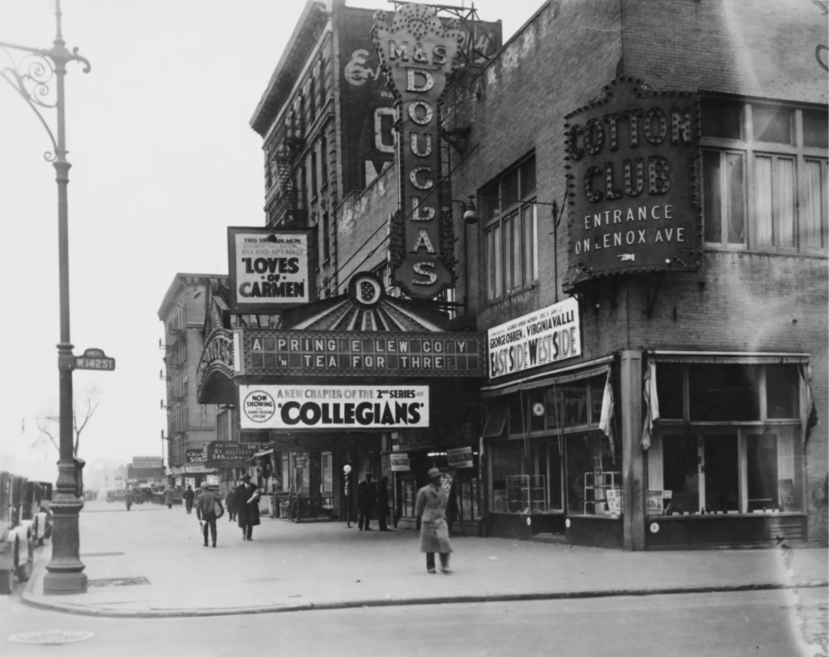
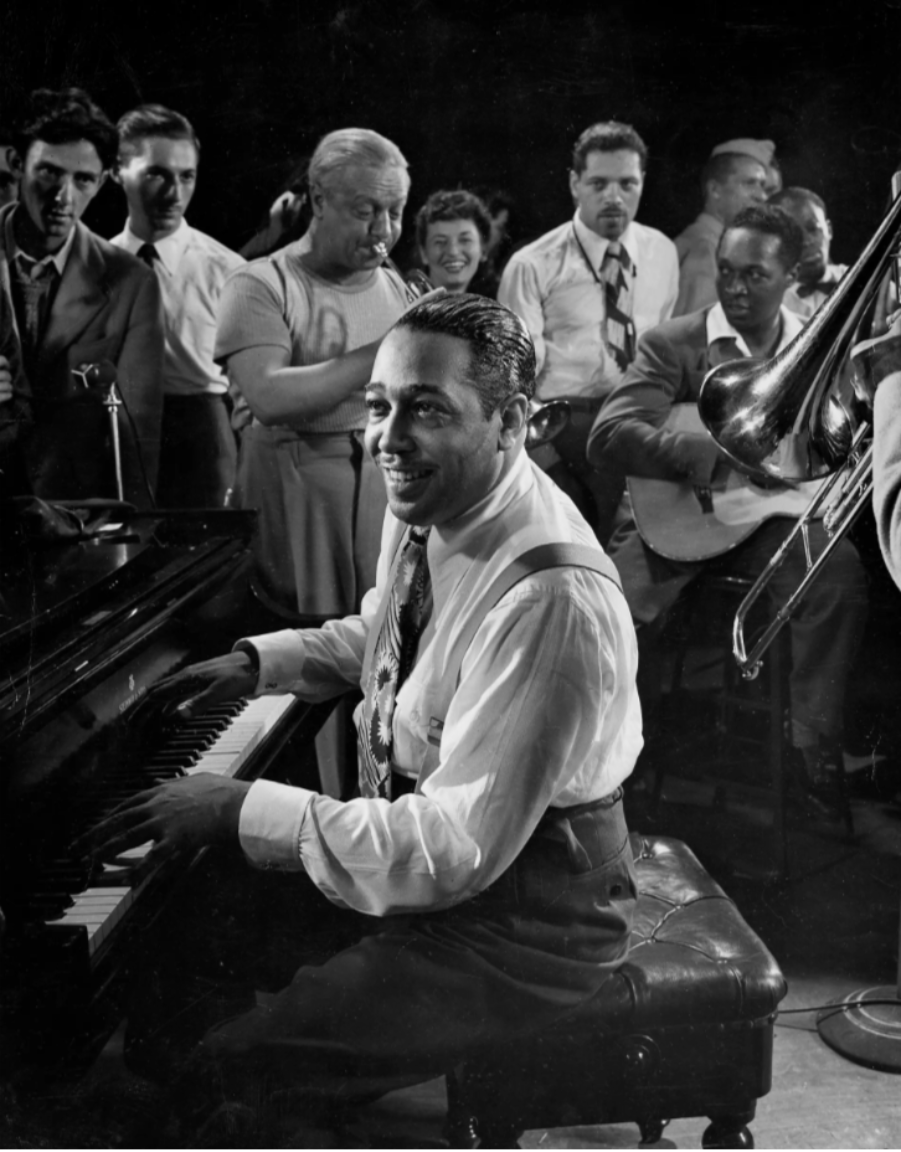
By the early 1900s, Harlem had become a cultural center for Black Americans, fueled by the Great Migration, which brought many from the South to northern Manhattan (History.com, n.d.). Originally envisioned as an affluent white neighborhood, Harlem became overdeveloped, which led landlords to rent properties to Black families, fostering a vibrant community and setting the stage for the Harlem Renaissance (History.com, n.d.). This period, spanning the 1910s to 1930s, saw an explosion of Black creativity in art, literature, and music, with figures like Langston Hughes, Cootie Williams, Duke Ellington, Cab Calloway and Zora Neale Hurston contributing to the community’s celebration of Black identity and resistance against racial stereotypes (History.com, n.d.). Moreover, The Cotton Club, one of Harlem’s most famous nightclubs, played a complex yet pivotal role during the Harlem Renaissance: while it brought Harlem’s vibrant music scene and African American talent to national prominence by showcasing Black musicians to integrated audiences, it simultaneously reinforced racial stereotypes and segregation, illustrating the era’s tensions between cultural celebration and systemic inequality (History.com, n.d.).
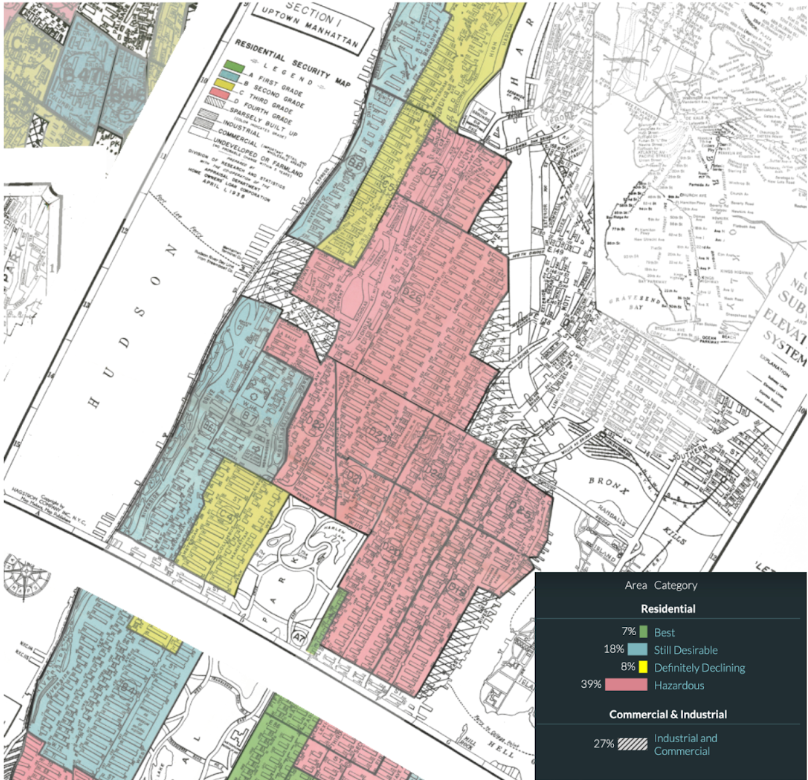
Following the Renaissance’s decline amidst the Great Depression, Harlem faced significant social challenges and greater poverty. Under Franklin Delano Roosevelt, the New Deal’s United States Housing Authority was underfunded and decisions on affordable housing construction were left to local governments, which often relegated it to marginal sites, if built at all. Even federal funds from the urban renewal programs of 1949 and 1954 primarily supported developments aimed at attracting the middle class, rather than creating adequate housing for low-income residents (Sugrue et al., 2018). Furthermore, discriminatory policies like redlining, the process of ‘drawing boundaries around neighborhoods based on residents’ race and depriving them of resources and opportunities,’ (Environment & Health Data Portal, n.d.) racialized poverty in the US by blocking communities of color from access to mortgages and investments, confining Black residents to under-resourced neighborhoods (Rickenbacker, 2024; Taylor et al., 2018). Despite redlining being banned in 1968, nearly 90 years after redlining maps were drawn, neighborhoods marked in the 1930s still face high poverty rates. According to the National Community Reinvestment Coalition, three-quarters of these areas remain low-to-moderate income, and two-thirds are predominantly communities of color. (Environment & Health Data Portal, n.d).
Harlem’s problems were exacerbated in the late 20th century by issues like drug use and violence. Federal policies, including the “war on drugs,” disproportionately affected urban Black communities from the 1970s through the 1990s (Rickenbacker, 2024). In the 1990s and 2000s, urban renewal brought affluent white residents to Harlem, and property ownership largely remained in white hands (Rickenbacker, 2024). After the 2008 recession, gentrification accelerated as the economy recovered and the demand for urban living grew, further displacing long-standing residents (Florida, Rise of the Creative Class).
As the housing bubble of the early 2000s reached its peak, Black Americans were 50 percent more likely than white borrowers to be offered subprime loans—loans that, as now widely understood, carried higher costs and elevated interest rates (Taylor et al., 2018). In this sense, the intersection of public and private interests has consistently skewed housing policies toward profit over equity. As property values rise, landlords are incentivized to replace lower-income tenants with wealthier ones, fueling gentrification and creating a “rent gap” that exacerbates displacement and reduces affordable housing stock (Smith, ‘Gentrification and the rent gap’).
The Community Challenge
New York City confronts an ever-worsening crisis marked by dwindling low-cost housing, unprecedented homelessness rates, and rising rent burdens that heavily impact low-income residents (Comptroller.nyc.gov, n.d.). It’s even worse for homeowners or would-be homeowners–after the 2008 housing market crash, in 2010, almost half a million Black Americans faced foreclosure (Taylor et al., 2018). By 2014, more than 240,000 had lost their homes, and the racial wealth gap grew: in 2007, the median white family held eight times the wealth of the median Black family, a disparity that had grown to eleven times by 2013, with only a slight decline since (Taylor et al., 2018).
Many Black families have had to leave Harlem. Over the past two decades, more than 200,000 Black residents have left the city–a 9% decrease–due to both the housing crisis and simple increase in costs of living (25). It’s not getting better: housing prices in Harlem have spiked by 247% over the last decade, most units costing $458 per square foot (Humanity in Action, 2021). Rent-stabilized apartments, a mainstay for those near the poverty line, range from $500 to $800 monthly, unregulated market-rate units can reach $4,000 per month (Humanity in Action, 2021).
The 2007-2008 financial crisis had other ripple effects. It stalled many planned development projects in Harlem, adding to the crushing insufficiency of housing that keeps the market hot. Only now, after the community has begun to recover from its buffeting by both the financial crisis and Covid-19, are some of these initiatives being revived (Fainstein, 2019). The city has seen a vacancy rate as low as 1.4% citywide, while households earning below 50,000 continue to decline in number, and those with incomes over $100,000 have risen by 11% (Senzamici, 2024)–which has led to further gentrification and racial demographic shifts in Harlem. Between 2000 and 2010, the number of Black residents in Harlem dropped by over 10,000, while the white population in Central Harlem South increased from 3.5% to 16% (Arakelian, 2016). Attracted by the availability of renovated brownstones and more affordable real estate prices compared to the rest of Manhattan, white residents have begun moving into southern Harlem, gradually shifting the neighborhood’s racial composition (Fainstein, 2019).
It’s not just a changing racial makeup that threatens Harlem. Its long-term residents also face homelessness. After the Covid-19 moratorium on evictions, they’ve picked up again now that they are newly legal. Given historically low vacancy rates, anyone thrown out of an existing rental situation may not have other housing options to turn to.
Current Government Policies: Actions, Gaps, and Limitations
Government policies intended to aid Harlem residents are often inadequate or may lead to unintended consequences that unscrupulous landlords and politicians alike may exploit.
Housing policies from New York’s Division of Housing and Community Renewal (DHCR) have been insufficient in protecting tenants. For instance, the Mitchell-Lama program, which provided middle-income tenants with affordable housing, allowed landlords to exit the program after 20 years, often converting units to market rates. This has led to the loss of over 26,000 units, putting additional pressure on Harlem residents facing unaffordable rent hikes (Humanity in Action, 2021).
Community members have expressed frustration with local political figures such as Congressman Charles Rangel, representative of the 15th district and C. Virginia Fields, former Borough President, as significant contributors to Harlem’s gentrification (Humanity in Action, 2021). According to local Harlem residents, some Black political leaders have cooperated with real estate interests that prioritize profits over the protection of long-term Harlem residents (Humanity in Action, 2021). Critics, including Reverend Manning of ATLAH Church and community advocate William Allen, allege that deals were struck with developers that undermined Harlem’s residents (Humanity in Action, 2021). Rangel and Fields have also faced criticism for accepting substantial campaign donations from real estate interests, raising concerns about where their priorities lie– with Harlem’s community or with influential corporate donors (Humanity in Action, 2021).
Under current policy, East Harlem faces the risk of losing between 200 and 500 affordable housing units each year over the next 30 years if affordability programs are not extended or made permanent (RPA, n.d.). An estimated 4,121 units with affordability restrictions are set to expire by 2030 alone, highlighting the importance of collaboration between property owners and government agencies to maintain regulated rents (RPA, n.d.). Altogether, nearly one-quarter of East Harlem’s 56,000 residential units could lose affordability protections by 2040 (RPA, n.d.).
Some policies offer hope. The Bloomberg administration offered 46% of the 3,858 new apartments to families that earn less than $30,750 a year, as part of the 125th street rezoning plan (Wortel-London, n.d.). Further, East Harlem is set for rezoning as part of Mayor Bill de Blasio’s initiative to add and preserve 200,000 affordable housing units over the next decade, with these changes intended to increase affordable housing availability (RPA, n.d.). However, in a rapidly gentrifying neighborhood like East Harlem, strong protections for existing residents will be crucial to prevent displacement and safeguard community stability (RPA, n.d.).
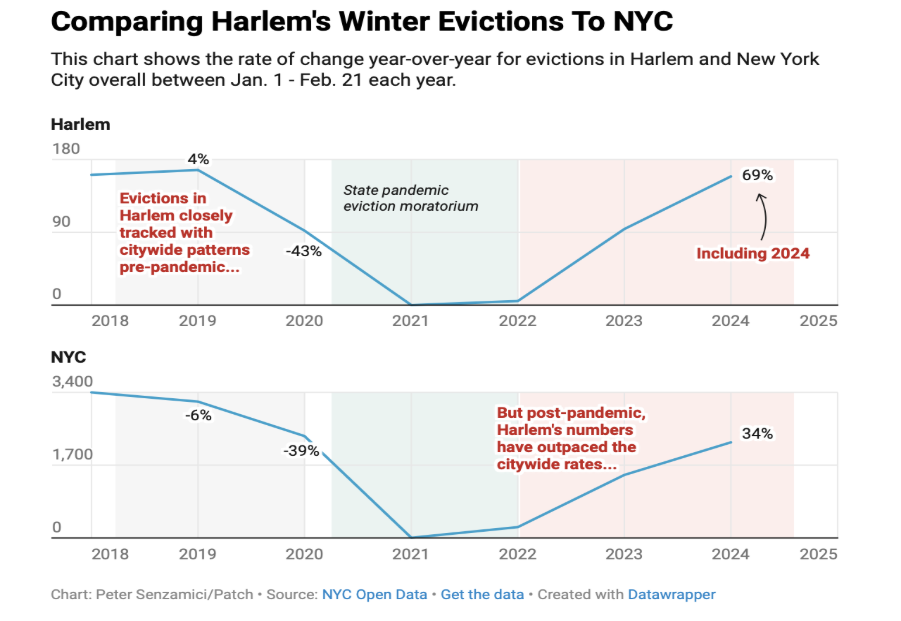
In 2024, Harlem experienced a sharp increase in winter eviction rates, with city marshals executing 159 evictions by February 21—a 69% rise from the same period in 2023, according to city data (Senzamici, 2024). This rise far exceeds the 34% citywide increase, indicating a quicker return to pre-pandemic eviction rates in Harlem (Senzamici, 2024).
With over a third of Harlem’s rental units unregulated, landlords face minimal restrictions on evictions or rent hikes and can legally deny lease renewals, often in response to tenant complaints about essential issues like heating or pest infestations (Cleare & Lewis, 2023).
The Good Cause Eviction law, effective April 20, 2024, seeks to protect some tenants in unregulated units by preventing landlords from evicting tenants without “good cause.” However, according to the Furman Center, these protections may inadvertently discourage landlords from investing in rental properties, which could limit new housing developments critical for Harlem’s supply. Landlords might also respond by imposing stricter tenant screening, potentially restricting housing access for vulnerable groups (Right to counsel, n.d.).
Further, the law could strain housing courts, increasing case backlogs and creating bureaucratic challenges for tenants and landlords alike. Advocates, including the Legal Aid Society, urge lawmakers to reinforce tenant protections, warning that without further intervention, rising eviction rates may drive families into homelessness or already strained shelters (Senzamici, 2024).
Existing Community Responses
The next section will highlight community-driven responses to the ongoing gentrification of Harlem. These locally led solutions serve as powerful forms of resistance against gentrification.
Pa’lante
PA’LANTE Harlem, or People Against Landlord Abuse and Tenant Exploitation, is a New York City nonprofit focused on alleviating poverty and promoting safe, affordable housing (PA’LANTE website). Established in 2006 by Harlem residents addressing issues of landlord neglect, PA’LANTE empowers tenants to assert their rights, forms tenant associations, and holds negligent landlords accountable (PA’LANTE website). Since its founding, the organization has preserved over 12,600 apartments, facilitated crucial repairs for 1,532 rent-stabilized units, and saved taxpayers approximately $127.8 million by preventing evictions for 1,801 families (PA’LANTE website). Additionally, PA’LANTE has formed 80 tenant associations, securing rent reductions for nearly 2,000 families living in unsafe conditions (PA’LANTE website).
Through its community-centered programs, PA’LANTE employs a bottom-up approach to housing security, with initiatives focused on homeless prevention, homeownership education, legal assistance, and community engagement efforts such as Stand & Deliver and Bodega Fridays (PA’LANTE website). This approach strengthens Harlem’s community resilience and empowers tenants to stay in their homes despite increasing gentrification pressures. Recognizing its significant impact, GreatNonprofits awarded PA’LANTE the 2023 Top-Rated Award, highlighting its essential role in Harlem’s housing advocacy (PA’LANTE website).
West Harlem Group Assistance Inc.
West Harlem Group Assistance, Inc. (WHGA) is a community development organization dedicated to empowering Harlem residents by providing affordable housing, economic support, and essential social services (WHGA Inc, n.d.). Founded in 1971 during a period of economic decline in Harlem, WHGA was established by community activists who sought to address the critical need for affordable housing and social resources in West Harlem (WHGA Inc, n.d.). Initially focused on acquiring and rehabilitating abandoned buildings, WHGA began with six properties and has since expanded to nearly 1,600 affordable housing units (WHGA Inc, n.d.).
WHGA offers a variety of programs, including the West Harlem Residence, which provides transitional housing for homeless families, and financial empowerment initiatives such as the Credit Resource Center and first-time homebuyer assistance (WHGA Inc, n.d.). Each month, WHGA delivers support services to over 80,000 New Yorkers and provides financial education to approximately 1,200 individuals annually ((WHGA Inc, n.d.). Partnering with city and state housing authorities, WHGA has managed over $300 million in development projects aimed at fostering community stability (WHGA Inc, n.d.). Through these initiatives, WHGA plays a vital role in addressing housing insecurity and building economic resilience, helping Harlem’s low- and moderate-income residents withstand the pressures of gentrification.
Harlem Community Justice Center
The Harlem Community Justice Center plays a vital role in empowering Harlem residents by offering programs that address housing stability, neighborhood safety, trauma recovery, reintegration, and youth engagement (Harkins, n.d.). At the heart of its efforts, the Housing Help Center provides essential eviction prevention support, assisting more than 2,000 residents in 2019 with court guidance and connections to legal and financial resources (Harkins, n.d.). This service strengthens housing security for Harlem’s most vulnerable residents and promotes a sense of fairness within the housing system (Harkins, n.d.).
Youth programs are another cornerstone of the Justice Center’s work. The Youth Impact initiative, for instance, offers restorative justice circles as a positive alternative to punitive responses for at-risk youth aged 13 to 18. In 2019, more than 60 young participants completed the program, fostering accountability and constructive growth (Harkins, n.d.). Similarly, the Men’s Empowerment Program focuses on trauma recovery, emotional regulation, and life skills development for young men of color aged 17 to 25. Since its inception in 2017, this program has supported over 150 participants, encouraging healthier attitudes toward mental health and helping to disrupt cycles of violence (Harkins, n.d.).
In partnership with the NYC Health Justice Network, the Justice Center also provides reentry services to individuals returning from incarceration, linking them to critical health and mental health resources to support reintegration (Harkins, n.d.). Collectively, these initiatives foster community resilience and mitigate gentrification pressures by bolstering housing stability, empowering youth, and facilitating successful reintegration. Through its holistic approach, the Justice Center strengthens Harlem residents’ ability to remain rooted in their community, countering displacement forces that often accompany gentrification (Harkins, n.d.).
Recommendations for the Community
Ultimately, Harlem’s future depends on a community-led approach that safeguards its identity and ensures housing remains accessible to long-time residents. These recommendations are designed to empower Harlem’s efforts to resist gentrification and protect against housing insecurity. Recognizing Harlem’s unique historical and racial context, they stand as a defense against the forces of transnational investors and corporate landlords who prioritize profit over community, aiming to preserve Harlem’s cultural legacy for generations to come.
In addition to expanding direct services, a unified approach to policy advocacy is crucial. Organizations like PA’LANTE, WHGA, and the Justice Center can advocate collectively for affordable housing policies, rent control expansions, “Good Cause” eviction protections, and regulations that curb speculative real estate practices. Such a coalition would amplify their impact on legislative efforts, addressing the root causes of gentrification and protecting Harlem’s low-income residents from displacement. Together, these expanded initiatives and policy efforts would safeguard Harlem’s cultural and community legacy.
Next, this unified coalition should work to promote local homeownership as a foundation for community stability. Reverend Floyd Flake’s approach in Jamaica, Queens, demonstrates the viability of this strategy: by developing housing specifically for local residents, his church created a strong base of homeownership, fostering a community more resistant to gentrification pressures (Humanity in Action, 2021). Like Harlem, Jamaica has long been a culturally rich, predominantly Black neighborhood facing similar gentrification risks. The success of Flake’s initiative in Jamaica underscores how prioritizing local ownership can provide residents with a sense of security and pride, empowering them to preserve their community’s cultural fabric (Humanity in Action, 2021).
To support Harlem’s long-term stability and address housing affordability, a multi-faceted approach is essential. Expanding homeownership assistance programs would provide Harlem’s Black families with the chance to build generational wealth within their own community. Programs offering grants, low-interest loans, and financial education specifically tailored to Harlem residents could help close the racial homeownership gap, empowering families with economic security and a personal investment in Harlem’s future.
In tandem, adopting the West Harlem Group Assistance (WHGA) model of acquiring and rehabilitating housing units could significantly boost affordable housing. Partnering with public and private developers focused on sustainable solutions, along with advocating for zoning adjustments to encourage multi-unit affordable housing in gentrifying areas, would allow WHGA to expand housing availability. Establishing a Community Land Trust (CLT) would further ensure long-term affordability by keeping land ownership within the community, insulating residents from volatile market pressures.
Supporting Black-owned businesses in Harlem is a powerful strategy in the fight against gentrification, as it not only sustains the local economy but also addresses the stark racial wealth gap that has historically disadvantaged Black communities. In 2007, the median white family had eight times the wealth of the median Black family, a disparity that grew to eleven times by 2013 and has only slightly decreased since (Taylor et al., 2018). By promoting and investing in Black-owned businesses, Harlem can retain wealth within the community, offering greater economic stability and helping narrow this wealth gap. These businesses are more than economic entities; they are cultural hubs that reflect Harlem’s heritage and offer spaces for community connection. To support this, city policies should provide grants, low-interest loans, and tax incentives to Black entrepreneurs, fostering economic resilience and empowering residents with financial independence. Strengthening Black-owned businesses counters gentrification’s push toward corporate chains, reinforcing Harlem’s identity and ensuring that its legacy endures. Another way to accomplish this is to promote Black-owned local Harlem businesses on social media. Platforms such as Instagram and TikTok can generate traction and draw attention to these businesses, amplifying their visibility to both locals and visitors alike. By highlighting some of the more niche, underground restaurants and stores that only locals might know, social media can create a sense of cultural discovery and foster appreciation for Harlem’s unique offerings. These platforms allow Harlem’s rich culinary, artistic, and entrepreneurial scenes to reach wider audiences, encouraging both local and citywide support.
Rent control in New York applies to apartments continuously inhabited since July 1, 1971, making such units increasingly rare and highly sought after (Nonko, 2020). The median rent for these apartments is just over $1,000 per month (Nonko, 2020). However, when a rent-controlled unit becomes vacant, it transitions to rent-stabilized status at a higher rate—approximately $1,375 per month—and, in some cases, may lose all protections. This creates an incentive for landlords to push out tenants in rent-controlled units. While eviction reform can help address these pressures, tenants in rent-controlled apartments must be well-informed about their rights to avoid involuntary displacement.
Building on this need for awareness, PA’LANTE’s tenant advocacy programs could be expanded with increased funding and partnerships with local law schools and legal aid organizations, enabling the organization to provide extended legal consultations and eviction prevention services. These expanded resources would empower more tenants to contest unfair rent increases and resist evictions. Additionally, offering tenant rights workshops throughout Harlem—especially targeting residents in rent-stabilized and vulnerable housing—would raise awareness and provide tenants with the tools to feel secure in their homes.
Moreover, tenants in rent-stabilized apartments often face unclear information about permissible rent increases, making them susceptible to illegal hikes. Community volunteers could play a crucial role here by distributing information on how to check an apartment’s rent history and advising tenants on steps to take against unfair rent practices (Nonko, 2020). Many tenants lack knowledge of the protections available to them and cannot afford legal representation. Therefore, tenants should have access to fundamental information on rent and eviction laws, along with access to public attorneys through the Right-to-Counsel law (Right to counsel, n.d.).
For youth and community engagement, the Justice Center’s Youth Impact and Men’s Empowerment programs could grow with additional funding to reach more young people. By developing after-school programs that include financial literacy, career exploration, and community-building skills, Harlem’s youth can become future leaders invested in their neighborhood’s welfare. Integrating restorative justice circles and emotional support resources into schools would deepen youth engagement, helping them feel a stronger connection to Harlem amidst the changes brought by gentrification.
Finally, expanding the Justice Center’s reentry services would further strengthen community resilience. By enhancing partnerships with local businesses and housing programs, individuals returning from incarceration could more easily find stable jobs and housing, promoting economic stability and reintegration into the Harlem community.
Conclusion
Harlem faces increasing evictions, cost pressure for renters, and lower housing affordability. Residents are losing their homes, culture, and community as gentrification forces out tenants and displaces Black-owned businesses. Organizations have been trying to combat these issues through tenant advocacy, legal support, and community-driven initiatives to protect Harlem’s heritage and residents. I’ve recommended a multi-pronged approach, whereby we strengthen tenant protections, expand affordable housing, and invest in community ownership and Black-owned businesses. By employing a bottom-up approach, we can work together to shape what Harlem becomes instead of watching it change around us!
Bibliography
A brief history of redlining (no date) Environment & Health Data Portal. Available at: https://a816-dohbesp.nyc.gov/IndicatorPublic/data-stories/redlining/ (Accessed: 31 October 2024).
Affordable housing opportunities (no date) Affordable Housing Opportunities – Fair Housing NYC. Available at: https://www.nyc.gov/site/fairhousing/resources/affordable-housing-opportunities.page (Accessed: Accessed: 31 October 2024).
Arakelian E. (2016). Black residents respond to the new Harlem. Available at: http://projects.nyujournalism.org/voicesofharlem/ (Accessed: 31 October 2024).
ARIAMA C. LONG Report for America Corps Member / Amsterdam News Staff (2024) Exploring solutions to Harlem’s high eviction rates, New York Amsterdam News. Available at: https://amsterdamnews.com/news/2024/04/04/exploring-solutions-to-harlems-high-eviction-rates/ (Accessed: 31 October 2024).
Central Harlem Neighborhood Profile (no date) NYU Furman Center. Available at: https://furmancenter.org/neighborhoods/view/central-harlem (Accessed: 31 October 2024).
Cleare, C.C. and Lewis, J. (2023) ‘Good Cause Makes Good Sense for Harlem’, Gotham Gazette [Preprint].
Fainstein, S. (2019) Harlem in the 2000s: Diversity, revitalization, gentrification, and equity, Items. Available at: https://items.ssrc.org/the-cities-papers/harlem-in-the-2000s-diversity-revitalization-gentrification-and-equity/ (Accessed: 31 October 2024).
Fullwood, S. (2024) The United States’ history of segregated housing continues to limit affordable housing, Center for American Progress. Available at: https://www.americanprogress.org/article/the-united-states-history-of-segregated-housing-continues-to-limit-affordable-housing/ (Accessed: 31 October 2024).
Governor Hochul announces $35 million in Covid-related rent relief for thousands of NYCHA tenants (2024) Homes and Community Renewal. Available at: https://hcr.ny.gov/news/governor-hochul-announces-35-million-covid-related-rent-relief-thousands-nycha-tenants (Accessed: 31 October 2024).
Harlem Housing Advocacy Group, Inc. (no date) Harlem Housing Advocacy Group, Inc.., Harlem Housing Advocacy Group, Inc. Available at: https://hhaginc.org/ (Accessed: 31 October 2024).
Harlem Renaissance definition, artists & how it started (no date) History.com. Available at: https://www.history.com/topics/roaring-twenties/harlem-renaissance (Accessed: 31 October 2024).
Harkins, W. (no date) Harlem Community Justice Center, Center for Justice Innovation. Available at: https://www.innovatingjustice.org/programs/harlem-community-justice-center (Accessed: 31 October 2024).
Humanity in Action (2021) ‘Gentrification and Displacement in Harlem: How the Harlem Community Lost its Voice en Route to Progress’. Available at: https://humanityinaction.org/knowledge_detail/gentrification-and-displacement-in-harlem-how-the-harlem-community-lost-its-voice-en-route-to-progress/#:~:text=Proponents%20say%20that%20the%20rezoning,be%20displaced%20by%20these%20plans (Accessed: 31 October 2024).
New York – gentrification and displacement (no date) Urban Displacement. Available at: https://www.urbandisplacement.org/maps/new-york-gentrification-and-displacement/ (Accessed: 31 October 2024).
(No date) Affordability of Rent Stabilized Units – nyc.gov. Available at: https://www.nyc.gov/assets/hpd/downloads/pdfs/services/rent-regulation-memo-2.pdf (Accessed: 31 October 2024).
(No date) Comptroller.nyc.gov. Available at: https://comptroller.nyc.gov/reports/the-growing-gap-new-york-citys-housing-affordability-challenge/ (Accessed: 31 October 2024).
(No date) Right to counsel. Available at: https://www.nyc.gov/site/mayorspeu/resources/right-to-counsel.page (Accessed: 31 October 2024).
Nonko, E. (2020) Rent control vs. Rent Stabilization in NYC, explained, Curbed NY. Available at: https://ny.curbed.com/2017/8/28/16214506/nyc-apartments-housing-rent-control (Accessed: 31 October 2024).
Pa’lante Harlem: Tenant advocates: 1411 Amsterdam Ave, New York, NY 10027 (no date) PA’LANTE. Available at: https://www.palanteharlem.org/ (Accessed: 31 October 2024).
Preserving Affordable Housing in East Harlem (no date) RPA. Available at: https://rpa.org/work/reports/preserving-affordable-housing-in-east-harlem (Accessed: 31 October 2024).
Racial differences in economic security: Housing (2022) U.S. Department of the Treasury. Available at: https://home.treasury.gov/news/featured-stories/racial-differences-in-economic-security-housing (Accessed: 31 October 2024).
Rent stabilization (no date) Rent Stabilization. Available at: https://www.nyc.gov/site/mayorspeu/programs/rent-stabilization.page (Accessed: 31 October 2024).
Rickenbacker, S. (2024) ‘Towards design reparations: Remedying urban morphologies through policy reform in Harlem, New York’, Architecture_MPS, 28(1). doi:10.14324/111.444.amps.2024v28i1.003.
Shkury, S. (2024) New York City housing shortage highlights need for more development, Forbes. Available at: https://www.forbes.com/sites/shimonshkury/2024/03/20/new-york-city-housing-shortage-highlights-need-for-more-development/ (Accessed: 31 October 2024).
Senzamici, P. (2024) Evictions skyrocket in Harlem so far this year: Data, Harlem, NY Patch. Available at: https://patch.com/new-york/harlem/evictions-skyrocket-harlem-so-far-year-data (Accessed: 31 October 2024).
Sugrue, T.J. et al. (2018) The Housing Revolution We Need, Dissent Magazine. Available at: https://www.dissentmagazine.org/article/housing-revolution-we-need-right-home-introduction/ (Accessed: 31 October 2024).
Taylor, K.-Y. et al. (2018) How real estate segregated america, Dissent Magazine. Available at: https://www.dissentmagazine.org/article/how-real-estate-segregated-america-fair-housing-act-race/ (Accessed: 31 October 2024).
Upper East Side Neighborhood Profile (no date) NYU Furman Center. Available at: https://furmancenter.org/neighborhoods/view/upper-east-side (Accessed: 31 October 2024).
West Harlem Group Assistance Inc.. (no date) WHGA Inc. Available at: https://whgainc.org/ (Accessed: 31 October 2024).
White flight may still enforce segregation (no date) American Psychological Association. Available at: https://www.apa.org/news/press/releases/2021/10/white-flight-segregation (Accessed: 31 October 2024).
Williams, T. (2008) Compromise is reached on Harlem rezoning, The New York Times. Available at: https://www.nytimes.com/2008/04/16/nyregion/16rezone.html (Accessed: 31 October 2024).
Wortel-London, D. et al. (2019) The fight for rent control, Dissent Magazine. Available at: https://www.dissentmagazine.org/online_articles/the-fight-for-rent-control/ (Accessed: 31 October 2024).
Wortel-London, D. (no date) New York – gentrification and displacement, Urban Displacement. Available at: https://www.urbandisplacement.org/maps/new-york-gentrification-and-displacement/ (Accessed: Accessed: 31 October 2024).