An Open Letter to Tondo
Dear residents of Tondo,
This community briefing aims to empower you as meaningful participants towards your vision of the future of transport in Tondo. Encompassing actionable recommendations developed through examples from around the Philippines and the world, this report intends to equip you with the necessary tools to design innovative and localised solutions to the ongoing traffic crisis. This briefing invites you to translate your experiences into community-championed results that will help to create sustainable and inclusive transit in Tondo.
Introduction
As cities are progressively restructured and shaped by new disruptors to their vitality, envisioning just and humanising strategies has become one of the key challenges to creating sustainable urban futures. Increasingly uneven trends of resilience between communities, however, suggests a discrepancy in working with the unfamiliar. The metropolitan city of Manila in the Philippines is one of the fastest-growing urban centres in Asia, and they are witnessing the region’s worst traffic crisis. The COVID-19 pandemic ushered in a new era of urban mobility: devoid of the usual commotion of motorised vehicles, thousands of cyclists flocked to the empty streets and embraced active transport at an unprecedented level. Unfortunately, this ‘new normal’ would not last. Roads and highways quickly fell back into disrepute once quarantine restrictions were lifted, and Manila is once again in a state of perennial gridlock. Existing infrastructure is lamentably inadequate and impotent against the rapid pace of motorisation brought about by uncoordinated policy, leading to a premature decline in mobility (Hasselwander et al., 2022). Cyclists have, once again, become an invisible population.
These systemic aberrations are most detrimental to the urban poor, who, barred by emotional impoverishment and material deprivation, are less able to effectively respond to the crisis. Tondo, one of the 16 districts comprising Manila, is a historically significant microcosm of the city. Characterised by a high incidence of poverty and overcrowding, it is further prone to the severity of the traffic crisis due to its proximity to two major commercial hubs, Divisoria and the Port of Manila. Contrarily, this places Tondo in an intriguing position for actionable and innovative community-based approaches, in lieu of failing traditional interventionist policy. This briefing begins by contextualising my positionality to the prevailing issue and examining the challenges against the background of the community. Following a brief overview of current policy, the report will conclude with a series of community-based initiatives catered to the socioeconomic profile of Tondo.
Positionality
My choice to explore urban mobility in this briefing is motivated by my summer internship with the Land Transport Authority (LTA) of Singapore. Growing up there, I must admit that my ‘lived experiences’ of transport is vastly different from that in Tondo. Transiting through Singapore is a pleasant process expedited by multimodal connectivity: public transport is frequent and extensive, and transport routes have grown to accommodate active mobility into the first and last mile.
With land scarcity and urban density being two of the biggest limiting factors to sustaining urbanism in Singapore, policy necessitates aggressive ambition and innovation. Through progressive engagement with civil society and social enterprises, various scales of transport planning are increasingly being supplemented by the meaningful participation of residents. I was most inspired by the work of Participate in Design (P!D), a non-profit organisation founded in 2013 that champions community-borne design in policy and planning. In an agency-wide seminar, Executive Director Larry Yeung spoke of P!D’s commitment to community empowerment through consistent grassroot engagement and proactive transparency. Their people-centric approach to solutionism is not disingenuous: guided excursions and focus sessions with neighbourhood residents have helped LTA to improve the wayfinding experience of active mobility users, fostering a success story of partnership and community integration.
While the government has played an integral role in developing an accessible transport system, the efforts of P!D proved to me the efficacy of bottom-up endeavours and the significance of gathering input from the community. This briefing presented an opportunity for myself to explore the feasibility of grassroot involvement in a community that has yet to experience inclusive and equitable mobility options. I chose to focus on Manila – and more specifically, Tondo – for two reasons: (1) I have family that grew up there, and in my childhood, came to learn of the vast differences in lifestyle, and (2) the circumstances surrounding Tondo present a landscape for practicable action. I do, however, recognise my removal from Tondo and its residents and must clarify that this report does not intend to dictate the doings of the community in question but rather, to propose feasible initiatives that offer collective power to them from the perspective of mutual aid.
The Problem
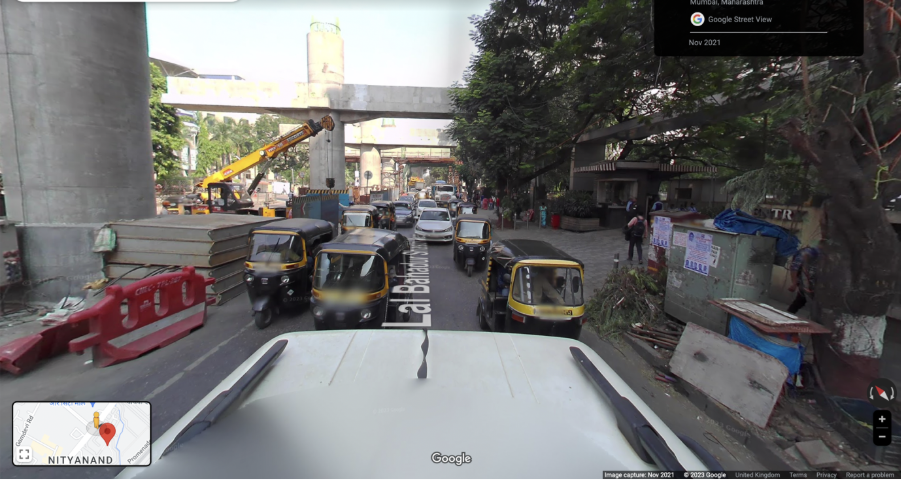
Out of the 278 entities named in the Asian Development Outlook 2019 Update, Manila topped the list as the most congested developing Asian city (Asian Development Bank, 2019). Further statistics rank Manila at 58th out of 60 global cities in Urban Mobility Readiness (UMR), an index which explores the efficiency and equitability of international transit systems across several fields (Oliver Wyman Forum, 2023). At a regional low of 31.2% in UMR, the metropolis is blighted by challenges in societal benefits, infrastructure, and system efficiency. Despite the worsening situation, there is a conspicuous absence of adequate infrastructure, and policy is saturated with homogenous top-down intervention that favours capital accumulation over the immediate needs of Filipinos. Other factors such as urban sprawl, a steadily increasing population, poor traffic etiquette and venal traffic enforcement exacerbate Manila’s traffic crisis.
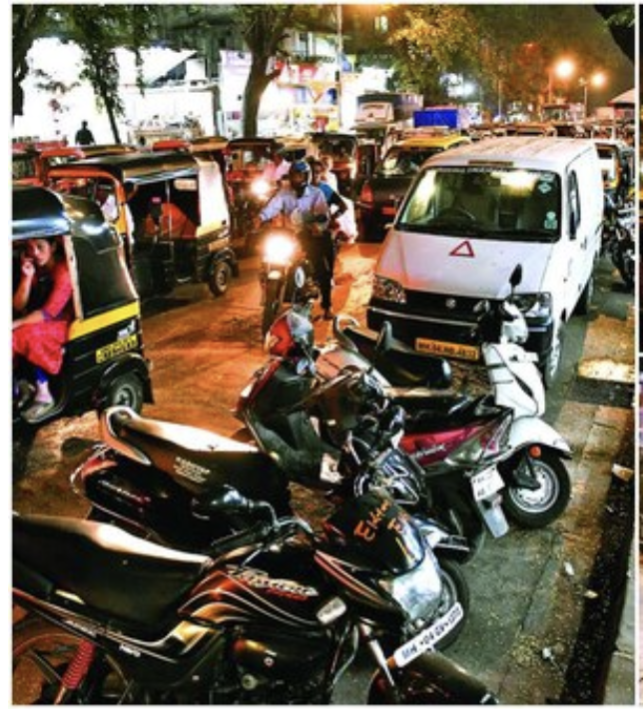
Alternative means of travel are similarly ineffectual in servicing the community. Although 94% of Filipinos do not own private vehicles (Bauck, 2023), public transport is unreliable and inconvenient, and micro-mobilities – namely walking and cycling – face compounding arbitrariness. Expenditure in active transport infrastructure peaked during the pandemic following a nationwide cycling boom initiated by the termination of mass mobilities, including the bus and rail networks. By 2021, the Department of Transportation had invested ₱801.83 million in building 500 kilometres of new bike lanes complete with quality wayfinding and safety details (Mercurio, 2021). The Philippine government, however, has failed to maintain this momentum, and was most recently criticised for slashing the budget for active transportation by ₱1.5 billion in their National Expenditure Programme between 2022 and 2024 (Relativo, 2023). This de-prioritisation of improving active mobility is worrisome. Data shows that bicycle ownership outnumbers car ownership 5:1 in Metro Manila, and an additional 2.7 million households adopted cycling as a primary mobility between 2022 and 2023 (Social Weather Stations, 2022; 2023). Despite this, 72% of road traffic comprises car travel (Japan International Cooperation Agency, 2014) and little has been done to enforce the value of cycling post-pandemic. Dedicated cycling lanes have reportedly been relegated to sharrows and misused as parking spaces (de Santos, 2023), undoing significant progress in the transition towards cycling as a primary mobility.
The Light Rail Transit (LRT) train, Bus Rapid Transit (BRT) and jeepney systems form the bulk of Manila’s mass transport network. All three industries are ineffectively utilised by the state and beset with sociopolitical complications. Despite a total ridership of 109.6 million in 2022 (Abadilla, 2023), the LRT does not offer a convenient commuter experience: they are highly inaccessible due to overcrowding, irregular scheduling, and inadequate comfort features (Moreno, 2023). Peripheral districts like Tondo are further afflicted with low station densities in spite of high demand (Damian and Mabazza, 2018). Coupled with the ongoing shortages in bus drivers and jeepneys – a consequence of job redundancy during COVID-19 (Siy, 2023) and a shutdown of operators in response to unmanageable costs imposed by the PUV Modernisation Programme (Ramos, 2023) respectively – mass transit journeys are made more unpredictable, forcing commuters to turn to private transport and thus contributing to traffic congestion.
Tondo Background
History: A migrant economy
“Isang kahig, isang tuka” – this Tagalog idiom represents the most impoverished in society and their living “from hand to mouth”. Exemplified in the social fabric and economic composition of Tondo, this Manilan district houses a population of 654,220 urban poor within the city’s largest slum (Philippine Statistics Authority, 2021). Here, poverty is both a historical and geographical characteristic. Since its claimancy by the Spanish Empire, Tondo has been considered an informal settlement: with land ownership formalised only in the eyes of the Church, its location outwith the historic centre of Intramuros meant that the district was naught but a jumbled populace in colonial times (Celdran, 2014). Its geographic position was later instrumental to the armed conflict in the Second World War: located on the northern bank of the Pasig River, the Americans secured Tondo as a strategic foothold against the Japanese, who had retreated into Intramuros on the southern bank (Connaughton et al., 1995). And when Intramuros was later razed to the ground by American artillery, survivors fled the desolate lands and settled up north of the Pasig River as squatters (Celdran, 2014).
Post-war changes to the economy engendered a potential for prosperity. From the provinces came migrants, attracted to Tondo by its proximity to markets, transport networks and the docks of Manila Bay, alongside a recognition that these were sources of opportunity in employment, education and entertainment (Poethig, 1970; Beltran Jr., 1982; Poppelwell, 1997). While Tondo was hardly mature, the people were uncomplaining – “The discomforts of the slum can be tolerated for the advantages that city life can bring” – and applied themselves as an unskilled workforce (Beltran Jr.,1982). In the rapid industrialisation that followed, “the adoption of mechanised production left migrants who lacked specialised skills ill equipped to compete for jobs” (Poppelwell, 1997). Forsaken by urban development, poverty in Tondo now runs at least three to four generations deep (Celdran, 2014).
Today: Challenges in Context
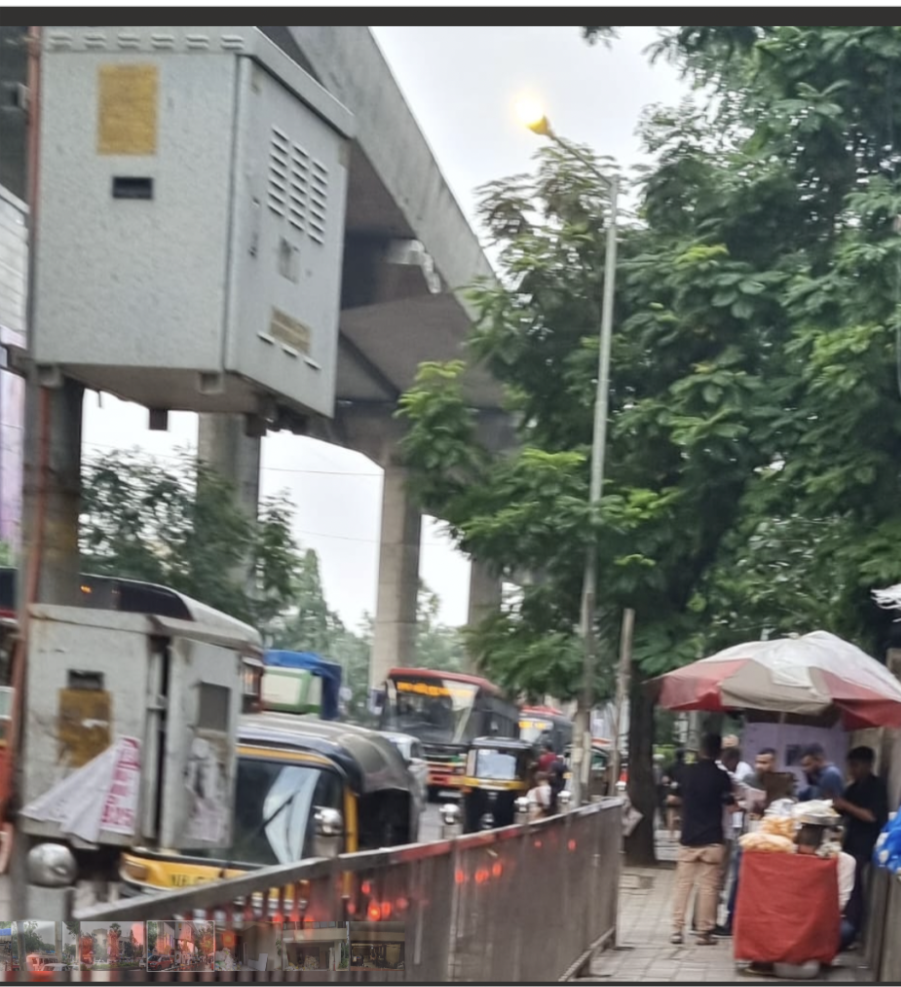
Divisoria, the central hub for competitively priced goods and bulk manufacturing, is alive with informal economies. From street vendors to night markets and bazaars, this famous commercial centre straddles the south end of Tondo, providing generations of residents with “sources of casual employment” (Beltran Jr., 1982). The bisecting thoroughfare, Recto Avenue, is exceptional in historical purpose: once a railway that serviced Manila Bay, it linked squatter settlements to further employment in the Port of Manila (Balbutin Jr., 2023). Now, Divisoria is afflicted by a violence of motor vehicles and small-business vendors, congesting this familial hub of work and known life. The Port of Manila is similarly blighted by gridlock, as it struggles to accommodate the influx of labourers from Tondo. Choked by poor traffic discipline and narrowed roads, areas like these have been met with persistent efforts to decongest the streets – though rather than focusing their intent on the vehicular side of the traffic crisis, attempts to do so concentrate on the warding off of sidewalk and street vendors.
Under the direction of Isko Moreno, the former Mayor of Manila, these everyday economies were assiduously swept aside by clearing operations (Beltran, 2019). The Department of the Interior and Local Government (DILG) followed suit with formal administrations that sought to direct the clearances of road-obstructing structures, while offering empty promises of “displacement strateg[ies] for those affected … which may include designation of unused spaces for their relocation, provision of alternative livelihood for vendors, and other similar efforts” (DILG, 2019; 2020) While it is recognised that street vendors may occupy or encroach upon cycling lanes, the choice to target small-business vendors is contentious: the Task Force on Urban Conscientisation (1992) had previously determined, through interviewing, that many of these vendors did not have the educational or financial capacity to abandon their professions in favour of another and as a result, obstinately continue to work in Divisoria in spite of adverse politico-economic conditions.
Current Policy
As a constituent district, Tondo falls under the jurisdiction of Manilan and Philippine legislation. This absence of municipal council and local ordinance subjects the district to policy practices that are unsuited to the socio-spatialities of Tondo. Stewarded by car-centric and technocratic administrations, infrastructural programmes in the Philippines have routinely neglected the potential for multi-modality in the transport sector. Two prominent programmes in the past decade, Build! Build! Build! (under the administration of Rodrigo Duterte) and Build Better More (led by Bongbong Marcos), were purposefully aimed at increasing global economic competitiveness and reducing car travel time (Rosario et al., 2023). These projects have ambitious goals of creating seamless trade corridors through increasing roadway capacities, rural-urban connectivity and other large-scale networks (Bangko Sentral ng Pilipinas, 2023). Such reactionary measures have a marginal impact in reducing gridlock in the long term and often end up inducing greater congestion instead (Litman, 2013).
At the same time, transport authorities have made almost antithetical commitments towards the prioritisation of vulnerable road users. They have, in several official publications, outlined codes of conduct to inform motorists on appropriate behaviour towards cyclists and their spaces (see DILG et al., 2020; Land Transport Office, 2021). While these may seem constructive, the guidelines are mostly transgressed due to a lack of respect for the exclusivity of bicycle lanes and poor enforcement of these rules (Manila Bulletin, 2023).
Commuity Recommendations
The traffic crisis is a wicked problem that, indisputably, should involve state-society collaboration. It is clear, however, that the situation is not benefiting from the long-standing inscriptions of statecraft and ad hoc, reactionary policies. Alleviating traffic congestion in Tondo is therefore contingent upon a transition from ‘vehicular mobility’ to ‘people mobility’. This would involve stimulating change in the vehicular makeup of the district through the democratisation of the roads in a way that is both affordable and inclusive. Given current road capacities and proximity between nodes, cycling makes for an exceptional alternative, especially with its growing prevalence (Litman, 2013; Portugal-Pereira et al., 2013). As current policy fails to provide the urban poor with the instruments to work around congestion, the following recommendations have been devised with community-based action and empowerment in mind.
Organised Collaborations
As a veritable first step, partnering with constituents of existing coalitions and organisations could offer Tondo residents “a network of people across the city who are primed to mobilise to protect bikers’ interests” (Bauck, 2023). This would provide the community with the guidance of well-informed cycling advocates from groups such as MoveAsOne Coalition and Bicycle Friendly Philippines, which have inspired social movements for cycling in Manila and Pasig City respectively. Through the provision of free cycling lessons, mass bike rides and support groups (MoveAsOne Coalition, 2023; Bicycle Friendly Philippines, 2023), organisations like these promote cycling as an essential and sustainable mode of transportation, thus enforcing collective behaviour in the community and subsequently reducing traffic congestion.
Since this community strategy involves diligent intra-communication and cooperation, there is considerable potential to then transition from vertical collaboration to building horizontal relationships. Local participation in the formation of working groups and coordinated bike pools has demonstrated its effectiveness in collective mobilisation (Social Weather Stations, 2022). I propose that such initiatives would be especially beneficial to those employed in Divisoria and the Port of Manila, as workers could amalgamate under the old adage of “safety in numbers”. The community could further invigorate their efforts by employing the help of Samahan ng Mamamayan – Zone One Tondo Organisation (SM-ZOTO), a registered federation of urban poor local groups with a history of community organisation. Their ‘Training-Organising Programmes’ (TOP) are designed to empower residents by providing them with opportunities to upskill their management and advocacy capabilities (SM-ZOTO, 2023a). Local attendance and partnership with these TOPs would strengthen the foundations of community-based action in Tondo by equipping proactive residents with the skills to mobilise the wider community. In the long term, the meaningful participation of residents on multiple levels would deliver an assured future of inclusive mobility, thus incentivising others to adopt cycling as their primary mode of transport.
Looking to the future, ensuing creative action could model itself after large, concerted efforts, such as Critical Mass (CM), in order to garner the attention of governing bodies. Conceived as a social movement in celebration of cycling, this global phenomenon institutes a culture of defiance against the dominance of the automobile through monthly unsanctioned bike rides organised by the community. CM has a distinctive structure of “self-determination [and] self-rule” (Furness, 2010), lending its participants with both an amorphous, adaptable power and customisable initiative. While it can represent a culmination of cyclists’ efforts, its very essence is interpretable: an open invitation to non-cyclists to join their cause; a signifier of people-power, or even a political revolution (Dyer, 1993; Edinburgh Critical Mass, 2023). Whichever direction the community chooses to follow, CM can help to raise the profile of community-based action in Tondo. Tangible efficacy, however, is conditional upon “real advocacy – such as lobbying … for bike lanes and progressive legislation” (Smith, 2010). The most amenable results therefore require a combination of organised collaboration and conceptualisation through participatory design.
Participatory Design
Research indicates that to achieve high cyclability and successfully cultivate active mobility as a social habit, the community must have the assurance that “[their] voices [can be] translated into tangible outcomes” (P!D, 2023; Rivera and Castro, 2023). By developing a collective vision, residents can actuate their transport aspirations of creating safer and more respectful streets. This reconstituting of transport planning as a shared responsibility conceptualises itself in the appointment of residents as creatives and actors in infrastructural design. It “do[es] not take civil society as mere participants in government consultations … invited just to comply with bureaucratic requirements” (Gatarin, 2023) but rather, enables them to participate meaningfully in place-based initiatives.
Illustrating this is Walkable Pearl Drive, a civic movement in the Philippine City of Pasig that advocated for improved safety and accessibility in the Central Business District. Highlighting the obstruction of sidewalks by parked cars, residents and office workers banded together to launch an online petition appealing to the wider community and local authorities to prioritise the rights and needs of pedestrians (Friends of Pearl Drive, 2018). Since its inception, Walkable Pearl Drive has been successful in reorienting community outlook on shared road spaces through the reclamation of sidewalks (Gatarin, 2023). Recalling Tondo’s comparable challenges of lane obstruction by small-business vendors and automobiles, residents could espouse these promising strategies to reclaim their bicycle lanes and in turn, their mobility. While the success of such projects does rely on a combination of personal motivation and mutual partnerships, the current volatile outlook on motorised-versus-active transport could practicably inspire social reform and mass action.
Public Education
Research indicates that education has a positive causal effect on social engagement, in that it influences democracy and participation through “the provision of information relevant to politics” (Mayer, 2011). At present, there is a conspicuous lack of transport data in educational curricula and academic research (Social Weather Stations, 2022), leaving a significant vacuity in situational awareness. Bringing data to schools would inform the younger generation of cycling behaviours and provide dedicated spaces for dialogue, thereby inculcating sustainable habits from an early age. Beyond the perimeters of school, urban forums and conferences provide the opportunity for the wider community to build their capacities and gain place-based insight. For example, SM-ZOTO frequently engages with the urban poor and other marginalised groups in public conferences to address their concerns and close the feedback loop with partnering authorities (SM-ZOTO, 2023b). Similar effects can also be achieved virtually: in 2021, the World Bank Group organised online bicycle infrastructure trainings for “stakeholders involved in active transport in the Philippines” to advise them on the principles of planning and design (Global Road Safety Facility, 2021). With groundings in action learning (a reflexive approach to problem solving), participants-turned-practitioners are encouraged to adapt their learnings to the local context and nurture a sense of belonging in their communities. In Tondo, the community can apply these fundamentals to enhance their reference base for organised collaborations and participatory design initiatives, and thus galvanise the masses towards a common purpose.
Conclusion
“While the community does exhibit a sense of cohesiveness, [there has been] a decline in the propensity for residents to be involved in organising” (Poppelwell, 1997). A review of the circumstances surrounding traffic congestion has revealed the exigencies of the Tondo community and their dismissal by dominant narratives of fiscal policy. As explored in this community briefing, this portrayal of mobility as a syndrome of socio-political drivers demands immediate reform through community engagement and bottom-up mobilisation. To confront the transport crisis, therefore, is to restructure Tondo as a vital community with the adaptive capacity to respond to geographies of urgency.
In pursuance of solidarity, the recommendations proposed in this briefing embrace a relational and collective approach to community-based action. These comprised organised collaborations (both within and outwith the community), engaging in participatory design, and sustained public education. While each initiative can be implemented independently of each other, the most compelling outcome involves a combination of these three elements. Through the power of the vital community, and as witnessed in other international contexts, such clamorous and consistent efforts have the incredible potential to engender significant changes in public outlook and statutory organisation.
REFERENCE LIST
Abadilla, E.V. (2023) 10 regional airports up for sale – Bautista. Available at: https://mb.com.ph/2023/04/12/sec-bautista-transport-key-to-national-recovery (Accessed: 13 October 2023)
Asian Development Bank (2019) Asian Development Outlook (ADO) 2019 Update: Fostering Growth and Inclusion in Asia’s Cities. Available at: http://dx.doi.org/10.22617/FLS190445-3 (Accessed: 11 October 2023)
Balbutin Jr., A. (2023) A tour through history in Tondo, Manila. Available at: https://filipeanut.art/a-tour-through-history-in-tondo-manila/ (Accessed: 12 October 2023)
Bangko Sentral ng Pilipinas (2023) Build Better More: A Glimpse into the Philippines’ Infrastructure Program. Available at: https://www.bsp.gov.ph/Pages/iro-macro-pres/Build%20Better%20More_Jan%202023.pdf (Accessed: 19 October 2023)
Bauck, W. (2023) Can Manila’s cycling boom survive a return to car traffic? Available at: https://grist.org/international/can-manilas-cycling-boom-survive-a-return-to-car-traffic/ (Accessed: 10 October 2023)
Beltran, M. (2019) Swept Aside, Where Are the Philippines’ Street Vendors to Go? Available at: https://thediplomat.com/2019/10/swept-aside-where-are-the-philippines-street-vendors-to-go/ (Accessed: 15 October 2023)
Beltran Jr., J.V. (1982) The Concept of Urban Renewal in Metropolitan Manila. Australia: University of Tasmania.
Bicycle Friendly Philippines (2023) Bicycle Friendly Philippines Facebook Page. Available at: https://www.facebook.com/bicyclefriendlyph/ (Accessed: 11 October 2023)
Celdran, C. (2014) Tondo: The space in between [Online Video]. Available at: https://www.aljazeera.com/program/the-slum/2014/11/11/tondo-the-space-in-between (Accessed: 12 October 2023)
Connaughton, R., Pimlott, J., and Anderson, D. (1995) The Battle for Manila, London: Bloomsbury Publishing.
Damian, J.C. and Mabazza, D.L. (2018) Historical Transport Network: Mapping Manila’s Settlements and Railway Systems (1895-1945) Using Geographic Information Systems and Graph Theoretic Analysis. Available at: https://riles.upd.edu.ph/wp-content/uploads/2018/02/016-ANGIS-2017-Historical-Transport-Network_-Damian-Mabazza.pdf (Accessed: 19 October 2023)
de Santos, J. (2023) Whatever happened to: The fight for protected bike lanes in Makati. Available at: https://www.philstar.com/headlines/2023/06/26/2276038/whatever-happened-to-fight-protected-bike-lanes-makati (Accessed: 12 October 2023).
DILG (2019) Customs Memorandum Circular 203-2019. Available at: https://customs.gov.ph/wp-content/uploads/2023/01/cmc-203-2019-DILG_MC_No-2019-121.pdf (Accessed: 15 October 2023)
DILG (2020) Memorandum Circular 2020-027. Available at: https://www.scribd.com/document/447372140/DILG-Memorandum-Circular-2020-027 (Accessed: 15 October 2023)
DILG, DOH, DOT and DPWH (2020) Joint Administrative Order 2020-0001. Available at: https://law.upd.edu.ph/wp-content/uploads/2020/09/DOH-DOT-DILG-DPWH-Joint-Memorandum-Order-No-2020-0001.pdf (Accessed: 15 October 2023)
Dyer, J. (1993) ‘Flocculating in the Streets of Berkeley’, Terrain. Available at: https://scorcher.org/~jym/terrain/flocculus.html (Accessed: 20 October 2023)
Edinburgh Critical Mass (2023) Edinburgh Critical Mass Homepage. Available at: https://edinburghcriticalmass.wordpress.com/ (Accessed: 20 October 2023)
Friends of Pearl Drive (2018) Pearl Project: “Road to a Walkable Pearl Drive”. Available at: https://www.change.org/p/pearl-project-road-to-a-walkable-pearl-drive (Accessed: 19 October 2023)
Furness, Z. (2010) ‘Critical mass rides against car culture’, Cycling Philosophy for Everyone: A Philosophical Tour de Force, pp. 134-145.
Gatarin, G.R. (2023) ‘Beating the Traffic: Civil Society Participation in Transport Reforms and Innovations in Metro Manila, Philippines.’, Urban Transformational Landscapes in the City-Hinterlands of Asia: Challenges and Approaches, pp. 143-158.
Global Road Safety Facility (2021) BICYCLE INFRASTRUCTURE TRAININGS. Available at: https://www.roadsafetyfacility.org/sites/default/files/2021-06/Bicycle%20infrastructure%20trainings%202021.pdf (Accessed: 15 October 2023)
Hasselwander, M., Bigotte, J.F., Antunes, A.P. and Sigua, R.G. (2022) ‘Towards sustainable transport in developing countries: Preliminary findings on the demand for mobility-as-a-service (MaaS) in Metro Manila’, Transportation Research Part A: Policy and Practice, 155, pp. 501-518. doi: 10.1016/j.tra.2021.11.024
Japan International Cooperation Agency (2014) ROADMAP FOR TRANSPORT INFRASTRUCTURE DEVELOPMENT FOR METRO MANILA AND ITS SURROUNDING AREAS (REGION III & REGION IV-A). Available at: https://openjicareport.jica.go.jp/pdf/12149597.pdf (Accessed: 11 October 2023)
Land Transport Office (2021) MC 2021-2267. Available at: https://www.scribd.com/document/596914953/MC-2021-2267 (Accessed: 15 October 2023)
Litman, T. (2013) ‘Smarter Congestion Relief in Asian Cities Win-Win Solutions to Urban Transport Problems’, Transport and Communications Bulletin for Asia and the Pacific, 82, pp. 1-18.
Manila Bulletin (2023) Bikers, bike lanes, and safe roads: It should not be a test to survive a journey. Available at: https://mb.com.ph/2023/5/5/bikers-bike-lanes-and-safe-roads-it-should-not-be-a-test-to-survive-a-journey (Accessed: 10 October 2023)
Mayer, A.K. (2011) ‘Does education increase political participation?’, The Journal of Politics, 73(3), pp. 633-645.
Mercurio, R. (2021) Metro Manila Bike Lane Network opens. Available at: https://www.philstar.com/nation/2021/07/28/2115672/metro-manila-bike-lane-network-opens (Accessed: 12 October 2023).
Moreno, F. (2023) Traffic congestion and management in Zamboanga City, Philippines: The public transport commuters’ point of view. Available at: http://eprints.rclis.org/44561/1/Traffic%20Management%20-%20MORENO%20RESEARCH%20PAPER%20-%20July%2014%2C%202023%20-%20FINAL.pdf (Accessed: 17 October 2023).
MoveAsOne Coalition (2023) MoveAsOne Coalition Homepage. Available at: https://www.moveasoneph.org/ (Accessed: 12 October 2023)
Oliver Wyman Forum (2023) Manila. Available at: https://www.oliverwymanforum.com/mobility/urban-mobility-readiness-index/ranking.html (Accessed: 10 October 2023).
Participate in Design (2023) Participate in Design Homepage. Available at: https://participateindesign.org/ (Accessed: 11 October 2023)
Philippine Statistics Authority (2021) 2020 Census of Population and Housing Results (City of Manila). Available at: https://rssoncr.psa.gov.ph/article/2020-census-population-and-housing-results-city-manila#:~:text=Among%20the%2014%20administrative%20area,and%20Santa%20Ana%20with%20203%2C598%20 (Accessed: 16 October 2023)
Poethig, R. (1970) ‘The Squatters of Southeast Asia’, Impact, 5(5), pp. 4-10.
Poppelwell, T. (1997) Slum Upgrading Revisited: An Evaluation of the Tondo Foreshore Urban Development Project. Canada: The University of British Columbia.
Portugal-Pereira, J.O., Doll, C.N.H., Suwa, A., and Puppim de Oliveira, J.A. (2013) ‘The Sustainable Mobility-Congestion Nexus: A Co-Benefits Approach to Finding Win-Win Solutions’, Transport and Communications Bulletin for Asia and the Pacific, 82, pp. 19-32.
Ramos, M. (2023) As Philippines scraps jeepney buses, operators struggle with costs. Available at: https://www.japantimes.co.jp/news/2023/02/28/asia-pacific/philippines-jeepney-operators-cost-struggle/ (Accessed: 17 October 2023).
Rosario, R.D., Padilla, J.A., Bonto, N.G., Mesa, R.C.D. and Cruz, O.G.D. (2023) ‘Value engineering on car curbing ownership in metro Manila’, AIP Conference Proceedings, 2823(1). doi: 10.1063/5.0162414
Relativo, J. (2023) ‘Non-priority’ of pedestrians, cyclists in proposed 2024 budget dismays group. Available at: https://www.philstar.com/headlines/2023/08/09/2287439/non-priority-pedestrians-cyclists-proposed-2024-budget-dismays-group (Accessed: 11 October 2023)
Rivera, Y.K. and Castro, J.T. (2023) Determinants for Modal Shift of School Children from Private Vehicles to Public Transport: A Case Study in Metro Manila, Philippines. Available at: https://ncts.upd.edu.ph/tssp/wp-content/uploads/2023/01/TSSP2022_12.pdf (Accessed: 11 October 2023
Siy, R. (2023) The bus driver shortage. Available at: https://www.msn.com/en-ph/news/money/the-bus-driver-shortage/ar-AA1clgYH (Accessed: 17 October 2023)
Smith, J.A. (2010) How to Start a Critical Mass Ride. Available at: https://www.shareable.net/how-to-start-a-critical-mass-ride/#:~:text=Understand%20the%20structure%20of%20Critical%20Mass.&text=It%27s%20an%20event%2C%20not%20an,that%27s%20what%20you%27ll%20do (Accessed: 19 October 2023)
SM-ZOTO (2023a) Programs and Services. Available at: https://smzotoincorporated.org/programs-and-services/ (Accessed: 11 October 2023)
SM-ZOTO (2023b) Samahan ng Mamamayan Zone One Tondo Inc. – Sm Zoto Inc. Facebook Page. Available at: https://www.facebook.com/SMZOTOINC/ (Accessed: 12 October 2023)
Social Weather Stations (2022) Kapihan sa SWS: Bicycle Usage and Attitudes of Filipino Household Heads on Cycling as Transportation [Online Video]. Available at: https://www.youtube.com/watch?v=M7GOmte9XyA (Accessed: 10 October 2023)
Social Weather Stations (2023) SOCIAL WEATHER REPORT | Cycling households rise from 29% in 2022 to 36% in 2023. Available at: https://www.sws.org.ph/swsmain/artcldisppage/?artcsyscode=ART-20230831040420 (Accessed: 10 October 2023)
Task Force on Urban Conscientization (1992) Divisoria: mga eksena ng buhay at pakikibaka sa bangketa. Quezon City: Task Force on Urban Conscientization.