Categories
Building Sustainable, Inclusive and Just Cities (Hons module) Uncategorised

Mitigating the Health Effects of the Urban Heat Island in Central Harlem, NYC

Author’s positionality

Before continuing to the briefing, I would like to recognize the privilege I have of being able to have access to the resources that enable me to write a piece of work such as this one. This briefing is focused on being for the people and them only. I believe that even though communities must sometimes rely on governmental bodies and NGOs to reach sustainability goals, social inclusion is a crucial aspect that is overlooked during processes. Communities, both rural and urban, have the potential to be localized routes to sustainability. Hopefully with a substantial amount of participation in practices and policy, at the personal level that is, others will take notice leading to a larger social change at the regional, domestic, and national level. It must be recognized that this paper does not aim to direct state-run actions but merely plant the seeds of change where it is so desperately needed.  

I recognize Central Harlem as being one of these areas, one that suffers from the extreme effects of climate change. Climate change is in most cases a silent but deadly characteristic of the world we live in. Rising sea levels and changing weather patterns pose threats to the natural environment and the livelihoods of billions. It should be prefaced that I do not intend to state that climate change can be solved by the community of Central Harlem. I would like to avoid creating a feeling of extreme pressure on my chosen community by stating this is simply not the case and remains true for any group of people. It must be approached by billions around the world, a nod back to how communities could be paths to localized and large-scale transformation. A prime example of such a tactic were the community reliant initiatives to combat Covid-19 in the past 4 years.  

Nineteen years of my life I spent growing up just a short walk away from Central Harlem and by frequenting the area for sport, I feel that I must give back to the community. By juxtaposing my former neighborhood, the Upper West Side, with it, I notice the major differences in the area economically and resource wise. Creating cool neighborhoods is a function of these two things. How could two areas that are so close to each other be so different? This is my main question and one that led me to share my thoughts on a personal level about how to mitigate the health effects of rising temperatures. This inequality is emphasized even more so where I currently live in a rural setting which experiences coastal breezes allowing homes and people to remain at lower temperatures even during heat events. Being a student allows me to approach this problem in as simple terms as possible backed by academia. Despite this I am still speaking from a privileged point of view. There may be a stark difference in knowledge and experience between me and those who reside in Central Harlem. Therefore, I acknowledge that my suggestions may be limited by this lack of familiarity. I wish to help those struggling with health effects and underlying diagnoses to ensure that heat does not affect their daily lives. I believe that neighborhoods of New York City have a strong willingness to come together and help each other no matter who they might be. Central Harlem and other communities can unlock a potential of civic participation which is subdued by a lack of power, education, greed, fear, and mistrust (Chatterton, 2019). I have full confidence in the abilities of Central Harlem’s population to create a healthier environment for all. Additionally, my suggestions are not solely for one demographic. I wish that every gender, age, race, and ethnicity may consider what I say in the following paragraphs with no third-party intervention.  

Community

Considering meeting global sustainability goals, new ways to face the obstacles of mass urbanism using urban justice must be considered, while remembering that a city is a space with history and people should have the right to remain in the spot they currently reside in. Cities have been able to outlive multiple governing bodies and radical social transformation (Sassen, 2018). New York City is deeply rooted in its own history with ties back to the native populations that roamed prior to the colonization of European powers. Just like its fellow colonial cities of Philadelphia, Boston, and Charlotte, it began to form into an area that revolved around capital, trade, and dense living.  Today it offers to many a deep sense of home, culture, diversity, and opportunity. The almost 8.9 million people (United States Census, 2020) are crammed into Manhattan, Queens, Brooklyn, The Bronx, and Staten Island. Manhattan is home to roughly 1.7 million residents in the metropolitan area, making it the third most populous borough (United States Census, 2020). Through the perception of media, most may assume the heart of Manhattan lies near Times Square or Soho. Although these areas may be significant in that they experience elevated levels of foot traffic and economic prosperity, Manhattan and its neighboring boroughs are filled with tucked away communities that pose their own charm.  

Central Harlem is one of many that offers attractions, good food, good people, and an overarching sense of community, spanning from Harlem River to the north, Central Park to the south, Fordham Cliffs to the west, and Fifth Avenue to the east (NYC Department of SBS, 2019). It is a product of a mass immigration pre–World War I, both domestically from other parts of New York City as well as abroad from the Caribbean into newly built tenements predominantly owned by white people (Columbia University, 2024). By the 20’s, the Harlem Renaissance’s artistic expression took over as the beating heart of the area (Grunwald, 1999). The people of Harlem were hit hard by the crash of 1929 leading to a cascading disparity both economically and socially leading to later riots in the 60’s and 70’s combined with the crack and AIDS epidemics in the 80’s (Foster, 2003). The effects of these historical events have been rooted in the space of Central Harlem and are being felt by the population today. Central Harlem is home to 138,953 people, 45.8% of which identified as Black, 28.2% as Latino, 14.4% as White, and 4.5% as Asian (NYU Furman Center, 2022). Diversity offers an inclusive neighborhood that prospers of the concept of community building. As of a community health survey conducted in 2018, 82% of adults reported that they were willing to help each other compared to a citywide percentage of 78% (NYC Health, 2024). Despite this Central Harlem seems to continue to struggle both economically and socially. 21% of residents live in poverty and 9% are unemployed compared to the 13% and 5% averages in the Manhattan as of 2019 (NYC Health, 2024). The median household income as of 2022 was $51,990, about $25000 less than the citywide average (NYU Furman Center, 2022). These imbalances are why I want to address this community specifically. They have the right social makeup but lack the economic fortitude to move forward with action to mitigate the health effects that the urban heat island may have on them. By catering my suggestions to a level that is attainable, the chances of them being adapted are higher and possibly looked at as being friendly to the population of Central Harlem. I would like to resonate to my community Chattertron’s (2019) statement that we must break down larger concepts and challenges into “manageable chunks and simply try things out on a small scale” as there is “no workable blueprint for unlocking sustainable urban futures” (p.115).

Health Effects of the Urban Heat Island Effect

As global temperatures rise, many metropolises are faced with harsh heat conditions that can lead to serious health effects or loss of life. The urban heart island effect (UHI) is when urban areas, like Manhattan, become ‘islands’ of higher temperatures relative to surrounding rural areas (EPA, 2024). Although the acceleration of the UHI has become more relevant given the state of our world, the concept has been termed for much longer than expected. It was first observed and recorded in 1833 in London and has since been measured in cities around the world (Heavside et al., 2017). This ‘heat accumulation phenomenon’ is caused by a multitude of factors especially human activity (Yang et al., 2016). Decisions on building geometry and surface materials can increase temperatures in cities (Heaviside et al., 2017), most of which are filled with high rises and buildings that lack the proper facets to remain cool. If the physical space remains at a tolerable temperature, then its inhabitants will be less susceptible to the threats of heat. Air pollution emitted from vehicles like cars, buses, and taxis also contributes to the UHI as well as using cooling systems like air conditioners (Nuruzzaman, 2015). These devices pump hot air out when in use. The built environment also affects the amount of heat in cities retain mainly in a passive manner. A lack of wind caused by large structures causes hot air to linger and short-wave radiation to constantly bounce around (Kleerkoper et al., 2012). Again, we can see how places like Manhattan or London, with their many glass skyscrapers create perfect conditions for an anomaly such as the urban canopy where multiple layers of buildings trap heat (Nurruzzaman, 2015). While most of the effects are experienced during the day, heat release can happen at night. The nature of concrete, the material most notably used in cities to build sidewalks, allows for solar heat to remain trapped for longer than soil, causing an extended release overnight (Parker, 2010). It is important to point out the way in which anthropogenic heat release only emphasizes the effects. In addition to the causes above, certain industries like construction require for energy to power machinery and construction vehicles that can lead to an immense rush of heat release throughout the year. In 2023 it was predicted that $83 billion was spent on building projects with an estimated 66 million gross square feet added to the metropolitan area of New York City (New York Building Foundation, 2023) making it the most constructed region in the entire United States (New York Post, 2024). Manhattan alone is set to have almost 3000 new apartment units available in 2024 (ibid). The community of Central Harlem is being setup for failure from a health standpoint. Expanding on how members are being affected it by from this point of view is crucial to why it has been chosen for this briefing.  

The heat vulnerability index for both north and south-Central Harlem was ranked a 5 (Figure 1), the highest number on the scale (NYC Environment and Health, 2023). The ranking shows the risk of community level impacts such as deaths caused by extreme heat and is constituted by data like surface temperature, green space, accessibility to air conditioning, and median income (ibid). In 2018 community members had to battle the average daytime surface temperature of 98.35 degrees Fahrenheit during the summer in Central Harlem (NYC Health and Environment, 2018). Before proceeding it should be noted that this briefing does not intend to substitute people with numbers when presenting statistical values. Numerical values are important to the fact that this paper is trying to capture how severe the health effects of the UHI have been and will continue to be without proper intervention. With that being said, the human body is a complex organism that in extreme exterior circumstances will begin to deteriorate. During the UHI effect as the air and ground temperatures increase, heat begins to rise causing the human body to exert more energy to stay cool. The amount of heat stored in the body is affected in different ways which include lack of ability to rid oneself of heat generated from metabolic processes, clothing, and excess heat stress from environmental conditions (WHO, 2024). If the body reaches over 41 degrees Celsius, heat stroke will most likely ensue along with ‘fever, hot and dry skin, rapid pulse and sometimes progresses to delirium and coma’ (Shahmohamadi et al., 2012, 67).  

Central Harlem has a higher concentration of ethnic minorities specifically Black New Yorkers (NYU Furman Center, 2022). This population faced around 1.2 deaths per million compared to the 0.5 deaths per million of White New Yorkers from 2013 to 2022 during warmer months (May to September) (NYC Environment and Health, 2022). The Hispanic and Latino communities also faced a slightly higher rate of 0.8 death per million (ibid). These two groups lack the most resources to mitigate heat related stress hence why their number of deaths were greater. The effects of heat on pre-existing health conditions must also be considered as underlying conditions can be emphasized with extreme heat specifically cardiovascular issues, diabetes, and asthma (Shahmohamadi et al., 2011). The obesity rate of Central Harlem was 35%, which is higher than that of the NYC area at 25%, while 7% of adults were diagnosed with diabetes, and 31% of residents reported have hypertension commonly known as high blood pressure (NYC Health, 2020). Adults with asthma (including Morningside Heights) was 15.9% in 2020 and in 2022 there were 182.3 asthma emergency visits per 10,000 children and 179.1 visit per 10,000 adults (NYC Environment and Health, 2022). Asthma is attributed to several factors including inadequate housing as well as placement due to socio-economic conditions near pollutants (Rosenbaum, 2008). Central Harlem needs a plan to slow the health affects the urban heat island effect has on them. Community involvement is a way to break the cycle of loss of life and improve wellbeing. 

        Figure 1: Heat Vulnerability Index (Dark Red = 5) NYC Environment and Health, 2023 

Recommendations

Utilizing Space: Green Areas and Community Centers

My first recommendation that I have for the community is utilizing urban green spaces and community building spaces for both cooling affects in a physiological and psychological way. As mentioned in the ‘Community’ paragraph, Central Harlem suffers mainly from a lack of economic prosperity. UHI tends to be more intense in areas that are lacking from a socio-economic standpoint and there is provided evidence that areas with more vegetation tend to be in more affluent areas hence remaining cooler (Heaviside et al., 2017). Parks and urban green spaces can cool down large areas by providing copious amounts of shade (Kleerkoper et al., 2012). Despite being at a disadvantage from a heat standpoint, Central Harlem has a plethora of parks where many can take refugee from extreme temperatures while simultaneously receiving the positive effects of nature connectedness. Jackie Robinson Park, Marcus Garvey Park, St Nicholas Park, and Morningside Park are just a few of the many available sites that would provide the needed shade. Together these provide alone an area of roughly 85 acres which consists of around 40% of open space in Harlem (NYC Department of Parks & Recreation, 2024). Despite this, parks which are in predominantly non-white neighborhoods are half the size of parks in neighborhoods with a higher white population and tend to have a greater amount of people within them (Urofsky and Parks, 2020). A solution to this problem would be creating a deeper relationship with community groups that are associated with each different park. By approaching these collectives’, newcomers have the potential to engage more as those running such programs will be similar in socio-economic stature thus appearing less intimidating than say the NYC Parks Service themselves. Friends of St. Nicholas Park for example consists of only roughly 50 group members and is aimed at revitalizing and maintaining the park while also organizing public events and providing volunteer work for those who are interested (NYC Department of Park & Recreation, 2024). The people of Central Harlem can gain two main things out programs like this. The first being the ability to contribute to making spaces more welcoming for others so that they may reap the benefits of parks which include being able to keep cool and improve psychological and physiological health. Park space has been connected to not only more physical activity but also the reduction of illnesses and diseases (Cohen et al., 2022) like the ones experience by a percentage of Central Harlem residents. Simultaneously, mental health of residents which is ultimately stressed by high temperatures can be subdued with nature. The second would be crafting the ability to engage other members so that parks become a habitual part of residents in Central Harlem thus creating an improved environment and an option to escape from the concrete convection oven.  

Along with parks, community spaces such as churches, public schools and athletic centers have the potential to act as cooling centers for those who lack the proper facilities in their homes to create comfortable living environments. As of 2017, only 82% of households (4 out of 5) have working air conditioning compared to the Manhattan percentage of 93% (NYC Health, 2017). This number makes sense if you turn back to the statistic that most heat related deaths occur amongst the Black and Latino populations of NYC. Most heat strokes occur in homes that lack air conditioning most of which are occupied in Central Harlem by these two demographics. There are 86 listed churches on the NYC Gov website that is accessible (NYC Gov, 2024). The list provides the name of the church, its address, telephone number and some with an email, and name of the pastor, bishop, or reverend (ibid). This list could be extremely important and can be utilized by community to reach and create spaces open to all who suffer from the absence of air conditioning. Given the physical setup of churches with many of them being open spaces with high ceilings, air ventilation either through windows or the use of external air conditioning resources can provide the drop in temperature that is required to limited detrimental health effects. Churches though are not the only places that can provide this kind of shelter. Community centers provide another option of where people can either go to cool off because of the already established air conditioners in the building or on the contrary make contact and gather resources to make them hubs for cooling.  The Central Harlem Senior Citizens Center provided multiple locations throughout Central Harlem (CHSCC, 2024) allowing for these spaces to be spread and reachable for those who lack the proper mobility to travel far distances especially when temperatures pose a threat. These two proposals dive deep into the concept of accessing the city and opening more spaces that can be claimed by and for Central Harlem community members.

Creation of Communal Programs

Elderly Checkups

By joining previously established groups, those who are able can proactively create parks and green spaces to cater more towards the population around them hence improving the ability to cool off, as well as transform spaces to be crucial keys to preventing heat related health consequences. Communities can also engage in mitigation techniques by creating their very own collectives. As mentioned previously, 77% of community members stated how they would be willing to help each other thus creating an environment where new groups can be welcomed. By creating a community checkup group during hotter months decreases the chances of not receiving the proper care to prevent or be guided through health episodes causes by extreme heat. Since older people are those who mainly lose the energy to move as much as they use to, they are subjected to being left alone or rely on others for services or tasks to be completed such as going to the grocery store or picking up the mail. The same applies to monitoring one’s health. In 2018, 11% of the population of Central Harlem was classified as being age 65 and above (NYC Health, 2018). New York City does have some services to take care of the older population. The Department of Aging provides a database of services focused on mental health, transportation, home care, case management and abuse prevention (NYC Department of Aging, 2024). Although the necessary tools are there to manage one’s health when heat becomes a problem, getting a clear and concise response can be the deciding factor of whether the matter is handled in an appropriate amount of time. NYC providers deal with millions of cases which does not guarantee that someone will receive the attention that is needed to deal with serious issues. Not to mention that the city has only so many employees to help cast a wide net of amenities to those in need. This is where communal check-ins are crucial. These collectives can be organized in different ways. Buildings can create these groups to do routine checkups on apartments that are inhabited by older persons. They can also be formed by bringing together those who live on the same block. This not only allows for a quick response time in the case of an emergency but also allows for neighbors who already have formed relationships to feel safe in difficult times. On the contrary, trust can also be formed through weekly and daily checkups. Volunteers can then adhere to those in need and act as an extension of them by moving them to a cooler area, retrieving medicine, or simply talking to calm them down in medical emergencies.

Tree Program for Children

While considering the elderly population is important, we must not forget the future. Children have every right to form groups based upon common interests. Harlem has a tree population of about 6,000 while other more economically prosperous areas like the Upper East Side has around 11,000 registered trees (NYC Parks, 2024). The areas may differ in size allowing for more trees to be planted. As a result, community members suffer from a lack of vegetation compared to other neighborhoods. As mentioned previously in the briefing, trees can act as natural coolers. Their shading of sidewalks and buildings can provide the needed drop in temperature to reduce the effects that the UHI can have on health. This proposal focuses mainly on children and their ability to learn and grow as humans. By introducing them to the management of trees on their streets and surrounding neighborhoods, feelings can be fostered about the importance of vegetation which may very well prevent friends and family from being affected by the UHI. One way in which the community of Central Harlem can go about doing this is by using the New York City Tree Map. This online tool provides the location of 873,677 trees in New York City and categorizes them by area, species, trunk diameter, and provides a unique tree ID (NYC Parks, 2024). By engaging with such a platform kids will be able to monitor and report about trees which they can explore both tangibly and in an abstract manner. This way knowledge about the importance of trees can be transferred in a way that can be easily understood. Children having gained such knowledge can then, through the facilitation of adults, can create their own groups with friends or neighbors. Not only will the groups yield a better grasp of natures gifts, but also create a bond between neighborhoods further increasing the community’s sense of togetherness.

Conclusion

I hope that these recommendations as well as stating hard facts about what is happening within Central Harlem can both bring attention to and inspire its population. I would like to echo that my recommendations come from independent, not on-site research. I presented my findings to help and support those in danger of bad health so that they may live life to the fullest, while cultivating a sense of environmental and urban justice. By bypassing political processes and NGO involvement, this briefing praises those willing to make change happen by using the power they possess. 

Works Cited

Central Harlen Senior Citizens Center (2024) CHSCC Home Page. Available at: https://www.chscc.org/ (Accessed on: 14/10/2024)  

Chattertron, P (2019) “5. Think Big, Start Small, Act Now” Unlocking Sustainable Cities: A Manifesto for Real Change, pp. 115-123. Chicago: Pluto Press 

Cohen, M., Burrowes, K., Gwam, P (2022) The Health Benefits of Parks and their Economic Impacts. Washington D.C.: Urban Institute 

Columbia University (2024) Harlem and New York City. Available at: Harlem and New York City | Vagelos College of Physicians and Surgeons (columbia.edu) (Accessed on: 19/10/2024) 

Environmental Protection Agency (2024) Heat Island – Learn About Heat Islands. Available at: https://www.epa.gov/heatislands/learn-about-heat-islands (Accessed: 4/10/2024) 

Foster, S (2003) ‘From Harlem to Havana: Sustainable Urban Development’ Tulane Environmental Law Journal, Vol 16, pp.783-805. New Orleans: Tulane Environmental Law Journal 

Grunwald, M (1999) Harlem Family Ride the Economy’s ‘A’ Train. Available at: Harlem Finally Rides the Economy’s `A’ Train – The Washington Post (Accessed on: 19/10/2024) 

Heaviside, C., Macintyre, H., Vardoulakis, S. (2017) “Built Environment and Health: The Urban Heat Island: Implications for Health in a Changing Environment”. Current Environmental Health Reports, Vol 4, pp. 296-305. Berlin: Springer Nature 

Kleerkoper, L., van Esch, M., Salcedo, T. (2012) “How to make a city climate proof, addressing the urban heat island effect” Resources, Conservation and Recycling, Vol 64, pp. 30-38. Amsterdam: Elsevier 

New York Building Foundation (2023) 2023-2025 New York City Construction Outlook Report. New York City: New York Building Foundation  

Nuruzzaman, M (2015) “Urban Heat Island: Causes, Effect, and Mitigation Measures – A Review” International Journal of Environmental Monitoring and Analysis, Vol 3(2), pp. 67-73. Pakistan: Science Publishing Group  

NYC Department of Park & Recreation (2024) Historic Harlem Parks. Available at: https://www.nycgovparks.org/parks/historic-harlem-parks (Accessed on: 14/10/2024) 

NYC Environment and Health (2022) 2024 NYC Heat-Realted Mortality Report. Available at: https://a816-dohbesp.nyc.gov/IndicatorPublic/data-features/heat-report/ (Accessed on: 12/10/2024)  

NYC Environment and Health (2022) Asthma. Available at: https://a816-dohbesp.nyc.gov/IndicatorPublic/data-explorer/asthma/?id=2380#display=summary (Accessed on: 30/09/2024) 

NYC Environment and Health (2023) Data Portal: Climate – Heat Vulnerability Index. Available at: https://a816-dohbesp.nyc.gov/IndicatorPublic/data-explorer/climate/?id=2411#display=map (Accessed 28/09/2024) 

NYC Health (2017) Community Health Profiles: Manhattan 110 – Central Harlem (Housing and Neighborhood Conditions) Available at: https://a816-health.nyc.gov/hdi/profiles/ (Accessed on: 14/10/2024)  

NYC Health (2018) Community Health Profiles: Central Harlem – Manhattan Community District 10. New York City: New York City Department of Health and Mental Hygiene 

NYC Health (2020) Community Health Profiles: Manhattan 110 – Central Harlem (Health Outcomes). Available at: https://a816-health.nyc.gov/hdi/profiles/ (Accessed on 12/10/2024)  

NYC Health (2024) Community Health Profile: Social and Economic Conditions – Central Harlem (Neighborhood). Available at: https://a816-health.nyc.gov/hdi/profiles/ (Accessed on 30/09/2024) 

NYC Health (2024) Community Health Profile: Social and Economic Conditions – Central Harlem (Economic Stress). Available at: https://a816-health.nyc.gov/hdi/profiles/ (Accessed on 30/09/2024) 

NYC Park (2024) New York City Tree Map. Available at: https://tree-map.nycgovparks.org/tree-map/neighborhood/71 (Accessed on: 12/10/2024) 

NYC Park (2024) New York City Tree Map. Available at: https://tree-map.nycgovparks.org/tree-map/tree/4930861 (Accessed on: 14/10/2024) 

NYC Small Business Services (2019) Central Harlem Manhattan: Commercial District Needs Assessment. Available at: https://www.nyc.gov/assets/sbs/downloads/pdf/neighborhoods/avenyc-cdna-centralharlem.pdf (Accessed on: 1/10/2024) 

NYU Furman Center (2022) Central Harlem MN10.  Available at: https://furmancenter.org/neighborhoods/view/central-harlem#:~:text=In%202022%2C%20there%20were%20an,and%2014.4%25%20identified%20as%20White. (Accessed on: 1/10/2024)  

Parker, D (2010) “Urban heat island effects on estimates of observed climate change” WIREs Climate Change, Vol 1(1), pp.123-133. Hoboken: John Wiley and Sons 

Rosenbaum, E. (2008) ‘Racial/Ethnic Differences in Asthma Prevalence: The Role of Housing and Neighborhood Environments’ Journal of Health and Social Behavior, Vol 49(2), pp. 131-145. Washington D.C.: American Sociological Association 

Sassen, S (2018) “Who Owns The City” The Quito Papers and the New Urban Agenda, pp.48-51. New York: Routledge 

Shahmohaadi, P., Che-Ani, C., Maulud, K.N.A., Tawil, N.M. (2011) “Healthy Environment: The Need to Mitigate Urban Heat Island Effects on Human Health” Procedia Engineering, Vol 20, pp.61-70. Amsterdam: Elsevier 

United States Censues Bureau (2020) New York City, New York. Available at: https://data.census.gov/profile/New_York_city,_New_York?g=160XX00US3651000 (Accessed: 1/10/2024) 

United States Census Bureau (2020) Manhattan Borough, New York County, New York. Available at: 2https://data.census.gov/profile/Manhattan_borough,_New_York_County,_New_York?g=060XX00US3606144919 (Accessed on: 1/10/2024) 

Urofsky, E.,  Park, R (2020) Public Green Spaces: Racism, Heat and Barriers to Access. Available at: https://www.weact.org/2020/08/public-green-spaces-racism-heat-and-barriers-to-access/ (Accessed on: 14/10/2024) 

World Health Organization (2024) Heat and Health. Available at: https://www.who.int/news-room/fact-sheets/detail/climate-change-heat-and-health (Accessed on: 12/10/2024) 

Yang, L., Qian, F., Song, D.X., Zheng, K.J. (2016) “Research on Urban Heat Island Effect” Proecedia Engineering, Vol 169, pp. 11-18. Amsterdam: Elsevier

Categories
Building Sustainable, Inclusive and Just Cities (Hons module) Uncategorised

Building Flood Resilience: Community Action in Kirkliston

Introduction

 In a rapidly urbanising world, the true test of urban sustainability is not just about resilient cities, but empowering communities to face the rising waters together. Urban sustainability encompasses the ability of cities to meet the needs of their current populations without compromising the ability of future generations to thrive. This concept includes not only environmental considerations but also social dimensions, such as justice, community engagement, and resilience in addressing various challenges. 

Urbanisation is advancing quickly, showing no signs of slowing down. In 1800, just 2% of the world’s population lived in urban areas, rising to 47% by 2000. Projections suggest that by 2092, the entire global population will be urbanised (Huang, et al, 2015). Simultaneously, climate change is progressing, with Scotland seeing a 27% rise in rainfall since 1960. Currently, 1 in 11 homes and 1 in 7 businesses in the country face flood risks , and on average, an additional 2,000 properties become vulnerable each year (Cunningham, 2019).  

Cities exist at the intersection between all dimensions of human development, balancing economic growth, population increase, and climate change challenges, many urban areas continue to seek an equilibrium between these critical objectives (Parnell, 2023). This balance is particularly relevant in the urbanising community of Kirkliston, Edinburgh, where housing expansion and flood risks are imbalanced. When addressing urban sustainability issues like this it’s important to incorporate a multifaceted approach. Williams (2010) suggests that the notion of a sustainable city in practise is “complex and intangible”, as each city has its own interpretation of what a sustainable city is, and what it means in practise, as well as their own set of distinct “pathways” to reach urban sustainability (Williams, 2010: pp 130). Recognising that there are multiple routes required in attaining ‘the sustainable city’  underscores the necessity for diverse actions, rather than relying solely on a top-down approach (Williams, 2010).  

Williams (2010) emphasises moving beyond a dichotomous view of “technical vs. social” approaches by advocating for the integration of these dimensions (Williams, 2010: pp 130). The reference to Bulkeley and Betsill’s critique of technocratic models supports the idea that technical solutions alone are insufficient; the success of sustainable urban development also depends on the engagement and behaviours of the community (Williams, 2010). This is particularly pertinent as this brief seeks to address flooding not just as an infrastructural or technical problem but as a social challenge requiring community involvement.  

This brief aims to offer a set of feasible recommendations, community-driven actions, that specifically address the needs of Kirkliston community as they confront the challenge of flooding. By positioning this brief as a vital contribution that transcends purely technocratic or policy-driven approaches, it provides actions that empower residents to actively engage in fostering a sustainable and resilient community.

Positionality

While flooding is a globally recognised issue within sustainable urban development, frequently addressed in policy discussions, it poses a real and immediate threat to the residents of Kirkliston. As a local resident of the Kirkliston community, my fundamental position in addressing Kirkliston’s flooding issue is rooted empathy. Having witnessed firsthand the devastating impacts of flooding on the community, I understand the frightening reality it presents. A particularly poignant account I resonated with, regarding a 2022 flooding event, was that of a resident whose neighbour described to them how they witnessed their personal photographs floating in the floodwaters (Stafford, 2023). Such flooding events are not merely statistics but deeply personal tragedies that stress the urgent need for effective solutions. I feel a strong connection to both those I know personally and those I haven’t met in the community who have faced significant material loss and moral hardship, seeing their lives disrupted and memories washed away. My perspective as community member allows me to grasp the concerns of residents more deeply and understand how these events effect real people.  

I feel a strong sense of responsibility to ensure that members of my community are shielded from flooding induced suffering. Witnessing these disasters drives my commitment to advocate for proactive measures to protect our homes and livelihoods. It is crucial to me that every resident in Kirkliston feels safe and secure, and I believe that by working together, we can do more to protect our homes and support one another. Harvey’s 2003 concept of “the right to the city” resonates with me as it empathises that all residents have a fundamental right to shape their urban environment ensuring their needs are met through inclusive solutions (Harvey, 2003: page 939). My dedication stems from a deep care for my neighbours and a desire to foster a future free from fear of future flood devastation. While the recommendations outlined in this brief cannot guarantee complete prevention of future flood damage, they are meaningful and positive steps that will help alleviate impacts and aid protection of homes. 

Furthermore, as a local I also have a direct stake in the efforts, and their effectiveness. As someone invested in the sustainability and future resilience of this community I am well positioned to speak on these issues, and I am deeply committed to bringing valuable contributions to the table for the residents of Kirkliston. Additionally, my background in urban sustainability and environmental studies equips me with a solid understanding of sustainable practices, allowing me to connect practical actions to the lived experiences of residents of Kirkliston.

The Community

This brief is addressing the Kirkliston community, a well-established and dynamic community approximately 10 miles west of Edinburgh’s city centre, known for its rich history and contemporary developments. Kirkliston has a fascinating history with evidence of settlement dating back to the 11th century when the land was possessed by the Knights Templar (Kirk News, 2014) with an established church, reflecting its longstanding history as a functioning community centre.  

While maintaining its traditional character, the community has evolved to accommodate a growing population, uniquely shaped by both long-term residents and newcomers. Long-term residents have witnessed the effects of extreme urbanisation on the village, especially flooding and are now urgently calling for help (Stafford, 2023). In contrast, newer residents may not yet fully comprehend the extent of the flooding, making entire community engagement in this brief essential. By bridging this divide among the community, this brief aims to cultivate a deeper shared understanding of the issue of flooding and build community movement. 

This brief is also addressing local business owners, who, while not residents, are nonetheless affected by flooding and can participate in the recommendations in this brief. Recognising their stake in the community nurtures a more inclusive approach to developing effective solutions that promote resilience in the community. 

Kirkliston is a particularly relevant community serving as a microcosm of broader urban development issues. The community’s ongoing struggle to balance growth with sustainability is a vital case study for addressing environmental challenges in rapidly urbanising areas.

The Challenge

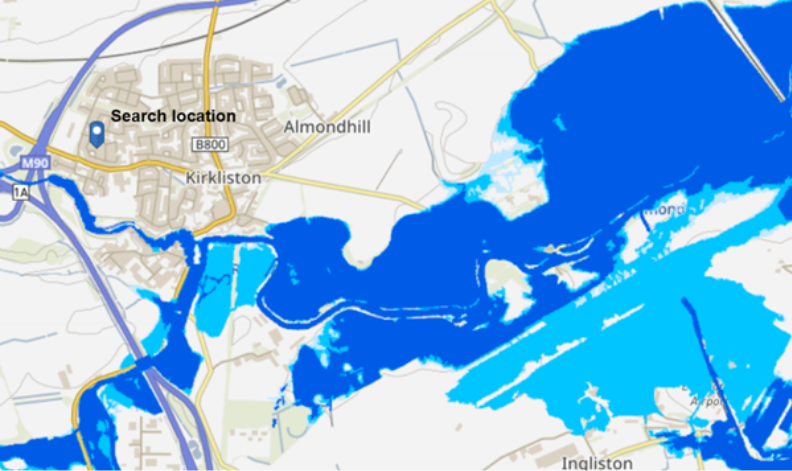
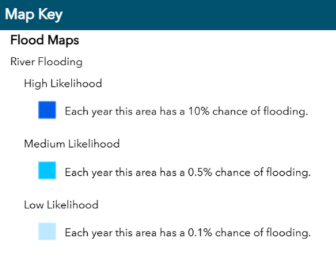
The River Almond runs through the village and is recurrently bursting its banks, particularly during periods of heavy rainfall. Flowing from the Southwest to the East, the river’s path is illustrated in Figure 1. Figure 2, produced by the Scottish Environment Protection Agency, shows the annual flooding likelihood of the area with dark blue indicating a substantial risk (10% chance), medium blue a moderate risk (0.5%), and light blue a low risk (0.1%). The map reveals that a sizeable portion of Kirkliston’s east faces a high probability of flooding, while the south, includes both high- and medium-risk zones. Most flood-prone areas are located near the River Almond, highlighting the biggest risk of vulnerability in the community. 

The events surrounding the River Almond bursting its banks can be attributed to a combination of factors. Firstly, the exponential increase in housing developments which has brought profound change to the village. Over the past decade Kirkliston has seen rapid urban development and housing growth, transforming it from a small village to into a bustling suburban community. Stimulated by its dormitory nature, new housing developments have emerged due to its desirable location close to Edinburgh, Edinburgh airport and other transportation links. This has intensified in recent years to meet demand of commuters who have been attracted to Kirkliston. Referring to data by the National Records of Scotland the estimated population of Kirkliston mid 2006 was 3,310 (National Records of Scotland, 2008) which rose to an estimate of 5,280 in 2020 (National Records of Scotland, 2022). While this data does not provide a direct measure of housing increases, the observed rise in population strongly indicates that the number of houses will have correspondingly increased to accommodate this growth. 

As the residential areas of Kirkliston have increased, the amount of impermeable surfaces in the village has also risen significantly. The conversion of natural land into roads, driveways, and building foundations has resulted in a substantial expansion of these impermeable surfaces. This transformation greatly reduces the land’s ability to absorb rainfall, disrupting the natural water cycle. Consequently, more rainwater runs off the surfaces instead of being absorbed into the ground, leading to greater surface runoff. This increased runoff contributes to a higher volume of water flowing into the River Almond and suggests why it has recurrently been bursting its banks in recent years, ultimately intensifying the level of flooding in the village. 

The rate of housing development has outpaced the capacity of existing drainage infrastructure, which struggles to manage the increased volume of surface water. This limits the ground’s ability to infiltrate rainwater, placing a significant burden on drainage systems and worsening flooding challenges. Following severe flooding in December 2022, a local councillor noted “there was water almost as far as the eye could see” (Turvill, 2023: paragraph 3), while another, Kevin Lang stated that Kirkliston’s drainage systems were never built to handle such water volumes and the recurring events cannot continue to happen. The National Records of Scotland (2022) found that by mid 2020, 91% of Scotland’s populations resided in settlements occupying just 2.3% of the country’s land area (National Records of Scotland, 2022). Although this data reflects the country as a whole, when applied to Kirkliston, this data highlights the pressure on infrastructure like drainage systems due to high housing density in a small area, exacerbating flooding issues. 

While Kirkliston’s proximity to Edinburgh Airport attracts residents, it also worsens the village’s flooding issues. Figure 1 shows how the Almond separates Kirkliston from the runway at Edinburgh airport which runs parallel, in close vicinity to the river. In the winter of 2017/18, pollution from de-icer at the airport was found to be seeping into Gogar Burn, which flows under the runway and into the River Almond (Brown, 2019). If the de-icer is entering the Almond via the Gogar Burn, surface runoff from the runway tarmac will likely contribute similarly. Figure 2 indicates that the runway area experiences a medium likelihood of flooding highlighting that the area does experience surface runoff. As the River Almond struggles to manage increased water volumes, runoff via Gogar Burn is likely to be worsening flooding in Kirkliston. 

Additionally, the Forth Rivers trust found that the de-icer chemicals have been having adverse effects on the biodiversity of the River Almond and have resulted in an accumulation of fungus along a 2.5-mile stretch of the river (Brown, 2019). If these harmful chemicals enter surrounding fields during floods, they could contaminate soil and water supplies, jeopardising crop health and posing risks to local agriculture and food safety. 

Past flooding events have significantly impacted the village, with the most severe incident occurring in December 2022. On December 30th, 2022, SEPA reported that the River Almond reached its second highest level on record and consequently burst its banks (Lawrence, 2023). Devastating damage was caused to homes as a result, leaving some residents trapped in their homes (Turvill, 2023). Not only is the damage caused already significant in itself, this has resulted in higher insurance costs, repair expenses and leaves many people displaced. Although 2022 is not the first time this has occurred. Records indicate that the high-risk flood areas in the southeast of the village have experienced property flooding on four separate occasions, along with two close calls, between 2000 and 2020 (Lawrence, 2023). Several cars were also written off by the 2022 event with a resident stating that within of 15 minutes of the flood beginning both his cars were written off, while water simultaneously flooded the entire ground floor of his home (Stafford, 2023: paragraph 9). Three out of four of the primary routes in and out of the village also became blocked with water (Lawrence, 2023), with children having to be rescued from cars (Stafford, 2023). Furthermore these conditions are not only dangerous but could also hinder emergency services from reaching those who need assistance. 

One village nursery is particularly vulnerable to flooding. On the 30th of December 2022 despite the owner managing to close the flood gates, water surged into the nursery, forcing her to “wade” through floodwater to ensure the children’s safety (Turvill, 2023: paragraph 1). Flooding essential services like the nursery forces families to seek alternative childcare, impacting their ability to work. Furthermore, while significant material damage occurs, it’s crucial to acknowledge the emotional toll on the entire community, leading to low morale and a pervasive sense of helplessness. 

Existing and Previous Efforts

Feelings of helplessness in Kirkliston are compounded by past and ongoing efforts to tackle flooding. The City of Edinburgh Councils Transport and Environment Committee responded in 2023 to Councillor Langs motion on flooding in Kirkliston and the wider Almond catchment (Lawrence, 2023). The report outlines immediate, short and long-term solutions; however it is evident in reading it that there is a desperate need for more to be done. The report acknowledges that existing drainage systems are not built to handle large water volumes in a short timeframe, often becoming overwhelmed beyond their intended capacity.  

Although the report confirms that water typically drains after the rain subsides and indicates that the drains are functioning properly, the report fails to recognise that while the drains may adequately clear water eventually, this does not address the fundamental inadequacy of the drainage systems themselves. It overlooks the necessity for more comprehensive measures, despite actually acknowledging the issue of overwhelm. 

The report also details how the council dredged a shingle island in the Almond slightly downstream of Kirkliston, after flooding in 2000, which has since undergone natural reformation (Lawrence, 2023). Subsequent research has shown that dredging has negligible effect on peak flow rates, and any proposed dredging of the River Almond would fail to adhere to current requirements for the village. Yet almost immediately after this statement, the report states in the immediate actions section that action 4.9.2 involved “vegetation removal from the silt/pebble island” (Lawrence, 2023: page 4) in the same location. This contradiction raises questions about the rationale behind removing vegetation if the shingle island itself is deemed to have no significant impact on flow rates and removing it would not meet current needs of flood management. 

The local nursery, which previously mentioned is among the worst affected by flooding, is referenced in the report which notes that a planning application was proposed in 2006 to convert the property from residential use to a nursery. Although the report states that flood risk was not a primary consideration at the time, the area had a documented history of flooding(Lawrence, 2023: page 3). In 2011, an application to extend the nursery building received a mixed decision; while it was deemed to pose “an unacceptable threat to occupants due to the flood risk from the River Almond” the application was ultimately granted, contingent upon adherence to further actions recommended by the Council’s Flood Prevention Officer. This included concrete flooring, elevated electrical sockets, water resistant coatings and other precautions (Lawrence, 2023: page 3). This raises significant concerns about the decision to approve the extension, given the known risks to the safety of young children in a flood-prone area, something that could have been prevented. 

Moreover, the report’s immediate actions section states that action 4.9.3 involved “minor strengthening to the flood gates” of the nursery which would help protect against “bow waves from traffic,” however states the gates would not offer any defence of the River Almond (Lawrence, 2023: page 4). This is despite one of the determinants of the approval plainly being “unacceptable threat to occupants due to the flood risk from the river almond” (Lawrence, 2023: page 3). Overall, the approval of the nursery’s extension and the subsequent measures taken to address flooding reveals a troubling inconsistency, as the actions proposed do not adequately mitigate the significant flood risk posed by the River Almond, thereby endangering the safety of vulnerable occupants. This also offers understanding behind why floodwater still entered the nursery despite flood gates being closed as discussed in the challenges section. 

Recommendations

The objective of this brief is to offer a set of community-driven initiatives that residents of Kirkliston can undertake to address the pressing urban sustainability challenge of flooding. This focus is particularly pertinent in light of the deficiencies identified in the report by the Transport and Environment Committee. The report in fact notably emphasises the need for “acceptance” of future flooding events in the area, suggesting that property owners should proactively implement self-protective measures to mitigate potential damage (Lawrence, 2023: page 3). 

Referring back to Williams (2010), who advocates for moving beyond a simplistic top-down versus bottom-up dichotomy (Williams, 2010), this aligns with Whiteheads (2013) claim that urbanisation is not a “inevitable and politically neutral process” but rather “an expression of intersecting regimes of social power” (Whitehead, 2013: page 1348). This highlights the need for innovative response frameworks. Relying solely on technical solutions is inadequate; embracing community-driven initiatives are not just supplementary but central to effective change. With this in mind, here are the recommendations for the Kirkliston community.

Recommendation 1 – Community Raingardens

The first recommendation is the implementation of community rain gardens, which are “low impact development practices” designed to collect and absorb stormwater runoff from roofs, driveways, and pavements (Bak and Barjenbruch, 2022).  

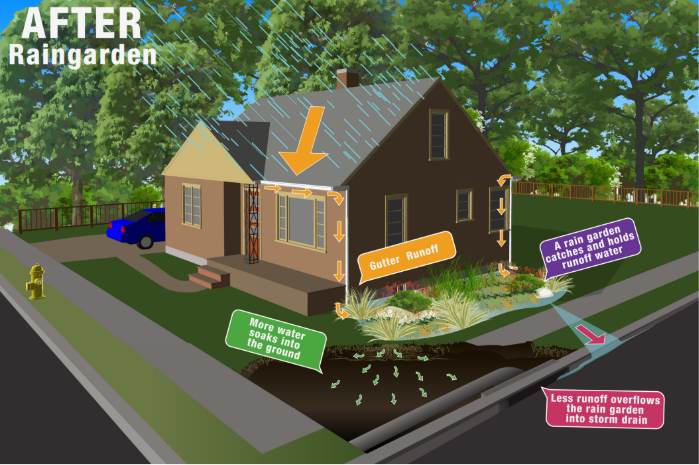
Introduced in Maryland in 1990, this strategy has been adopted by various countries, including Japan, USA and Australia, to address flooding while maintaining the natural hydrological cycle (Osheen and Singh 2018). Raingardens help delay flood peaks by filtering water through layers of plants, drainage, and soil. They are characterised by a shallow area with native plants, such as Meadowsweet and Tall Fescue in Scotland, which thrive in wet conditions and effectively absorb water (Royal Botanic Garden, 2019). Figure 3 below illustrates how a raingarden would look and work in practise. In 2019, the Royal Botanic Garden in Edinburgh introduced an experimental raingarden, in a historically waterlogged area, finding it successfully mitigated flooding by effectively absorbing excess rainfall. The garden also featured plants that promote biodiversity, providing nectar sources and habitats for invertebrates, which highlights both the ecological benefits and the aesthetic appeal of rain gardens (Royal Botanic Garden, 2019).  

On a larger scale this nature-based solution has been employed in Serbia, specifically in the suburban community of Kać. The study evaluated the performance and effectiveness of two distinct rain gardens within the area. The fundamental functions the raingardens were observed which included reducing flow during storm periods, managing standing water, monitoring infiltration speeds, assessing vegetation condition. The assessment findings indicated that both raingardens successfully absorbed runoff during rainfall, showing no standing water after 24 hours (Greska, et al,2023).  

In terms of a recommendation for Kirkliston, both studies emphasise that rain gardens can be implemented at various scales, making this a versatile and practical solution. Residents could create their own rain gardens on private properties, or local schools or community groups might consider undertaking this as a collaborative project in public areas like parks. Kirkliston already has a community garden where people can learn gardening basics, so with further guidance raingardens could be incorporated into existing community activities. While raingardens require regular maintenance, they can boost community morale and support mental well-being by encouraging outdoor activity and socialisation. Additionally, raingardens can be retrofitted in small, underutilised spaces, making them accessible and relatively low-cost (City of Edinburgh Council, 2016) . The City of Edinburgh Council developed a Sustainable Rainwater Management Guidance,  which would be a useful tool for implementing rain gardens in Kirkliston. The guide includes detailed instructions on construction methods, design considerations, and maintenance requirements, providing a step-by-step approach for this initiative. 

Recommendation 2 – Community flood preparedness group

The second recommendation is the creation of a community flood preparedness group. This initiative would involve residents coming together to raise awareness, share resources, and provide support during flood events, enhancing local resilience. The group could coordinate activities, such as flood preparedness workshops aimed at educating homeowners on flood-proofing measures like, installing floodgates, placing barrels in their garden to collect water or creating raingardens. Additionally, the group could develop emergency response plans specifically for vulnerable residents, ensuring that those most at risk have tailored support during flooding events. Establishment of a flood preparedness group would raise community cohesion, improve individual and collective readiness, and ultimately create a safer, more informed Kirkliston. By actively involving residents in these efforts, the community can build a culture of preparedness that not only mitigates flood impacts but also strengthens social ties.

Recommendation 3- Promotion of permeable paving

Following on from this, the third recommendation is promotion of permeable paving for driveways in new housing developments and promoting it for when upgrades of existing properties are required. Permeable paving systems allow water to infiltrate through the surface, reducing surface water runoff. This approach not only alleviates pressure on drainage systems during heavy rainfall but also minimises the likelihood of localised flooding.  

By advocating for the integration of permeable materials in driveways and other hard surfaces, the community can significantly improve flood management. Integrating this initiative into the responsibilities of the local flood preparedness group could enhance community involvement and awareness. The group could organise informational campaigns, workshops, and partnerships with local builders to promote permeable paving solutions. By doing so, they can not only educate residents on the benefits but also drive community support for permeable paving. 

A study conducted in an urban community in Beijing developed a simulation model to assess the impact of “green infrastructure” at a community level. One of 5 scenarios examined included converting traditional brick pavements to porous alternatives. The findings revealed that impervious surfaces were the primary contributor to runoff and so transitioning to pervious surfaces proved to be the most effective solution (Liu, et al, 2014: page 6). 

The findings from the Beijing study highlight that, like the study’s urban community, Kirkliston could benefit from implementing permeable surfaces to reduce stormwater runoff, mitigate flooding risks, and enhance overall water management, making it a crucial step toward greater resilience and greener infrastructure. 

These initiatives would primarily be implemented by leveraging existing groups, such as the community garden group, to disseminate information, organise workshops, and engage residents in the recommendations. The local social media pages could also be leveraged to increase engagement.  

To measure the effectiveness of these recommendations residents could track frequency, severity and damage costs associated with flooding before and after installation. Community members could also be surveyed on their awareness and opinions on the recommendations understanding and positive attitudes often accompany well publicised green infrastructure projects.

Conclusion

In conclusion, the flooding challenges in Kirkliston necessitate immediate, community-led initiatives that align with sustainable urban development goals. As the community grapples with rapid housing expansion, there is a critical mismatch between growth and the investment needed for flood resilience. Traditional top-down approaches can be slow and inadequate, making it essential to empower residents through initiatives like community rain gardens. These low-impact developments not only address stormwater runoff but also enhance biodiversity and community engagement. This inclusive approach emphasises the collective efforts of residents in fostering resilience. 

By integrating such initiatives into existing community frameworks, Kirkliston can create a more just and sustainable environment. Ultimately, these recommendations highlight the urgency for immediate action—floods don’t wait for long-term government planning. By taking ownership of the environment, residents can contribute to a sustainable future that balances urban growth with effective flood management. This holistic approach will be essential in maintaining a thriving community, well-prepared for the challenges posed by change.

References

Bak J. and Barjenbruch M., (2022) ‘Benefits, Inconveniences, and Facilities of the Application of Rain Gardens in Urban Spaces from the Perspective of Climate Change—A Review’. Water, vol 14: pp 1-19. 

Brown A., (2019) ‘River Almond polluted by de-icer from Edinburgh Airport’. Available: https://www.bbc.co.uk/news/uk-scotland-edinburgh-east-fife-50674371 (Accessed: 2024, October 10th). 

Cunningham R., (2019) ‘Second Scottish Climate Change Adaptation Programme 2019-2024’. Climate Ready Scotland, pp 1-229. 

Edinburgh City Council, (2016) ‘Sustainable rainwater management guidance: factsheet W3 – Rain gardens’. Available: https://www.edinburgh.gov.uk/downloads/file/30100/sustainable-rainwater-management-guidance-factsheet-w3-rain-gardens (Accessed: 2024, October 10th). 

Greska A., Blagojević B, and Grabić J., (2023) ‘Nature-based Solutions in Serbia: Implementation of Rain Gardens in the Suburban Community Kać’. Environmental Processes, vol 10: pp 1-30. 

Harvey D., (2006) ‘The Right to the City’. International Journal of Urban and Regional Research, vol 27.4: pp 939-941. 

Huang L., Wu J. and Yan L., (2015) ‘Defining and measuring urban sustainability: a review of indicators’. Landscape Ecology, vol 30: pp 1175-1193. 

Kirky News., (2014) ‘Kirkliston – A Guide’. Kirky News, pp 1-51. 

Lawrence P., (2023) ‘Response to motion by Councillor Lang – Flooding in Kirkliston and the wider Almond catchment’. Transport and Environment Committee: pp 1-7. 

Liu W., Chen W. and Peng C., (2014) ‘Assessing the effectiveness of green infrastructures on urban flooding reduction: A community scale study’. Ecological Modelling, vol 291: pp 6-14. 

National Records of Scotland, (2022) ‘Mid-2020 Population Estimates for Settlements and Localities in Scotland’. Available: https://www.nrscotland.gov.uk/statistics-and-data/statistics/statistics-by-theme/population/population-estimates/settlements-and-localities/mid-2020#:~:text=The%20population%20living%20in%20settlements%20and%20localities%20was,accounted%20for%202.3%25%20of%20Scotland%E2%80%99s%20total%20land%20area (Accessed: 2024, October 10th). 

National Records of Scotland, (2008) ‘Mid-2006 Population Estimates for Settlements in Scotland’. Available: https://webarchive.nrscotland.gov.uk/20210313212831/https://www.nrscotland.gov.uk/statistics-and-data/statistics/statistics-by-theme/population/population-estimates/special-area-population-estimates/settlements-and-localities/mid-2006 (Accessed: 2024, October 2024). 

Osheen., and Singh k., (2018) ‘Rain Garden—A Solution to Urban Flooding: A Review’. Sustainable Engineering, Lecture Notes in Civil Engineering, vol 30: pp 1 -383. 

Parnell S., (2023) ‘A sustainable future for the world’s cities’. Nature, vol 620: pp 697. 

Stafford I., (2023) ‘Villagers issue plea for help after flooding ‘devastation’’. Available at: https://news.stv.tv/east-central/villagers-in-kirkliston-edinburgh-make-plea-to-council-for-help-after-river-almond-flooding. (Accessed: 2024, October 1). 

Royal Botanic Garden Edinburgh, (2019) ‘Rain Garden success after recent downpours’. Available: https://www.rbge.org.uk/news/media-centre/press-releases/current/raingarden/ (Accessed: 2024, October 10th). 

Turvill D., (2023). ‘Nursery owner waded through water to get children to safety amid floods.’ Available: https://news.stv.tv/east-central/edinburgh-nursery-owner-waded-through-water-to-get-children-to-safety-amid-floods-in-kirkliston (Accessed: 2024, October 10th).  

Whitehead M., (2013) ‘Neoliberal Urban Environmentalism and  the Adaptive City: Towards a Critical Urban Theory and Climate Change’. Urban Studies, vol 50: pp 1348-1367. 

Whyte D., (1991) ‘Kirkliston a Parish History’. Available at https://queensferry-at-war.weebly.com/surrounding-areas/a-brief-history-of-kirkliston-parish (Accessed: 2024, October 1).

Categories
Building Sustainable, Inclusive and Just Cities (Hons module)

Fostering Environmental Sustainability and Social Equity in Bethnal Green, London: Implementing Community-Driven Urban Cyclability Initiatives

Introduction  

Home to over half of the global population with an expected increase of up to 60% by 2030 (Buchholz, 2020), cities play a central role in the prevention and mitigation of the increasingly visible repercussions of climate change and in reducing its lasting consequences (Buckley, Gariepy & Patey, 2021) in attempts to meet the 2030 Agenda (United Nations, 2015). Harmonious with the interconnected nature of urban issues, by tackling one area of concern a chain reaction of improvements in other fields of interest will be seen. For instance, in trying to achieve SDG11: “make cities and human settlements inclusive, safe, resilient and sustainable” (United Nations, 2015), economic growth (SDG8) and overall equality (SDG10) among others are also targeted.  

Traffic issues and pollution have long had a disproportionate impact on deprived areas facing the lasting consequences of increased traffic, and Bethnal Green is no exception. Transport accounts for almost one-quarter of total global carbon emissions (IEA, 2009; EEA, 2020) suggesting an urgent need to address transport issues to mitigate environmental concerns. If dependence on energy-intensive modes of transport is not significantly reduced the achievement of sustainability agendas is not possible (Buccharione et al., 2023). As one of the growing number of countries pledging to achieve net-zero carbon emissions by 2050, the UK has made substantial progress in reducing emissions in some sectors, however emissions in the transport sector continue to rise at an unprecedented rate (EEA, 2020). According to research at the University of Oxford (2021), these emissions targets are “unlikely to be met without a significant move away from motorised transport”. Instead, researchers suggest a transformative shift to active transport with potential savings of 25% of personal CO2 emissions from transport (Brand et al., 2021).  

Through implementing a collaborative approach, this briefing aims to inform and engage the community of Bethnal Green in adopting sustainable practices that enhance residents’ quality of life, protect local ecosystems, and foster a resilient community in the face of climate change.  

Positionality  

As a white individual operating in the predominantly white discipline of Geography and Sustainable Development inherent privileges naturally shape my approach to engaging with a diverse community, such as Bethnal Green. This influences my beliefs of the studied community, the potential biases I may hold, and the dynamics of my interactions at the community-level. An awareness that my experiences may not fully capture the complex realities of marginalised groups drives my approach in working with humility and my commitment to learning from community experiences. The natural power imbalance in engaging with the community as an academic may complicate relationships with community members, where I may be perceived as an authoritative figure, potentially leading to mistrust or hesitancy. However, I strive to understand Bethnal Green’s unique needs, values, and visions for local sustainability, recognising community members as the true experts of their lived experiences. Ensuring that the sustainable practices suggested are reflective of the community’s aspirations rather than imposed preconceived notions is essential. By fostering collaborative relationships, I aim not only to co-create strategies that address environmental concerns associated with the overuse of combustion vehicles, but to develop long-term initiatives that are culturally relevant, and consider the everyday issues of social equity and justice disproportionately affecting Bethnal Green.  

Historical & Geographical Background  

Located in the London Borough of Tower Hamlets, Bethnal Green is one of the oldest and liveliest neighbourhoods in the East End, boasting a rich history that stretches from medieval times to present day. Many transformations have shaped Bethnal Green from the most impoverished and overcrowded London parish in 1871 (Baker, 1988) into the contemporary and diverse space existing today. Prominently, the 1800s saw revitalisation as Bethnal Green became connected to the wider city with the expansion of the railway, providing links to opportunities in surrounding areas (Oakley, 2023). Simultaneously, the once slum-like conditions prevalent following the collapse of the silk-weaving industry in the nineteenth century (Porter, 1966) made way for newer, cleaner, housing with the establishment of the world’s first council housing development known as the ‘Boundary Estate’ (Baker, 1998). Following this, the 1900s saw an influx of migrants to Bethnal Green seeking better living conditions and employment opportunities in the capital. Migrants came from across the globe making Bethnal Green a vibrant and fascinating place to live. Respectively a part of the new Bethnal Green consisted of Jewish individuals from Eastern Europe who immigrated in the late nineteenth century. Additionally, South Asian individuals arrived in the mid-twentieth century, followed by individuals from African and Eastern European countries shortly after (Oakley, 2023). This newly founded multi-ethnic neighbourhood (Shirazi et al., 2020) was accompanied with many sophisticated and interrelated challenges associated with the complexities of a socially and culturally diverse community in an urban region, most of which are still prevalent today.  

Understanding Urban Cyclability   

Urban sustainability is the practice of constructing and supporting cities in a manner that meets the needs of current residents while ensuring the ability of future residents to meet their needs is not compromised (WCED,1987; Castán Broto & Westman, 2019). Urban sustainability primarily focuses on three distinct pillars: environmental health, economic viability, and social equity. The Brundtland Report (WCED, 1987) was the first publication to explain sustainability using these three pillars, conceptualising the interrelations of the pillars to provide policy solutions that accounted for all three areas. The 1987 report asserts that the environmental pillar works to minimise pollution from transport and industry, conserve natural resources and preserve the natural environment for future generations; the economic pillar addresses inequalities in access to jobs and opportunities and promotes economic diversity and resilience; and the social pillar aims to foster an inclusive and healthy community while preserving cultural heritage.  

From English sociologist John Urry’s (2004) depiction of a ‘system of automobility’ from the existence of a world dominated by cars, the foundation of a ‘system of cyclability’ in the bike dominated city of Copenhagen, Denmark was later recognised as a more sustainable practice in terms of carbon emissions (Itani & Herrera, 2021). Itani & Herrera (2021) conclude that while motorised vehicles connote “market-oriented values” such as socioeconomic status and libertarianism, non-motorised vehicles relate to values of sustainability, including social and environmental justice. The authors (2021) expand their narrative with reference to the three pillars of sustainability explaining that “cycling provides a holistic sustainability” from its efforts in reducing air and noise pollution, its contributions to improving public health and its role in equalising mobility for poverty-stricken individuals.  

The Case for Urban Cyclability in Bethnal Green  

Transport and traffic are pervasive problems in many urban areas, and Bethnal Green is no exception. For Bethnal Green, traffic problems arose with the arrival of a large migrant population in search of better opportunities in the booming capital to support their families. As the area’s population increased, so too did private car ownership heavily influencing traffic congestion and greenhouse gas emissions, contributing to many environmental crises.  

Cycling is the most under-utilised mode of transport in Bethnal Green (Shirazi et al., 2020). This may coincide with the fact that prior to the establishment of government sustainability initiatives such as the Liveable Streets Scheme (2019), little cycling infrastructure existed in the area. Alternatively, most residents opt to use private cars and public transportation for both short- and long-distance travel (Chibou, n.d.). The use of public transport and private motor vehicles is seen as the safest mode of travel with few using carbon-neutral methods such as walking and cycling (Shirazi et al., 2020). Bethnal Green’s roads were traditionally made for continuous flows of high-speed traffic, creating conflict between cyclists and other road users. Residents general lack of knowledge and confidence in riding safely further deters potential cyclists from switching from combustive vehicles to bicycles. This hesitancy to adopt sustainable practices has detrimental impacts on both environment and society and carbon reduction agendas. For instance, poor air quality produced through the excessive use of combustion vehicles emitting high volumes of carbon dioxide and other harmful agents (a major contributing factor in global warming) has a disproportionate impact on the health of vulnerable groups such as children, the elderly and minority ethnic groups, a particular concern in the diverse Bethnal Green community. With the promotion and implementation of active transport measures, incidences of pollution-related illnesses can be lowered as enhanced air quality contributes to better health outcomes.  

Cycling is one of the easiest lifestyle changes an individual can make in favour of a more sustainable future, offering added benefits for health and finance. Amid the global cost of living crisis, promoting active transport is an effective solution to better manage traffic and protect areas of ecological concern given the financial incentive of alternative options which are less expensive at point of use. Urban cyclability projects aid the mitigation of global environmental concerns, including climate change, and invoke a sense of shared responsibility and belonging, a much-needed addition to the segregated community.  

Existing Cycling Infrastructure in Bethnal Green  

The 3-year borough-wide Liveable Streets Scheme with an estimated cost of £15million was initiated by Tower Hamlets Council in October 2019 with the overall aim of remodelling the ways in which London’s streets are used. The proposed plans designed to remove non-residential traffic from passing through Bethnal Green regenerated the area’s residential streets. Prominent changes were seen on Old Bethnal Green Road, where roads used as a thoroughfare connecting Cambridge Heath Road and Gosset Street was permanently closed to eastbound traffic at the base of Clarkson Street (Kehoe, 2023). Congested roads made way for dedicated cycle lanes, paved streets and bollards preventing vehicular access. While the western end of Old Bethnal Green Road saw the creation of a one-way system, diverting non-local traffic away from residential areas. The now outmoded road space was turned into a bicycle lane connecting Old Bethnal Green Road with Clarkson Street and Mansford Street, complete with a more cycle-friendly surface and greenery (Kehoe, 2023). Furthermore, other key streets in the Bethnal Green community saw transformation in the form of widened sidewalks and more bicycle parking spaces, creating a safer and more pleasant place to live and work.  

With only 80% of planned elements implemented at present, the scheme has succeeded in its goal to ‘reduce people making short-cuts through residential streets to eliminate “rat runs” and encourage more sustainable journeys to improve air quality and road safety’. However, reducing traffic on boundary roads has displaced traffic onto surrounding roads creating consequent congestion and traffic delays, allowing critics to question the feasibility and effectiveness of the measure in lowering emissions from cars, contributing to improved air quality (Kehoe, 2023). Residents and local business owners in particular doubt the programme’s expectations and proposed long-term outcomes for the community. From concerns raised by various stakeholders at a Tower Hamlets council meeting, local authorities have grounds for considering alternative options that both meet the scheme’s goals and local needs. For instance, emergency services personnel urgently call for all road closures to be reversed due to the impact of traffic congestion on roads outside the boundary has on waiting times and health outcomes.  

Community engagement where local needs are recognised is crucial for creating an effective cyclability framework. Therefore, amendments must be made to the existing infrastructure with all concerned parties acknowledged and issues resolved within a modified framework for tackling traffic and air pollution challenges to continue to promote more sustainable modes of travel.  

The recommendations outlined in the next section aim to provide the Bethnal Green community with effective solutions for improving and promoting the appeal of cycling in the local area, with the overall aim of reducing reliance on private motor vehicles, so mitigating climate change through improving local air quality.  

Recommendations for Improving Urban Cyclability in Bethnal Green, London  

1. Community Engagement & Education:  

(i) Cycling Proficiency Classes  

Cycling proficiency in line with the UK government’s national cycling programme, Bikeability, refers to education for cyclists, providing the practical skills necessary for cycling safely on Britain’s roads (Active Travel England, n.d.). To improve the attraction of cycling in Bethnal Green, potential cyclists should be educated on how to safely travel by bicycle on roads in and around the local area, with a focus on the young people attending local schools and youth groups who arguably have the most drive for sustainable change. Along with general cycling safety, proficiency classes also teach the importance of route planning, educating cyclists on suitable routes in the local area, further enhancing safety and confidence.  

With a deeper understanding of safe cycling practice, residents will become empowered to cycle with the knowledge and skills to do so confidently. As a result of increased uptake of cycling, fewer journeys will be made using privately-owned vehicles, lowering greenhouse gas emissions, aiding the achievement of Net Zero carbon targets for a more sustainable future while also promoting active lifestyles.  

(ii) Bike Maintenance/Repair Workshops  

Due to a lack of cycling in Bethnal Green, it is expected that residents will have little to no experience in basic bike maintenance and care suggesting that when an individual’s bicycle is damaged or in a state of disrepair, their bicycle automatically becomes out of use. In collaboration with experienced bicycle mechanics and local bicycle businesses, regular workshops will offer residents the opportunity to become educated in basic bike maintenance and repairs allowing local bike users to become self-sufficient in caring for their bicycle. These workshops are key to ensuring cycling is a longstanding travel choice with neutral environmental impact, by preventing the potential for minor damage and mechanical issues becoming a barrier to continued bicycle use and participation in sustainable action.  

(iii) Bike Recycling Programme  

Bike recycling is a group action aimed at providing residents with the equipment needed for safe cycling in the local area. The programme’s aims are to take in bicycles donated by members of the local community and refurbish them into a safe condition, before distributing them to individuals and families who otherwise would not have the opportunity to own or use a bike. Creating meaningful partnerships with schools and youth community groups helps find recipients for the refurbished bikes, ensuring they go to those in need. Alternatively, the programme can request a small donation for refurbished items with all profits going towards funding future cycling promotion projects and events in the local community. Collection drives are an effective way of promoting local sustainability by encouraging residents to repurpose any unwanted/unused equipment rather than discarding it, allowing someone else the opportunity to give it a new lease of life. Creating dedicated collection points in accessible places such as schools and local businesses offers further opportunities for donations to be made  

A bike recycling scheme would be a helpful implementation in Bethnal Green as schemes of this nature help to foster community engagement and aid the reduction of landfill waste, a further prominent issue in the area (Tower Hamlets Council, 2017). Where a bike is beyond repair, the metals and other materials should be recycled appropriately to further minimise waste.  

(iv) Community Cycle Rides  

The very essence of community cycle rides lies in their inclusion. Locals of all ages and abilities come together to enjoy the outdoors and a shared passion for cycling. Typically, a community cycle ride has an accessible designated meeting point, usually a local park or school, where participants gather, exchange formalities, and receive safety briefings before beginning the planned route. Rides guide participants through the history of the local area, travelling through Bethnal Green’s popular green spaces such as Victoria Park and along the scenic paths overlooking the River Thames. These carefully considered routes allow for a greater appreciation of nature and natural beauty among the concrete and congestion of the urban landscape. By making clear ecological connections between people and place, cyclists can collectively adopt a deeper understanding of their role in protecting and preserving the Bethnal Green environment. Cyclists are reminded of the contribution of sustainable practices that reduce carbon emissions and improving local air quality.  

For community cycle rides to be successful in raising awareness of the many benefits of cycling to person and place, they must be free of charge for all to ensure no added barriers prevent engagement. Where charges apply, the potential for community rides to encourage residents from all backgrounds to co-create cycling culture is undermined.  

A success story of a programme encompassing all aspects of the community engagement and education recommendation is the Kent-based ‘ReCYCLE’ programme. ReCYCLE  is an award-winning recycling and education programme working with local schools to educate young people on refurbishing donated bicycles in a safe and supportive environment. Unwanted/unused bicycles are donated by members of the public to the organisation for refurbishment before being sold on to other locals at an affordable price, ensuring everyone can cycle safely even on the smallest of budgets. The volunteer-led project also hosts free sessions in vulnerable communities to encourage and support locals in their cycling endeavours. Sessions offer a space to have small repairs fixed and provides learning opportunities on basic bike care and maintenance. Learn-to-Fix workshops, aimed at adult and teenage beginner cyclists, educate the basics of cycle mechanics using non-technical terms. Meanwhile social rides provide a relaxed environment for meeting like-minded people and find various safe cycling routes in their local area.  

Community cycling programmes foster a sense of community among participants who often share experiences and advice, enhancing the social aspect of cycling making it more attractive as a viable mode of travel. The success of ReCYCLE and other community-driven programmes should be the basis for the establishment of a sustainable cycling project in Bethnal Green where residents are offered a platform to participate in and promote cycling as an environmentally friendly way of travelling. By creating social spaces for collaboration and acknowledgement of the benefits of adopting sustainable practices, residents will be more likely to make the necessary switch from motor vehicles to carbon-neutral transportation methods needed for meeting the 2030 Agenda (United Nations, 2015).  

2. Promoting Active Transportation:     

Research into Bethnal Green travel habits (Shirazi et al., 2020) shows residents will need encouragement to begin the process of using more sustainable transportation, such as cycling. A local incentivised campaign aimed at further encouraging locals to adopt alternative travel methods is an effective way of reducing traffic congestion and harmful exhaust fumes. While simple promotion methods like poster advertising can be persuasive, techniques which actively engage communities are more likely to provide substantial results. By collaborating with local stakeholders, a community initiative can be created which encourages the adoption of sustainable active transportation options using incentives to further promote involvement (Parker, 2024). By constructing a culture of active transportation, Bethnal Green can prevent overreliance of motor vehicles leading to reductions in CO2 emissions, key to mitigating climate change. Furthermore, overall quality of life for residents will improve with the reduction of traffic congestion on residential streets and enhance air quality, accommodating better health and wellbeing outcomes.  

By way of example, the city of Long Island, New York holds annual car-free and car-lite days/weeks as part of the city’s longstanding active transportation initiative to reduce substantial amounts of CO2 emissions from motor vehicles and simultaneously increase long-term uptake of other means of travel. Car-free/lite periods involve Long Island residents, schools and businesses pledging to use sustainable transportation such as public transportation, walking or cycling for at least one journey usually taken by car. By pledging to be car-free or car-lite for one-week, Long Island residents saved an immense ninety-two tonnes of CO2 emissions (Let’s Move LI, 2024), allowing for significant improvements in local air quality and progressing the city’s commitment to climate change and overall sustainability.  

3. Local Adoption of the Bike2Work Scheme:  

The Bike2Work Scheme is a popular government-approved initiative designed to promote cycling as well-suited for commuting to workplaces and living healthier lives. The main aims of the scheme are to encourage active and healthy lifestyles through active transportation while reducing users’ carbon footprint and improving air quality through reduced traffic congestion. Typically, the scheme involves employee-employer partnerships, where all employees of participating organisations can embrace the manifold benefits of the scheme. However specific criteria may prevent individuals with limited working hours and zero-hour contracts from being fully eligible for the scheme. With over 400,000 employers, ranging from small local businesses to large international corporations, already signed up to the programme in the UK, many individuals can improve their health and wellbeing, while helping preserve the environment for future generations (Bike2Work Scheme, 2024).  

Once eligibility is verified employees can choose a bicycle and the equipment needed to safely commute to work by bike from a participating retailer. A spending cap applies ensuring that employees select a bicycle that is suitable for their needs within their financial limits. Central to the Bike2Work scheme, financial incentives are provided to employees in buying bicycles and associated equipment for commuting purposes. This is conducted through a “salary sacrifice” provision, whereby employees opt to have a part of their monthly income deducted to cover the cost of their bicycle and accessories over a specified period, usually around 12-18 months. This arrangement is a significant aspect of the programme’s appeal, having mutual benefits in making cycling and physical activity more affordable while also providing potential tax benefits, as monthly deductions are often taken before income tax is applied, so reducing employees’ overall taxable income. Furthermore, with government approval the Bike2Work Scheme offers employee savings of up to 48.25% (Bike2Work Scheme, 2024) of the cost of bicycles and equipment, further reducing demographic barriers to the uptake of sustainable active mobility. Additionally, promoting cycling and active travel aligns with the social responsibility targets of many organisations, showing an employer’s commitment to sustainability through reducing their carbon footprint.  

In summary, the Bike2Work Scheme is a key contribution to promoting urban cyclability within the workplace setting, offering health and financial incentives to all that choose to take part. Bethnal Green residents, many of whom are currently facing increasing financial constraints with rising global fuel and living costs, should be encouraged by these incentives to adopt the Bike2Work Scheme within their organisations and should urge non-participating employers to register for the scheme given the social and economic advantages provided to both the employees and employers involved, along with the scheme’s wider contribution to tackling environmental issues associated with excessive use of motor vehicles for commuting.  

4. Amendments to the Liveable Streets Scheme:  

Lefebvre and Harvey (1967) assert through their popularised conception of “the right to the city” that urban spaces are created and shaped through the experience of the residents that inhabit them. By advocating for inclusive, fair, and participatory urban development outcomes, residents empower their voice in influencing the decisions made by local authorities and policymakers that affects their accessibility to the urban environment.  

As discussed previously, the Liveable Streets Scheme has made significant strides in reducing air pollution and traffic congestion in the residential streets of Bethnal Green. But as is recognised by local critics, the scheme does not meet the social needs of all stakeholders who are suffering because of the drastic changes imposed. Bethnal Green community members should use their “right to the city,” advocating their wants and needs to collaborate with local authorities involved in the deployment of the Liveable Streets Scheme to make meaningful adaptations to the existing framework. This is to allow for a better experience for residents while also making improvements to local air quality and resident health and wellbeing. This is intended as a long-term goal where monitoring and evaluation of participation and interest in the community-driven activities presented should be used as a guide to inform and influence future government-led sustainability initiatives.  

Conclusion  

In summary, the implementation of urban cyclability measures in Bethnal Green marks a transformative step towards a more sustainable, and inclusive community. By enhancing cycling and other active transportation methods, not only can pressing local issues like congestion and pollution be resolved, healthier and more active lifestyles are promoted for all residents. By implementing the suggested improvements, Bethnal Green can be used as a model for urban cyclability and sustainability for the wider city.  

However, while this brief is aimed at providing members of the Bethnal Green community with achievable actions which can initiated without input from local authorities, it is widely understood that promoting urban sustainability in Bethnal Green is a shared responsibility that requires active participation from several stakeholders. Moving forward, it is crucial for engagement with stakeholders at various levels to gather insightful feedback to inform future sustainability actions. 


References

Active Travel England. (n.d.) An Introduction to Bikeability and The Bikability Trust, UK Government Department for Transport, Available at: An-Introduction-to-Bikeability.pdf (bikeabilitytrust.org), (Accessed: 26/10/2024)   

Baker, T.F.T. (1998) Bethnal Green: Building and Social Conditions 1876-1914, in A History of the County of Middlesex: Volume 11, Stepney, Bethnal Green, British History Online, Available at: A History of the County of Middlesex | British History Online (british-history.ac.uk), (Accessed: 09/10/2024)   

Brand, C., Götschi, T., Dons, E., Gerike, R., et al. (2021) The climate change mitigation of active travel: Evidence from a longitudinal panel study in seven European cities, Global Environmental Change: Oxford, 67(1), pp.1-15  

Buccharione, A., Bassanelli, S., Luca, M., Centellegher, S., et al. (2023) Play&Go Corporate: An End-to-End Solution for Facilitating Urban Cycling, IEEE Transactions on Intelligent Transportation Systems, 24(12), pp.15830-15843    

Buchholz, K. (2020) How has the world’s urban population changed from 1950 to today? World Economic Forum, 4 November, Available at: How has the world’s urban population changed? | World Economic Forum, (Accessed: 19/10/2024)  

Buckley, E., Gariepy, M., Ma, W., and Patey, A. (2021) Reimagining our Roadways: Promising Practices Framework for ‘Open Streets’ Programs in the City of Vancouver, School of Public Policy, Simon Fraser University, p.6    

Castán Broto, V. and Westman, L. (2019) Urban Sustainability and Justice: Just Sustainabilities and Environmental Planning, Zed Books: London   

Chibou, M. (n.d.) Appendix G Bethnal Green Equality Impact Assessment, Tower Hamlets Council, Available at: Appendix G Bethnal Green Equality Impact Analysis (towerhamlets.gov.uk), (Accessed: 22/10/2024)   

European Environment Agency. (2020) Air Pollution, in The European environment – state and outlook 2020, EEA: Copenhagen, pp.191-209  

International Energy Agency. (2009) Transport, Energy and CO2 Moving Towards Sustainability, IEA: Paris, pp.1-418  

Itani, A., and Herrera, V. (2021) What about a “system of cyclability”? 4Cities, 11 March, Available at: What about a “system of cyclability”? – 4CITIES, (Accessed: 17/10/2024)   

Kehoe, C. (2023) Bethnal Green’s LTN divide – are the most deprived shouldering the burden of traffic? Bethnal Green London, The Slice, 20 October, Available at: Low Traffic Neighbourhood’s burden of traffic — Bethnal Green LDN (bethnalgreenlondon.co.uk), (Accessed: 09/10/2024)   

Let’s Move LI. (2024) Long Island’s Active Transportation Initiative, Available at: Active Transportation – Let’s Move LI (letsmoveli.com), (Accessed: 28/10/2024)   

Oakley, M. (2023) Bethnal Green: A Guide to East London’s Historic and Cultural Hub, East London History, 18 June, Available at: Bethnal Green: A Guide to East London’s Historic and Cultural Hub (eastlondonhistory.co.uk), (Accessed: 09/10/2024)   

Parker, W. (2024) Promoting Active Transportation: Encouraging Cycling and Walking with Parking Initiatives, Medium, 23 April, Available at: Promoting Active Transportation: Encouraging Cycling and Walking with Parking Initiatives | by William Parker | Medium, (Accessed: 27/10/2024)   

ReCYCLE. (2021) ReCYCLE – Award-winning bicycle recycling and education programme in Ashford, Available at: ReCYCLE – Award winning bicycle recycling and education programme in Ashford (cyclecommunity.org), (Accessed: 21/10/2024)   

Shirazi, M.R., Keivani, R., Brownill, S., Butina Watson, G. (2020) Promoting Social Sustainability of Urban Neighbourhoods: The Case of Bethnal Green, London, International Journal of Urban and Regional Research, 46(5), pp.441-461     

Tower Hamlets Council. (2017) Town Centre Strategy 2017 to 2022, Available at: Town Centre Strategy – doc (towerhamlets.gov.uk), (Accessed: 22/10/2024)   

Tower Hamlets Council. (2023) Liveable Streets Bethnal Green Consultation outcome and measures, September 2023 Cabinet Meeting, Available at: LONDON BOROUGH OF TOWER HAMLETS, (Accessed: 10/10/2024)   

United Nations. (2015) Transforming our World: The 2030 Agenda for Sustainable Development, Available at: Microsoft Word – 1516301E.docx (un.org), (Accessed: 23/10/2024)   

Urry, J. (2004) The ‘System’ of Automobility, Theory, Culture & Society, 21(4-5), pp.25-39   

World Commission on Environment and Development. (1987) Our Common Future, United Nations and Oxford University Press, pp.1-300