Categories
Building Sustainable, Inclusive and Just Cities (Hons module)

Paradise for who? Houselessness in Native Hawai’ian populations -Kapolei, Hawai’i  

Introduction 

This briefing is directed at Native Hawai’ians who are houseless, or at risk of becoming, in Kapolei, O’ahu, as well as those who support this community. Kapolei is the second largest city on the Hawai’ian island of O’ahu and is part of Honolulu County. According to the 2020 census, over one million (1,016,580) people reside on O’ahu and minor surrounding islands (U.S. Census Bureau, 2021), with over 21 thousand people (21,411) of this population living in Kapolei (U.S. Census Bureau, 2022). Considered by many as a ‘paradise’ destination, the reality for many Native Hawai’ians is houselessness or the constant threat of. Because Hawai’i is undeniably the home of native populations, I will use the term houselessness rather than homelessness throughout this briefing except when I feel the latter is necessary to properly represent material I am referencing.  

An intensely present tourist industry and expat community throughout Hawai’i puts immense pressure on housing supply. Rents are constantly being driven up, and the stark mismatch between local wages for the majority and even the lowest rent costs leave local populations struggling to meet the cost of living – many being pushed into houselessness (Bond, 2020). This briefing will analyse the background context and current situation of the housing crisis in Kapolei before drawing on examples of initiatives elsewhere to suggest actions the community in Kapolei can take – focusing on long-term solutions that hold community wellbeing and resilience at their centre, as well as the preservation of Hawai’ian culture. I hope that through creating this briefing, I can offer an outside perspective to the housing crisis in Kapolei that is unbiased and help amplify the voices of the marginalised communities around which this report is centred.  

Context and Current Situation  

Land Rights 

The houselessness epidemic of native Hawai’ians is illustrative of the wider political and social landscape of the state. Western influence in Hawai’i began taking hold through the 18th century, one resulting consequence being the shift in perceptions of land rights that paved the way for the prioritisation of profit over people that we see across Hawai’i today. Hawai’ians traditionally consider human relationships with the land to be one of stewardship, implying a responsibility to care for and a sense of belonging with the land. In contrast, the western concept of ownership of land does not encourage a reciprocal relationship, instead land is regarded as nothing more than a commodity for human use. In 1848, Hawai’ian land was assigned rights, with the vast majority going to elites and only 1.1% (28 thousand acres) of the total land allocated to the commoners. Native Hawai’ians who had previously lived with and from the land – gathering, hunting, and fishing – were now heavily restricted in what was now regarded as private property. Thousands of Native Hawai’ians were priced off land they had been on for generations (Arias, 2022, pp. 74-76). 

Tourism  

Initial western influence paved the way for the illegal overthrowing of Hawai’i as a sovereign power and subsequently its seizure by the United States of America that resulted in the territory becoming a state in 1959 (Davis, 2022). Following statehood, annual tourist numbers increased by over 16 times to 8 million a year in 2015 (up from below 0.25 million) (Mak, 2015, p.2). Given that the population of Hawai’i in 2015 was 1.4 million (World Population Review, 2020), annual visitor numbers of nearly six times the resident population puts a huge strain on the space and resources of the nation. High demand of land for development has led to evictions across Hawai’i of the remaining people who were living off the land in traditional ways. In their place, rapid residential and commercial development has occurred. An end to many traditional ways of living has been forced, even activities as inoffensive as the gathering of traditional plants have been disallowed (Bates et al., 2018). As stated by Kalehua Krug, Principal of Ka Waihona o Ka Na’auao school whose curriculum incorporates the revival of Hawai’ian culture, ‘they [the US] could lock up the water, they could lock up the food, they could lock up the ability of Hawai’i to self-sustain’ (as quoted in Davis (2022)). This forceful displacement of native populations made space for non-natives, predominantly rich Americans, to relocate to ‘paradise’ – a flow of people that shows no signs of slowing down (Haunani-Kay, 2018). 

Housing for who? 

Being a highly desirable location with limited space for further developments but experiencing relentless demand for property, Kapolei has seen rapid increases in property prices and rent in the area over the past years. In 2023, a two-bedroom apartment in Kapolei costs 2400 dollars per month on average to rent, a substantial increase of a third on the average two bed rental price only six years ago in 2017 which was 600 dollars less per month (1800 dollars) (Real Estates Network, 2022). Hawai’i is the state with the most expensive property to buy and is also the third most expensive state for renting property (Arias, 2022, p.77). Some see the booming property market as a sign of prosperity for the state, but we must ask who does it serve? As Arias (2022) explains, ‘[A]lthough Hawai’i may have a strong housing market for luxury-seeking individuals or families, the market is not conductive to the needs of local communities’ (p.78). This high demand for property and the resulting astronomical costs are a large contributing factor to the high cost of living in Hawai’i. Hawai’i has the highest cost of living out of all the American states (Arias, 2022, p.77). A study from 2021 carried out by The Department of Business, Economic Development and Tourism showed that individuals must make ‘significantly more than the minimum wage to be self-sufficient’ (Arias, 2022, p.77), that is to exist without government assistance or other subsidies to afford life’s essentials, but no luxuries. A single adult would have to make 18.35 dollars per hour while working a forty-hour week to be self-sufficient (Arias, 2022, p.77). However, the minimum wage in Hawai’i in 2021 was only 10.10 dollars per hour (hawaii.gov, 2023). As a result, four out of five households consisting of a single parent with two children were below the self-sufficiency level. And in a family of four, even if two members are working on minimum wage, the family will only be at around half the income level required to be considered self-sufficient (Arias, 2022, pp.77-78). Households below the self-sufficiency level are under constant financial stress, unable to afford the bare-minimum and forced to make choices such as whether to pay rent or put food on the table (United for ALICE, 2023). This systemic issue of misalignment between income and rental costs because of property demand by rich expats and tourists mean that truly affordable housing for local populations is severely lacking in Kapolei and across the state of Hawai’i more broadly (Arias, 2022, pp.77-78). 

Houseless but not Homeless 

As stated previously, Hawai’i is obviously the rightful home of native Hawai’ians. However, as detailed throughout this report so far, these native populations are being forced out, largely due to issues of affordability. Consequently, Hawai’i has the highest rate of houselessness out of all the American states (Arias, 2022, p.78). With increasing pressure on current services, an area of particular concern is the rise in houseless population without any shelter. The unsheltered population in Kapolei (those that are staying on the streets rather than emergency shelters or transitional housing) increased by over six times in the ten years from 2012 to 2022 (Thielen, 2022). Being unsheltered increased exposure to violence and bad weather, as well as restricting access to food and safe water (Hodge, DiPietro and Horton-Newell, 2017). One study found Native Hawai’ians or other Pacific Islanders to be 2.65 times as likely to be houseless compared with the general population. In contrast, White individuals were 0.26 times less likely to be houseless, and Asian individuals 0.79 times less likely. In Kapolei, over 80% (81%) of houseless individuals were chronically houseless (houseless for at least one year), with the main self-reported cause of houselessness in the city being inability to pay rent (Thielen, 2022). 

Houselessness Impact on Health and Wellbeing 

As Hodge DiPietro and Horton-Newell (2017) state, ‘Poor health is simultaneously a cause and consequence of homelessness’. Factors that restrict a person participating fully in contemporary societies (such as physical or mental illness) are typically more present in houseless populations than the general population, both contributing to them becoming houseless in the first place and/or remaining without shelter. In Honolulu County, over one third (36%) of houseless adults or unaccompanied minors were reported to have one or more physical or developmental disabilities. The same proportion of those surveyed (36%) had mental health illness (Pruitt and Barile, 2020). 

As houseless seniors are more likely to suffer from physical disabilities or mental illness, a demographic of particular concern is the ageing houseless population on O’ahu. Nearly one quarter (22%) of the houseless population was over the age of 60 in 2023, up from 8% the previous year. This count could be somewhat inaccurate due to the practical difficulties in assessing houseless populations. But insufficient service provision combined with Hawai’i having the fastest aging population in the US is likely a sign that we will continue to see more Hawai’ians becoming and/or remaining houseless later in life (Terrell, 2023). 

A Brief Critique of Current Mitigation Efforts  

In 2015, the governor of Hawai’i announced a state of emergency regarding homelessness in the state. Subsequently, the declaration has been renewed four times. As a result, homeless service contracts have been extended, numerous laws that elongate the process of building shelters for houseless individuals have been suspended, and over one million dollars (1.3 million) has been invested in addressing the crisis. However, some of the implemented mitigation efforts are highly controversial. In Honolulu County, begging on the street has been barred, and informal camps of houseless populations are being disrupted and/or cleared (Hodge, DiPietro and Horton-Newell, 2017). Although the government and non-governmental organisations do provide services for houseless individuals across O’ahu, native Hawai’ians are underrepresented in the use of mainstream solutions like shelters and temporary housing that allow immediate care to be delivered. Nearly half (48%) of the native Hawai’ian houseless population are classed as ‘repeaters’ – observed to be houseless on more than one occasion (Pruitt and Barile, 2020). Current service provisions are clearly falling short of native Hawai’ian needs. Additionally, even if utilised, current services are not necessarily sufficient to prevent, or address the roots of, houselessness. A governmental report in Honolulu County found that ‘as quickly as service providers house people, new individuals fall into homelessness to take their place.’ (Pruitt and Barile, 2020).  More must be done to prevent houselessness occurring in the first place or else this cycle of houselessness will continue perpetually (Pruitt and Barile, 2020). It is important therefore to consider action the community itself can take to break this cycle, rather than waiting for support from outside bodies which may never be provided and who have largely failed native Hawai’ians historically. 

Moving Forward – Community Recommendations 

Taking inspiration from Okinawan, Japan 

As the main factor cited by those that are houseless in Kapolei is inability to pay rent (Thielen, 2022), this is clearly the area that must urgently be addressed in order to tackle the issue at its root and put a permanent end to the epidemic of houselessness that Kapolei, and Hawai’i in general, is currently experiencing. Solutions must be created that safeguard the financial security of populations at risk of houselessness in order to prevent houselessness in the first instance. One way this could be done is through creating a community financial support system. A similar system exists in Okinawan, Japan where small groups commit to supporting each other through life, including providing financial assistance when needed (Blue Zones, 2018). In Kapolei, with so many living in a precarious financial situation, this community provided insurance could allow rent to still be paid when unforeseen circumstances arise – in the instance of a missed pay-check due to illness, for example. Preventing the initial occurrence of houselessness is important as once this occurs, many more risks are encountered that often lead to people being trapped in a cycle of houselessness (Hodge, DiPietro and Horton-Newell, 2017). With such stark wealth disparities in Kapolei (Arias, 2022, p.78), valuable contributions akin to reparations could be made to the support group by more affluent members of the community and businesses that reap the benefits of tourism and expats in Hawai’i, if these groups can be appealed to. Beyond direct financial support, other factors that contribute to the likelihood of houselessness like substance abuse and domestic violence could be less likely to occur thanks to interventions and assistance from the support group (Pruitt and Barile, 2020).  

Learning from the Pu’uhonua O Wai’anae community  

One way the community can provide long-term solutions is by placing the focus on building relationships and the community itself rather than outcomes such as housing or overcoming substance abuse. By achieving this, the later issues can also be achieved with higher success rates and greatly reduced chance of relapse since people are able to put down roots and find stability that provides them with long-term support. Shelters can only take people for a maximum of 90 days, meaning that the same circumstances that led them to be there in the first place are often waiting for them again when they leave. In contrast, giving people time and space to form relationships within a community and shape their own life and path to healing with help from those around them means many initial issues that contributed to, or were encountered during, their houselessness dissolve or cease to impact the person (Puʻuhonua O Waiʻanae, n.d.). 

As the true experts on the houselessness crisis are those who have direct experience of it, we can learn a lot from actions taken by other communities that have emerged from the same situation.  One such community is Pu’uhonua O Wai’anae – a community also located on O’ahu, 12 miles north of Kapolei that is home to around 250 houseless people, two thirds of whom are Native Hawai’ians. It defines itself as being ’community first’ – believing relationships to be the key to healing and living well. Pu’uhonua O Wai’anae began organically as temporary structures on state land. It has since grown into a ‘village’, providing a dependable base for its members. Importantly, it is a community led project, managed and maintained by members of the community, decisions are made for the community by the community (Puʻuhonua O Waiʻanae, n.d.). 

The power of collective action can be seen through actions this community has taken. For example, since the village of Pu’uhonua O Wai’anae is on state land, it cannot remain in its original location permanently. Fortunately, organised fundraising by the community has guaranteed its future – raising enough money to purchase 20 acres of land in order to transition to a permanent location. This transition is still in progress, with fundraising currently being carried out for necessary construction in their new location which will be capable of housing and providing services to around 300 people. Without members of the community endeavouring to make this happen, this would not have been possible (Puʻuhonua O Waiʻanae, n.d.). 

Collective action is also necessary for communities to be resilient to policies that work against the interests of houseless populations. An example of this can again be found in the experience of the Pu’uhonua O Wai’anae village. The government, far from assisting this community that not only works to improve the health and wellbeing of members but also saves the state a significant amount of money every year (an estimated two million dollars annually), very nearly evicted the community in 2018. However, pushback from locals and the wider Hawai’ian population gained the support of organisations and led to a local governor intervening, avoiding this eviction being realised. This sort of community power and support can be recreated in Kapolei. Efforts could be made to rally support from local businesses, organisations, and even governmental officials in the early days of a community housing project similar to Pu’uhonua O Wai’anae. Another valuable effort would be seeking to create a dialogue and reciprocal relationship with the already established community of Pu’uhonua O Wai’anae, enabling similar communities to assist and learn from each other. This would increase the resilience of new similar communities in Kapolei to destructive actions from the state that impede the ability of a community to provide for their people (Puʻuhonua O Waiʻanae, n.d.). 

Centring New Developments Around Traditional Ways of Life 

As well as ensuring housing is affordable, it is important to ensure communities can live in ways that honour their history and culture. Addressing the housing crisis in Kapolei offers an opportunity to undo some of the historic violent erasure of indigenous ways of life in Hawai’i. 

Bates et al. state that ‘Indigenous practices are not understood as urban possibilities’ (2018). A priority when building infrastructure designed to make Hawai’i affordable for native populations should be the incorporation of indigenous practices and ideas into housing plans. Native Hawai’ians have traditionally had multigenerational living arrangements but this way of living that is not catered for by current housing provision in Hawai’i which is heavily influenced by western living arrangements designed for nuclear families (Laforteza, 2022). However, challenging western norms and moving toward this more traditional feature of native Hawai’ian living would not only honour indigenous practices, but it would also increase the resilience and self-sufficiency of the community. Land in Hawai’i is limited so designing communities that have co-living arrangements can reduce space requirements and development costs (and therefore rent) as well as offer a range of other benefits. Every household can still have private indoor space as well as some having a small area of private outdoor space. However, the vast majority of outdoor space and amenities would be shared. Gardens, kitchens, social spaces and laundry facilities would not exist for the private use of one household as is the norm in western societies today. Adopting these co-living arrangements would allow traditional multigenerational living. Besides saving on space, resources and cost, this way of living would benefit the overall wellbeing of community members in other ways. For example, multigenerational living can provide a purpose for those that are unable to do paid work (Puʻuhonua O Waiʻanae, n.d.). Since the houseless population in Hawai’i is aging, it is important to design housing solutions where those unable to find paid work due to physical or mental barriers are provided with a purpose and are able to contribute to their communities as far as they are able (Terrell, 2023). Everybody benefits, with childcare being available for working parents, and other jobs that enrich the community like gardening or cleaning being covered. Additionally, wisdom can be passed down through generations, as well as the reassurance for everyone that every individual will be valued and cared for by the community no matter their economic contribution and ability to partake in paid work.  

Within these co-living developments, another way indigenous practices can be incorporated is through the creation of shared community gardens. This would allow the growing of native crops and enable the community to harvest some of its own produce. This importantly preserves aspects of native Hawai’ian culture by allowing people to create and/or maintain a connection with the land, as has been done in Hawai’i for generations. Additionally, it would help reduce living costs by providing cheap food for people, reducing reliance on imports which are susceptible to price shocks (Loke and Leung, 2013). Once established, these gardens could help serve the wider community by establishing a food larder, providing food for others struggling with the cost of living and acting as a preventative measure to reduce the number of people that are forced into houselessness.  

Conclusion 

This briefing has outlined how the occupation of Hawai’i has led to a disproportionate number of native Hawai’ians being without housing in Kapolei. The compounding impacts resulting from colonialism over generations leaves native populations fighting for a place to live on the island that is their home. I have demonstrated how interventions from the state are falling short in addressing this and have made suggestions of actions the community itself can take that could help put an end to the crisis of houselessness that native Hawai’ians must currently contend with. It is important to note policy change that would provide reparations to native Hawai’ian populations is highly valuable and should continue being fought for, but as the state has historically let native populations down, it is important this takes place in conjunction with other action. I hope by offering the above suggestions, the community can regain some agency over its future – increasing quality of life for its members and undoing or at least preventing further loss of culture and native people in Kapolei. 

Reference list 

Arias, P. (2022). Part of the Solution: Addressing Honolulu’s Housing Crisis Through Inclusionary Housing Legislation. Asian-Pacific Law & Policy Journal, [online] 24(1), pp.74–78. Available at: https://heinonline.org/HOL/Page?handle=hein.journals/aplpj24&id=75&collection=journals&index= [Accessed 3 Oct. 2023]. 

Bates, L.K., Towne, S.A., Jordan, C.P., Lelliott, K.L., Bates, L.K., Towne, S.A., Jordan, C.P., Lelliott, K.L., Johnson, M.S., Wilson, B., Winkler, T., Livia Brand, A., Corbin, C.N.E., Jordan Miller, M., Koh, A., Freitas, K. and Roberts, A.R. (2018). Is Honolulu a Hawaiian Place? Decolonizing Cities and the Redefinition of Spatial Legitimacy/Interpretations & Imaginaries: Planning Theory & Practice, [online] 19(2), pp.254–288. Available at: https://doi.org/10.1080/14649357.2018.1456816 [Accessed 3 Oct. 2023]. 

Blue Zones (2018). Moai—This Tradition is Why Okinawan People Live Longer, Better – Blue Zones. [online] Blue Zones. Available at: https://www.bluezones.com/2018/08/moai-this-tradition-is-why-okinawan-people-live-longer-better/ [Accessed 9 Oct. 2023]. 

Bond, L. (2020). The Hawaiian Homelessness Crisis. [online] The HomeMore Project. Available at: https://thehomemoreproject.org/blog/the-hawaiian-homelessness-crisis [Accessed 1 Oct. 2023]. 

Davis, M. (2022). ‘They’ve been selling this lie’: It’s a dream holiday destination for some. Others tell a different story. ABC News. [online] 11 May. Available at: https://www.abc.net.au/news/2022-05-12/native-hawaiians-fighting-for-culture-language-and-land/101051550 [Accessed 6 Oct. 2023]. 

Haunani-Kay, T. (2018). The Struggle For Hawaiian Sovereignty – Introduction. [online] Culturalsurvival.org. Available at: https://www.culturalsurvival.org/publications/cultural-survival-quarterly/struggle-hawaiian-sovereignty-introduction [Accessed 25 Sep. 2023]. 

hawaii.gov. (2023). Minimum Wage and Overtime. [online] Available at: https://labor.hawaii.gov/wsd/minimum-wage/ [Accessed 1 Oct. 2023]. 

Hodge, J.G., DiPietro, B. and Horton-Newell, A.E. (2017). Homelessness and the Public’s Health: Legal Responses. The Journal of Law, Medicine & Ethics, [online] 45(1_suppl), pp.28–32. doi:https://doi.org/10.1177/1073110517703314. 

Laforteza, R.C. (2022). Co-Housing: A Housing Approach to Fostering a Multigenerational Community – ProQuest. [online] Available at: https://www.proquest.com/docview/2778573935?fromopenview=true&pq-origsite=gscholar [Accessed 9 Oct. 2023]. 

Loke, M.K. and Leung, P. (2013). Hawaii’s Food Consumption and Supply Sources: Benchmark Estimates and Measurement Issues. Agricultural and Food Economics, [online] 10. Available at: https://www.researchgate.net/publication/269039132_Hawaii%27s_Food_Consumption_and_Supply_Sources_Benchmark_Estimates_and_Measurement_Issues [Accessed 9 Oct. 2023]. 

Mak, J. (2015). Creating ‘Paradise of the Pacific’: How Tourism Began in Hawaii By. [online] Available at: https://www.economics.hawaii.edu/research/workingpapers/WP_15-3.pdf [Accessed 7 Oct. 2023]. 

Pruitt, A. and Barile, J. (2020). UNSHELTERED IN HONOLULU. [online] UNSHELTERED IN HONOLULU. Available at: https://www.honolulu.gov/rep/site/ohou/UnshelteredHNL-2020-compressed.pdf [Accessed 30 Sep. 2023]. 

Puʻuhonua O Waiʻanae. (n.d.). Puʻuhonua O Waiʻanae. [online] Available at: https://www.alohaliveshere.org/ [Accessed 6 Oct. 2023]. 

Real Estates Network. (2022). Average Rent in Kapolei. [online] Available at: https://realestates.network/data-research/average-rent-in-kapolei/ [Accessed 3 Oct. 2023]. 

Terrell, J. (2023). Oahu Sees Alarming Increase In Number Of Homeless Seniors. [online] Honolulu Civil Beat. Available at: https://www.civilbeat.org/2023/05/oahu-sees-alarming-increase-in-number-of-homeless-seniors/ [Accessed 4 Oct. 2023]. 

Thielen, L. (2022). 2022 POINT IN TIME COUNT COMPREHENSIVE REPORT Partners In Care O’ahu Continuum of Care. [online] Available at: https://www.hawaiihealthmatters.org/content/sites/hawaii/2022PITCountReport.pdf [Accessed 25 Sep. 2023]. 

U.S. Census Bureau (2021). Hawaii: 2020 Census. [online] Census.gov. Available at: https://www.census.gov/library/stories/state-by-state/hawaii-population-change-between-census-decade.html [Accessed 1 Oct. 2023]. 

U.S. Census Bureau. (2022). U.S. Census Bureau QuickFacts: Kapolei CDP, Hawaii. [online] Available at: https://www.census.gov/quickfacts/kapoleicdphawaii [Accessed 1 Oct. 2023]. 

United for ALICE. (2023). Meet ALICE | UnitedForALICE. [online] Available at: https://www.unitedforalice.org/meet-alice [Accessed 1 Oct. 2023]. 

World Population Review (2020). Hawaii Population 2020 (Demographics, Maps, Graphs). [online] Worldpopulationreview.com. Available at: https://worldpopulationreview.com/states/hawaii-population [Accessed 9 Oct. 2023]. 
Categories
Building Sustainable, Inclusive and Just Cities (Hons module)

Shifting Tides: Climate Gentrification in Miami, Florida

Introduction & Positionality 

Miami, Florida: an urban metropolis notorious for its coastal location and melting pot of diverse cultures. One thing that makes Miami particularly special, coming from somebody who grew up in the city, is the sense that nobody is ever really from Miami. Like myself, people from all backgrounds & places find themselves emigrating to the ‘Magic City’ and calling it home. Since its official incorporation in 1896, the city has undergone drastic urban development and prides itself on being the headquarters for many multinational companies and having the largest concentration of international banks in the United States (City of Miami). Yet, many residents would argue that the ‘Magic City’ is not as magical as it seems. I have witnessed first-hand the over-development of the city and encroachment into culturally valued spaces that form the historical foundation of the city by private investors. Moreover, I have felt the anxieties of climate change manifest through events such as rising sea-levels that pose an increasing risk to my community. This summer I was motivated to be part of a change in my community and interned for The Women’s Fund Miami-Dade where I was introduced to the vast network of grass-root movements in the city dedicated to change. Through my work with the organisation, I learned about risks such as extreme heat and unaffordable housing posing a threat to my community but also became enlightened about the power of local collective action.  

Historical Background of Inland Immigrant Communities =

Over the course of 1960 to the 70’s, Miami experienced significant population growth due to the influx of immigrants from both Cuba and Haiti (The City of Miami). According to the most recent census, 72.25% of Miami-Dade County (MDC) residents are Hispanic/Latino and 58.1% of residents are foreign born (Miami-Dade Matters). These statistics are a testament to the city’s history as a refuge for Central, South American, and Caribbean communities (Seeteram et al.). Neighbourhoods such as Little Havana and Little Haiti, which my briefing will focus on, have been described as a ‘home away from home’ by residents (Chéry and Morales). The story of Little Haiti begins with Haitian activist Viter Juste who moved to what was one of the earliest settlements in Miami at the time and proceeded to convince many other Haitians to move to the area eventually creating a vibrant and cultural community (Chéry and Morales). Standing at 13 feet above sea level, Little Haiti is one the most weather resilient points in the city due to its inland location (Grist Creative). Yet, the community’s location reveals a dark history of discrimination and displacement. Higher-elevated areas in Miami tend to be historically marginalised communities (Kim). This is due to the legacy of Jim Crow laws, redlining policies, and forced relocation of African American communities to inland areas (Seeteram et al.). A StoryMap published by the University of Miami documents the history of housing segregation and displacement Black communities in Miami have experienced. Moreover, it demonstrates how past patterns of discrimination connect to modern disparities. Little Haiti’s poverty rate is higher than average for the city of Miami and the majority of residents live below the city’s median household income (Chéry and Morales).  

Additionally, results from a housing market analysis show that only 26 percent of residents own their home (Chéry and Morales). This uncovers how housing insecurity in the community can be attributed to institutionalised racism. Beginning in the late 1980s, residents began to see the rise of gentrification when investors would buy and cease maintenance of properties with the intention of selling when the area became valuable to developers (Chéry and Morales). Little Haiti is not the first neighbourhood in the city to experience this; only 20 minutes away, Little San Juan, a neighbourhood once predominantly inhabited by working-class Puerto Ricans, was entirely gentrified, and renamed the ‘Wynwood Arts District’ (Grist Creative).  This is the outcome that residents in Little Haiti are fearful and resistant to today.  

Laying The Foundation: Climate Gentrification, Sea-level rise & Social Vulnerabilities 

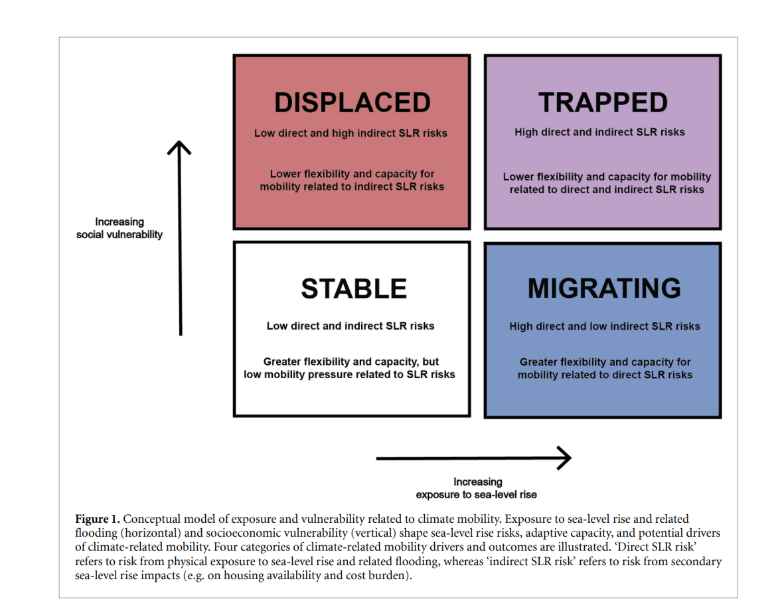
The threat Little Haiti faces is the newer phenomenon, and double burden, of climate gentrification. Indicative of how this form of gentrification is especially tied to Miami, the term was first explored in a 2018 study about housing prices in Miami-Dade (Nathan).  In simple terms, climate gentrification is defined as the process where wealthier populations move into areas less vulnerable to climate change impacts that were previously inhabited by low-income and often marginalised communities (Nguyen). While the term is relatively new, the aftermath of Hurricane Katrina serves as a stark example of climate gentrification. Following the destruction caused by the hurricane, homeowners in the Lower Ninth Ward, a predominantly working-class Black community, struggled to secure the financial support to rebuild their homes and the area was slowly gentrified into a noticeably wealthier and whiter community (Santiago). Aside from the environmental impacts of climate change, scholars have recently emphasised that more attention needs to be paid to its social effects, and indirect impacts, asserting that it exacerbates existing challenges in sectors such as housing and health (Santiago). Moreover, research has found that wealthier neighbourhoods have a greater ability to handle the shocks of climate change in comparison to socioeconomically vulnerable communities (Santiago) In the specific case of Miami, and this briefing, sea-level rise (SLR), a product of climate change, has ensued both direct impacts such as coastal flooding and indirect impacts like the increasing demand for housing in less vulnerable areas (Seeteram et al.). According to scientific projections, 13 million people in the United States are estimated to experience six feet of sea level rise by 2100 with nearly 25% of the 13 million residing in Miami-Dade & Broward County (Santiago). Arguably, this exhibits the particular jeopardy Miami faces as a coastal city. As a result, climate resilience has been described as the ‘hot new amenity’ adding a climate-change imperative to the existing urban gentrification pressures that are already distressing low-income communities (Tulane). Within the city, the social vulnerabilities vary across communities but have been bounded into four categories: displaced, trapped, stable and migrating (Seeteram et al.). For the purpose of this briefing, it is important to clarify how each category is conceptualised. The model below displays the vulnerability level related to climate mobility, indicating that, as a result of either direct or secondary sea-level rise impacts, communities will be displaced, trapped, stable or migrating (Seeteram et al.). Little Haiti falls into the ‘displaced’ category due to its low exposure to sea-level rise but high risk of being displaced due to the populations in the migrating category seeking housing in the area. 

Source: Seeteram et al.  

Now that the key concepts forming this discussion have been outlined, I will provide a brief context of the current migration patterns, urban development forecasts, sea-level rise and real-estate markets in Miami.  Development and property plans are highly intertwined with concerns over sea-level rise. Further, expedited by the Covid-19 pandemic, there has been a population influx due to the large number of people moving to the city motivated by factors such as its favourable climate and tax incentives (Seeteram et al.) . The increase of high-income moving into these communities has raised rent and property values within neighbourhoods like Little Haiti (Santiago). Yet, property values in Little Haiti have been increasing substantially years before the pandemic.  According to real estate marketplace data, in 2012 the average home in Little Haiti was valued at $58,403 whereas this year houses value at an astonishing $482,557. The growing threat of sea-level rise has not gone unnoticed by scientists, the local community or real-estate developers. Studies show that just 12 inches of sea level rise would make 15% of Miami uninhabitable (Weir), specifically beachside property which tends to be of high value, and that a 2m rise would affect almost one million residents placing over $129 billion in property at risk (Seeteram et al.). For example, after Hurricane Irma struck Miami in 2017 beachfront properties suffered billions of dollars in damage and affluent buyers turned their focus to climate protected neighbourhoods that were distanced from the coast (Tulane). Additionally, a study looking at nationwide real-estate data and sea level rise predictions calculated that homes that are at risk of flooding due to rising sea levels sell for 7% less than in-land homes that are not at risk of flooding (Nathan). Inevitably, it is harrowing statistics like this that have pushed developers to focus on in-land property and communities to relocate to less vulnerable areas.  It is also necessary to touch on the political climate in Florida and perspectives on the climate crisis. Florida’s governor, Rick Scott, has expressed his reluctance to address climate change and even gone so far as to state ‘I’m not a scientist’ when asked if it was real (Moulite). Essentially, failing to legitimise or pursue federal action that mitigates climate change and its effects.  The lack of federal action coupled with the rising cost of altitude has sparked a noticeable shift in community activism and municipal budgets (Weir).  

The Challenge: the double burden of fighting climate gentrification while achieving environmental and social justice. 

Thus, Little Haiti, and other vulnerable communities in the city, have found themselves in a tug of war with private investors and developers, migrating populations and the government. This brings me to the next section that will expand on the challenge Little Haiti is facing: the double burden of fighting climate gentrification while achieving environmental and social justice. This double burden originates from the process of developing climate-resilient homes that exacerbates existing inequalities due to wealthy homebuyers and real estate investors displacing vulnerable populations already suffering from systemic inequities (Tulane). On top of being displaced by climate gentrification, vulnerable populations suffer additional climate change impacts due to the general rise of property prices that is eliminating low-end housing altogether (Tulane). Little Haiti has been described as ‘the perfect storm’ for developers due to having a high real estate supply and lower cost in comparison to other areas, as well as its convenient location near downtown and the airport (Rivero). Zillow, a leading real estate marketplace, ranked Little Haiti as one of South Florida’s ‘hottest neighbourhoods’ (Santiago). Yet, in reality, it is also one of the fastest gentrifying neighbourhoods in South Florida with a 19% increase in home values since 2016 (Santiago). Aside from sea-level rise, the accelerated gentrification of the community is also fueled by a federal tax break that incentivizes development in ‘Opportunity Zones’ (Grist Creative). The map below from a study of climate mobilities in Miami-Dade County shows Little Haiti, the area I circled in red, as being in the high social vulnerability category with a score of seven (Seeteram et al.).  

Source: Seeteram et al. 

Furthermore, stories from the locals that live in the community truly highlight the extent of the challenge they are facing. It is a unique situation where climate change, immigration and gentrification collide (Weir). Joe Raedle, a climate activist, stated in his article Fighting for the soul of Little Haiti that ‘…the neighbourhood is being sold off, carved apart, and built up, taking the Haitian community and regional cultural identity with it’ (Grist Creative). The part about the community being robbed of their cultural identity particularly struck me- as I previously mentioned how this community is a ‘home away from home for many’. Interviews with locals from the community have documented the harsh and rapid process of gentrification. Schiller Sanon-Jules, the long-time owner of the Little Haiti Thrift & Gift Store, speaks about his experience of being pushed out of his cherished store space due to his rent being doubled over the course of just one year (WLRN). The store that was once a cultural staple in the community stocking ‘Haitian art, African drums and a collection of vintage clothing’ and hangout spot where Sanon-Jules and his wife would serve Haitian food while local bands played music was erased in just a few months (WLRN). This story is just one of many. In 2019, Little Haiti residents took to the streets to protest the development of the Magic City Innovation District that would redevelop 18 acres of land in the community into a ‘glitzy mixed-use development’ that would be built as tall as 25 stories (Grist Creative). Community leaders stated that the plan would cost displaced people of Little Haiti $68 million and ‘undermines the future of the community for its lack of guarantees, clarity, and that it does not protect the residents of Little Haiti’ (CBS). Nevertheless, while leaders and activists in the community were extremely vocal about their disapproval of these plans, organising protests and attending commission meetings, the plans to build were approved and their voices were ignored.  

Yet, residents of the community are not backing down and are continuing to fight against climate gentrification and over-development. While some believe there may be nothing activists can do to stop the next Magic City (Grist Creative) or that climate gentrification is happening so rapidly you can’t stop it (Mooney), my briefing takes the stance that there are actions that can be undertaken by locals to defend the challenges their community is facing. The first section of this briefing has built the foundations for my recommendations by providing a historical background of the community, conceptualising climate gentrification and touching on current socio-economic dynamics in Miami. I will now move to presenting my four community-led solutions for Little Haiti, as well as other vulnerable neighbourhoods in Miami. At the heart of all my recommendations, is the sentiment that activists should aim to promote empowerment rather than the displacement of vulnerable populations (Santiago). On this basis, my solutions will take a bottom-up approach that empowers local perspectives, promotes community participation, and amplifies resident’s voices. This approach emphasises the need for collaboration from all corners of the community, local business-owners, activists, nonprofits, and residents, in order to create equitable solutions.  

Recommendation one: Building a climate-resilient neighbourhood: create local incentives and projects to mitigate the impacts of climate change and sea-level rise.  

In order to effectively mitigate the impacts of climate change, intentional community engagement across all parties is required (Santiago). I would recommend that the community works to build a climate-resilient neighbourhood. These neighbourhood’s are defined as ‘those in which communities design, plan, and implement ways to adapt social, economic, and infrastructural systems to minimise risk and harm from climate change’ (Bastien). A leading organisation in climate resilience efforts is the Family Action Network Movement (FANM) that has been recognised for fighting for climate equity at the local, state and national level (Bastien). One of FANM’s goals is to build a green local economy in Little Haiti and become one of the nation’s first 100 percent resilient neighbourhoods (Bastien). These goals cannot be achieved alone and call for action from the entire community to create a greener space. The leaders of FANM have also stressed the injustice of the lack of federal funding and resources to address climate change leaving the local community to solve a crisis they did not create themselves (Bastien). Nevertheless, they recognise that it is an issue that needs to be acted on immediately and there is no time to wait on federal support. Instead, charitable trusts like the Captain Haiti Foundation have stepped in and began raising funds to allocate to ‘allocated to community cleanups, public art and planting greens’ (Sun).  I would recommend that the community comes together once a week and, with the help of organisations like FANM, facilitates a collective conversation about how to make their urban space greener. Instead of promoting more development, the community should focus on ‘greenifying’ spaces by building outdoor parks and pathways. Moreover, I propose that the community uplifts the programs that are already in place that aim to build a climate-resilient neighbourhood. For example, with the goal of creating a circular economy, FANM has established plans for a thrift, folk art and food bazaar mecca as well as a green jobs program (Bastien) . While these initiatives exist, they require consistent support and dedication from the community to ensure longevity and success. I recommend that organisations and businesses in Little Haiti create incentives for residents to contribute to a green economy and lifestyle and promote volunteer projects. 

Recommendation two: Climate & housing education and leadership programs 

In low-resource communities, there should be a strong urgency for education and awareness surrounding the impacts of climate change (Moulite). Furthermore, both housing and climate literacy education can give residents the tools they need to combat climate gentrification. Through community leadership schemes and educational programs, residents can be empowered to resist over-development and displacement. For example, these programs already exist within the community but tend to be underfunded. Existing public funds need to be reallocated to these programs and better distributed by community leaders in order to more effectively tackle the problem. An example of an existing program is CLEAR Miami—Community Leadership on the Environment, Advocacy and Resilience which hosts a 11-week leadership-training program focused on climate resilience in Miami (Moulite). Additionally, the CLEO institute is a nonprofit organisation dedicated to growing climate literacy within communities like Little Haiti (Moulite). As well as organisations focusing on climate literacy, activists have highlighted the need for housing literacy in communities as well. For example, The Miami Millennial Investment Group (MMI) confronts gentrification by hosting community workshops where they educate people about home ownership and how to secure funding to purchase a property (Joseph). As demonstrated, programs such as these do exist, however the large presence of individuals in vulnerable communities who don’t even know about the existence of these programs shows us that better work must be done in order to raise awareness and remedy the issue. With the improvement of housing and climate literacy in Little Haiti, people will be better informed on how to resist the growing pressures of climate gentrification.  

Recommendation three: Protest & resist gentrification 

An additional recommendation I propose is the power of resisting and protesting. I believe that, as exhibited by the BLM protests in 2020, social media is an extremely valuable tool in organising protests and garnering support for change. While the protests the development of the Magic City Innovation District did not result in the outcome hoped for, it did show that the community of Little Haiti is motivated to protest for their housing and climate rights and will not back down from climate gentrification. Coupled with my other recommendations, such as increased climate and house literacy, I believe that the community can utilise tools such as social media to organise and highlight a movement that promotes the resistance of climate gentrification and advocates for environmental justice. In a youtube video titled REBUILD The Fight for Little Haiti: Miami’s Silent Real Estate War, the activists stressed the mantra of ‘L’union fait la force- unity is power’ within the community (Earn Your Leisure). 

Recommendation four:Take Back Control of The Community: Gentrification versus Equitable Development 

Lastly, I believe the most effective solution is for the local community to take the land back. For example, an organisation based out of a community just minutes away from Little Haiti, named Struggle for Miami’s Affordable and Sustainable Housing, has embarked on a mission to buy land in their community and build affordable housing deeming it a ‘community land trust’ (Joseph). This community run project has resulted in buying property that is owned and controlled by the community itself opposed to a corporation or individual (Joseph). In the words of the executive director of SMASH, pursuing community-led development is ‘…the difference between gentrifying a neighbourhood and equitably developing a neighbourhood’ (Joseph). I recommend that the community of Little Haiti pursues a similar project in their community and employs locally born investors to purchase land opposed to outside private developers. In fact, MMI, the organisation mentioned in my second recommendation, has taken a similar approach and purchased several homes in vulnerable neighbourhoods with the intention of charging a fair rent (Joseph). To my knowledge and according to my research, Little Haiti has yet to undertake projects like SMASH and MMI. I propose that the community develops a similar model to that of the organisations mentioned and works with allies to invest in buying back land in the community with the aim of developing it into affordable housing.  

Concluding Remarks 

The year of 2023 has been defined by climate anxieties, pandemic migration, and ever-changing markets. In the beginning of this paper, I mentioned the misconception of Miami as a ‘magic city’. Throughout my briefing, I have demonstrated the history of systemic racism that is being continued today through the process of climate gentrification. While sea-level rise should be a concern to the city of Miami, the burden of climate change should not be put on the community of Little Haiti causing the displacement of thousands of individuals. Moreover, Little Haiti is an extremely unique and special community- serving as a cultural epicentre for Haitian arts, food, and language. I believe hope is not lost in the community, and that if my recommendations were undertaken, Little Haiti can fight in the injustices of climate gentrification.  

Works Cited 

Bastien, Marleine. “Little Haiti Is Fighting Climate Change.” Othering & Belonging Institute, 28 Feb. 2019, belonging.berkeley.edu/little-haiti-fighting-climate-change. 

CBS Miami. “Protest Held in Little Haiti over Magic City Innovation District.” Www.cbsnews.com, 2019, www.cbsnews.com/miami/news/protest-held-in-little-haiti-over-magic-city-innovation-district/. 

Chéry, Dieu-Nalio, and Christina Morales. “Little Haiti Residents Fear Losing Their “Home Away from Home.”” The New York Times, 12 June 2023, www.nytimes.com/2023/06/12/realestate/little-haiti-miami.html. 

City of Miami. “City of Miami Proposed Operating Budget Fiscal Year .” Archive.miamigov.com, 2015, archive.miamigov.com/home/history.html#:~:text=The%20City%20was%20incorporated%20in. 

Earn Your Leisure. “REBUILD the Fight for Little Haiti: Miami’s Silent Real Estate War.” Www.youtube.com, 2023, www.youtube.com/watch?v=4YNUmsyMYtY. Accessed 27 Oct. 2023. 

Grist Creative. “Fighting for the Soul of Little Haiti.” Grist, 2 Mar. 2020, grist.org/Array/fighting-for-the-soul-of-little-haiti/. 

Joseph • •, Teresa. “Young Black Investors Confront Gentrification in Parts of Miami.” NBC 6 South Florida, 24 Sept. 2018, www.nbcmiami.com/news/local/young-black-investors-confront-gentrification-in-parts-of-miami/170597/. Accessed 27 Oct. 2023. 

Kim, Minho. ““Climate Gentrification” Will Displace One Million People in Miami Alone.” Scientific American, 2023, www.scientificamerican.com/article/climate-gentrification-will-displace-one-million-people-in-miami-alone/#:~:text=%27Climate%20Gentrification%27%20Will%20Displace%20One%20Million%20People%20in%20Miami%20Alone. Accessed 27 Oct. 2023. 

Matters, Miami-Dade. “Miami-Dade Matters :: Demographics :: County :: Miami-Dade.” Www.miamidadematters.org, 2022, www.miamidadematters.org/demographicdata. 

Mooney, Taylor. “Little Haiti Residents Forced from Home Again as Climate Change Upends Miami Real Estate.” Www.cbsnews.com, 2020, www.cbsnews.com/news/climate-change-miami-little-haiti-gentrification-cbsn-originals-documentary/. 

Moulite, Jessica. “Color of Climate – Black News, Opinions, Politics and Culture.” The Root, 18 Aug. 2017, www.theroot.com/tag/color-of-climate. Accessed 27 Oct. 2023. 

Nathan, Aparna. “Climate Is the Newest Gentrifying Force, and Its Effects Are Already Re-Shaping Cities.” Science in the News, 15 July 2019, sitn.hms.harvard.edu/flash/2019/climate-newest-gentrifying-force-effects-already-re-shaping-cities/. 

Nguyen, Amy. “What Is Climate Gentrification? – Sustainable & Social.” Sustainable & Social | Sustainable Business & Lifestyle, 6 Feb. 2021, sustainableandsocial.com/climate-gentrification/. Accessed 27 Oct. 2023. 

Rivero, Nicolas. Miami’s Hidden High Ground: What Sea Rise Risk Means for Some Prime Real Estate . 2023. 

Santiago, Elizabeth. “Weathering the Storm: Climate Gentrification in Miami’s Little Haiti | the Pursuit | University of Michigan School of Public Health | Climate Change | Climate Gentrification | Miami |.” Sph.umich.edu, 2020, sph.umich.edu/pursuit/2020posts/weathering-the-storm-climate-gentrification-in-miami.html. 

Seeteram, Nadia, et al. “Modes of Climate Mobility under Sea-Level Rise.” Environmental Research Letters, vol. 18, no. 11, 16 Oct. 2023, pp. 114015–114015, https://doi.org/10.1088/1748-9326/acfe22. 

Sun, Zhiyuan. “Miami Blockchain Folk Hero Secures $5M for Community Tokenization.” Cointelegraph, 17 May 2023, cointelegraph.com/news/miami-blockchain-folk-hero-secures-5m-for-community-tokenization. Accessed 27 Oct. 2023. 

Tulane Blog. “The Rising Dilemma of Climate Gentrification vs Displacement.” Tulane, 23 Mar. 2021, online.law.tulane.edu/blog/the-rising-dilemma-of-climate-gentrification-vs-displacement. Accessed 27 Oct. 2023. 

Weir, Bill. “Miami’s Little Haiti Wasn’t a Target for Developers. Until the Seas Started to Rise.” CNN, 11 July 2019, edition.cnn.com/2019/07/11/us/miami-little-haiti-climate-gentrification-weir-wxc/index.html. 

WLRN. “Where Magic City Will Rise, Haitian-Owned Businesses Priced Out.” WLRN, 2 July 2019, www.wlrn.org/news/2019-07-02/where-magic-city-will-rise-haitian-owned-businesses-priced-out. Accessed 27 Oct. 2023. 

Categories
Building Sustainable, Inclusive and Just Cities (Hons module)

The Gentrification of Fikirtepe in Istanbul, Turkey 

Author Positionality  

Fikirtepe is a neighbouring district to my grandmother’s house, in which I have spent most of my holidays. Consequently, the gentrification-led displacement and the economic hardships I witness in Fikirtepe, albeit with some distance, are topics that are close to my heart. Over the course of twenty-one years, I have frequently visited my family in Istanbul and the transformations between my visits have been apparent. Driving from the European side – where the airport is located – to my family home across the Bosphorus, the results of profit-driven modernisation have always been evident to me. This transformation not only changed the physical landscape of Istanbul, but it has also had a profound impact on the livelihoods of the citizens and the social fabric that characterised the neighbourhood. 

The higher prevalence of ‘gecekondus’ – or unauthorised developments – in this part of the Anatolian side of Istanbul made it more susceptible to urban redevelopment and gentrification. Fikirtepe, once a shanty town composed of little shacks and poorly built structures that I distinctly remember passing daily in the car, can now be seen from miles away as contemporary high-rises steadily replace the old shanties.  

It is important to acknowledge that my upbringing primarily stems from an upper-class background. Thus, my exposure to the challenges faced by lower-income and migrant communities is limited beyond the research I have done for the purpose of this Community Briefing. Furthermore, the findings of this briefing are meant to offer an additional perspective to the ongoing discourse on gentrification and should be regarded as complementary to the existing viewpoints of the Fikirtepe community.  

Introduction  

A severe housing crisis has persisted in Turkey as a result of profound economic instabilities driven by a staggering inflation rate of 61.53% (TUIK, 2023). Today, rent prices have spiked, with an annual increase of 145.6% in Istanbul (Mays, 2022). The housing crisis is further exacerbated by the influx of migrants following the devastating earthquakes that struck southern and central Turkey in February (Karabat, 2020). Despite these existing challenges, ongoing urban transformation initiatives supported by the Turkish President, Recep Tayyip Erdogan, continue to be implemented in municipalities throughout Turkey, notably in Istanbul, aggravating these issues (Lepeska, 2014). These initiatives focus on shanty towns as well as seismic-vulnerable buildings; the need to retrofit or demolish these structures is undeniable. However, vulnerabilities created by seismic risk have become a convenient pretext for exploitative developers seeking to profit from the area’s prime location and the allure of high-rise living. These urban development initiatives have also intensified a multitude of social justice issues. Foremost among these issues is the exacerbation of economic inequality. The displacement of low-income residents due to rising rent and property values has become a disconcerting reality, often leading to homelessness and housing instability. The upper middle class increasingly supplanting the lower-income demographic in gentrifying neighbourhoods, has driven up the overall cost of living. This surge in living costs poses substantial challenges for lower-income residents in procuring basic necessities. The resultant economic inequality intensifies existing disparities within Istanbul and emphasises the need for social justice reform. Furthermore, gentrification in areas such as Fikirtepe tends to disproportionately affect lower-income Eastern Anatolian migrant communities, thereby aggravating ethnic disparities. The third dimension of concern relates to the displacement of residents and its impact on the erosion of cultural and social ties as residents are forced to vacate their homes for the means of ‘urban transformation’. The influx of newcomers due to this displacement reshapes the neighbourhood’s character by eroding its cultural identity and the traditions of the community, further marginalising its residents. This is particularly significant in the Turkish context, where community and neighbourly relations hold intrinsic value in the cultural fabric.  

I recommend a comprehensive strategy that includes zoning policies and public funding, community land trusts and tenant protection initiatives, as well as local and community-based efforts. Additionally, I propose the expansion of existing community initiatives to effectively address and combat gentrification challenges in Fikirtepe.  

History of the Community  

Fikirtepe, situated in the Anatolian part of Istanbul within the Kadikoy district, has a rich history that has revolved around its close-knit and diverse community. Fikirtepe’s transformation began in the 1950s with an influx of immigrants from the Black Sea coast, seeking better economic opportunities in the rapidly industrialising Istanbul. In the absence of social housing policy, as well as uncontrolled and unplanned urbanisation, the migratory flows resulted in informal settlements called ‘gecekondus’ (translates directly to ‘laid at night’) on the peripheries of the city at the time. Consequently, Fikirtepe transformed into a shanty town, expanding as more immigrants arrived. These immigrants were predominantly friends and family from regions such as Sinop, Kastamonu, and Rize, which fostered a strong sense of community in Fikirtepe. This sense of community remained decades after their first settlement due to their prior connections from their hometowns. As the city sprawled outwards, Fikirtepe transitioned from its former status as a suburban outlier of Istanbul, to becoming part of the urban landscape and a centrally located district. Today, Fikirtepe’s location has made it an appealing candidate for gentrification, given its proximity to the Central Business District of the Anatolian side. Approximately half of its built infrastructure – accommodating up to 70% of its population – developed beyond the scope of institutionalised planning.  

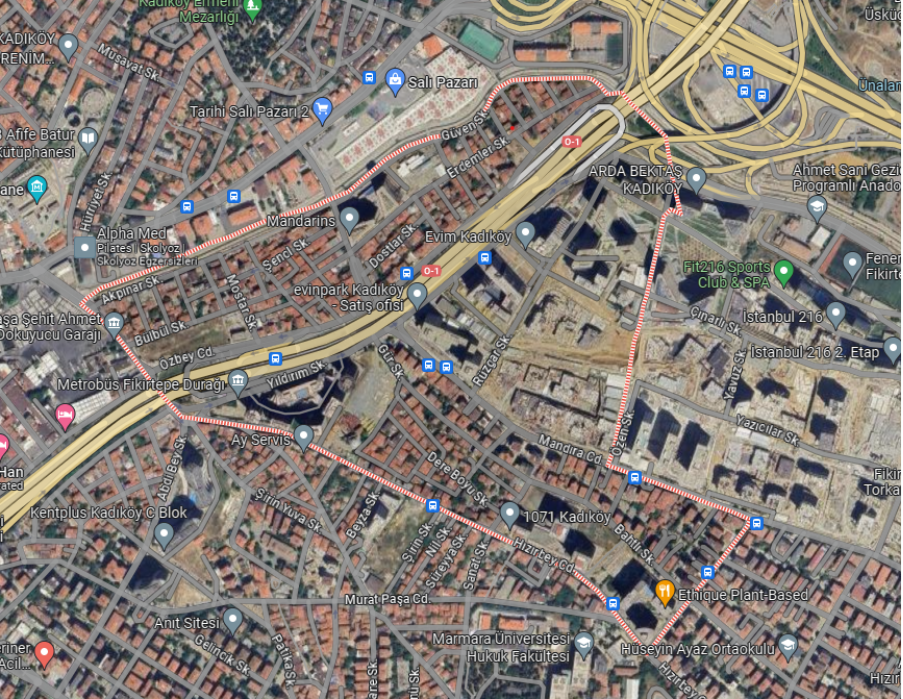
Current satellite image of the gentrifying neighbourhood of Fikirtepe in Istanbul outlined in red (Google Maps, 2023) 

Existing policy and governmental actions  

Despite ongoing efforts since the 1990s, a lack of legislative action and governmental intervention persists in Istanbul. Habitat II – officially known as the “United Nations Conference on Human Settlements” was held in Istanbul in 1996 (UN, 1996). This conference aimed to address urban sustainability issues, including housing, quality of life in cities, and human settlements; all of which are affected by gentrification (UN, 1996). A significant document emanating from this conference called the “Istanbul Declaration on Human Settlements” outlined global objectives and principles for sustainable urban development (OICRF, 2006). A key concept in this document emphasised the significance of addressing urban challenges such as informal settlements, inadequate housing, and homelessness (OICRF, 2006). This could have played a crucial role in mitigating the effects of gentrification in Fikirtepe. Nevertheless, despite shaping the global discourse on urbanisation, there have been no substantial government endeavours to achieve these goals. Additionally, the conference stressed the necessity of participatory planning and community engagement, both of which have not been adhered to by the Justice and Development Party, led by the Turkish President Recep Tayyip Erdogan. Provided that these principles are effectively incorporated into policies and practices by governments and urban planners, this declaration has the potential to mitigate the impacts of gentrification in Fikirtepe.  

One initiative aimed at integrating the principles from the Istanbul Declaration on Human Settlements is the Urban Renewal Rent Subsidy (Yeni Safak, 2023). This program offers rental and relocation assistance for a period of eighteen months to tenants residing in buildings deemed as ‘risky’ through contractor evaluations. Those who reside in properties within the urban transformation zone receive a two-month rental subsidy. In Istanbul, this subsidy amounts to 3,500 Turkish liras per month, which is equivalent to 102 British pounds. In addition to enhancing structural safety and safeguarding against seismic-risk prevalent in shanty towns such as Fikirtepe, the Urban Renewal Rent Subsidy also plays a pivotal role in addressing the impacts of gentrification in Istanbul. The eighteen-month and two-month subsidies for beneficiaries and tenants, respectively, function as a buffer against the displacement of Fikirtepe’s residents in the face of Urban Transformation. This allows long-term residents to remain in their neighbourhoods, thereby fostering socio-economic diversity by preserving the character and cultural dynamic of Fikirtepe.  

Existing community responses 

TMMOB Chamber of Architects  

A community response to gentrification in Fikirtepe is facilitated through the Union of Chambers of Turkish Engineers and Architects, specifically the TMMOB Chamber of Architects division (MO, 2021). Established in 1954, the TMMOB Chamber of Architects is a constitutional professional organisation founded to serve the public and society’s interests (MO, 2022). Its focus is on architecture and urban planning through advocacy and various other initiatives. Firstly, the Chamber advocates for the transparency and accountability of developers and government agencies involved in the urban transformation processes. For instance, in 2019 the Chamber led to the successful cancellation of the stage plans of the Fikirtepe Urban Transformation Project through legal action (MO, 2022). The report for the plans revealed inconsistencies in the text and tabular data, as well as calculation errors which would have resulted in a “hidden density increase” (MO, 2022). Consequently, the efforts of the chamber aided in the prevention of issues such as overcrowding or lack of living space for residents, safeguarding their overall quality of life. Moreover, the Chamber plays a substantial role in advancing social justice and mitigating the impacts of gentrification in Fikirtepe through community engagement. Aside from the affordability issue, the most significant form of displacement is the changing social fabric as the middle-class relocate into the modern high-rise buildings that have replaced the shacks that the residents once called home. Many residents have protested that “the rebuilt houses are not designed according to the lifestyle and needs of the gecekondus families living in Fikirtepe”, and thus the social dynamic and character of this district is taking a turn for the worse (Markoc, 2019). The chamber assists in amplifying the voices of the community to advocate for policies and plans that prioritise the interests of all community members, particularly the ones of marginalised and vulnerable populations.  

Tasarim Arastirma Katilim (TAK) Fikirtepe 

TAK is a design and research organisation based in Turkey, that believes that socially oriented design has the power and potential to shape existing systems and society for the better by considering the role of the designer and user through a shift towards participatory and collaborative design in an approach inclusive to contemporary social and political aspects (TAK, 2023). To minimise the social repercussions created by spatial intervention such as urban transformation, TAK developed the ‘Social Impact Sensitive Design’ method – a community-oriented and participatory design process, which focuses on the life dynamics and expectations of the residents for the future of Fikirtepe. This allows the designers at TAK to develop principles, strategies, and tools to establish a horizontal hierarchical, democratic structure instead of Erdogan’s top-down, authoritarian approach to the Fikirtepe Urban Transformation project (TAK, 2023). In addition to creative disciplines, various stakeholders and actors from different fields are also involved in this process, for more holistic solutions. An example of their work in Fikirtepe is the Urban Transformation Workshop, which allowed participants from different disciplines to discuss the planning, architecture, transportation, and social problems in Fikirtepe interactively to develop a critical and comprehensive understanding of the multifaceted nature of Urban Transformation and gentrification, from participants who are directly impacted by it (TAK, 2018).  

Another way in which TAK provided a community-based response to the gentrifying neighbourhood of Fikirtepe, is through the “We are from Fikirtepe!” short film workshop (Tak, 2013). To encourage a sense of community and belonging as the urban structure of Fikirtepe rapidly changes, the Film TAK program, conducted by volunteer project coordinators from various fields, documented the life, stories and voices, of eleven participants between the ages of six and eleven (Tak, 2013). This was significant in maintaining the urban memory of the community and sustaining neighbourly relations. The screenings, first held on the 16th of November 2013, not only raised awareness of the neighbourhood’s history and dynamics, but also fostered a sense of community in Fikirtepe (Tak, 2013). Through these films, the residents find a platform to connect, share their own narratives, and preserve the essence of their neighbourhood to reinforce the bonds and ‘brotherly’ relations that have long defined the cultural and social fabric of Turkey.  

Recommendations for the community  

Zoning Policies and Public Funding  

There are numerous policies, which if effectively implemented, could significantly reduce the displacement of low-income populations from their homes (Bolton, 2020). For instance, implementing overlay zoning for affordable housing may require demolished housing units to be replaced with affordable housing, which in turn, could reduce the demolishment of existing low-income housing by acting as a disincentive (Bolton, 2020). Additionally, overlay zones can be used to control the density and land use within neighbourhoods, for instance by limiting the number of units that can be built, which stops houses from being redeveloped into high-density apartments. This makes the area less profitable, and thus also less appealing to Erdogan’s goals of profit-led modernisation. Additionally, inclusionary zoning would create more affordable units within the gentrifying area for lower-income individuals and families, consequently preventing their dispossession (Bolton, 2020). Building on this, securing more public funding through government agencies, partnerships, and funding agencies would provide the necessary financial resources to construct and maintain affordable units (Bolton, 2020). These funds can be allocated to land acquisition, construction expenses, and operational costs to ensure that the new housing remains affordable for low-income residents. By enhancing public funding, developers can not only create more units, but also maintain lower rates, directly countering the pressures of gentrification and addressing the needs of vulnerable communities in Fikirtepe.  

Community Land Trusts and Tenant Protection Initiatives 

A more extensive approach to preserving housing which offers collective ownership to ensure community stewardship of land is through Community Land trusts (CLTs). CLTs are community-based organisations often initiated and managed by local communities to ensure affordable housing whilst protecting residents against the impacts of gentrification such as displacement. CLTs work towards preventing developers from displacing low-income residents by inhibiting the development of expensive infrastructure targeted to upper-class citizens, in addition to ensuring that the current residents can benefit from the investments in their neighbourhood, as a strong CLTR captures the economic value generated from these developments for residents (Cole et al., 2023). CLTs can also be utilised in moving housing from market to community ownership which combats gentrification by reducing the influence of profit-driven real estate prices (Burrowes et al., 2022). Consequently, ameliorating the affordability and stability of housing over the long-term. Furthermore, CLTS help provide low- and middle-income property-owners with the opportunity to build equity and provide more protection against foreclosures by significantly reducing the initial purchase price, making homeownership more accessible. CLTs protect homeowners from the risk of losing their homes in foreclosure due to unaffordable market prices by imposing resale restrictions, ensuring that the property remains affordable for future buyers.  

Despite the presence of rental assistance programs implemented by the Turkish government in Fikirtepe, these programs often inadequately meet the residents’ requirements to sustain their quality of life or force them to relocate to cheaper housing in more affordable neighbourhoods in the peripheries of Istanbul. Thus, I recommend Tenancy right-to-counsel programs, which not only provide low-income renters facing economic difficulties with emergency funds to pay rent, but also provide access to legal representation for renters who may be facing eviction (Cole et al., 2023).  

Local and Community-based Initiatives  

Local Non-profits and legal groups  

Fikirtepe would also benefit from an eviction aversion initiative, which has proven to work well in numerous cities such as Cleveland in the US (Cole et al., 2023). This proactive approach is designed to prevent evictions by addressing underlying issues that may trigger them, through facilitating open communication between tenants and property owners to resolve disputes and miscommunications, thereby preventing eviction as an outcome (Cole et al., 2023). Also known as the Eviction Diversion Program, both rental assistance and legal counsel are offered to avoid eviction, increase housing stability, and reduce homelessness. These factors would alleviate the issues of gentrification evident in the case of Fikirtepe.  

Urban grassroots and justice organisations  

Urban grassroots movements are incredibly important in the combatting of gentrification in Fikirtepe, as these initiatives are organised by residents and local activists, characterised by their bottom-up approach, which allows ordinary citizens to take the lead in identifying problems, mobilising resources, and driving solutions tailored to the needs of their community to improve the quality of life in their neighbourhood (Can, 2022). This collective action and community engagement brings people together as a united front and leverages this power of collaborative work to foster change. Activism through these movements, particularly to fight increasing rent prices and decreasing affordability in the Fikirtepe rental housing market, would be influential in resisting state-led urban transformation and the processes of gentrification (Can, 2022). Foremost, negotiations with the municipality aimed to collectively represent property-owners’ rights would ensure that individual properties were not sold without the organisation’s knowledge (Islam et al., 2015). This strategy counters the municipality’s pressures on property-owners individually, to sell their estates. Resorting to legal action in the case that these negotiations fail hasn’t worked in the past when looking at case studies such as the Taralbasi project in Istanbul, which participated in juridical battles, challenged the project in local court and the European Court of Human Rights, and applied to UNSECO for aid, and was not successful (Islam et al., 2015). However, through its media coverage, it brought international awareness to the project, increasing the support of other organisations such as Amnesty International, which helped amplify the message of the Taralbasi residents, and put pressure on local authorities to implement more inclusive and socially responsible policies that prioritised the well-being of the community over profit-driven gentrification (Islam et al., 2015). Fikirtepe can consider implementing a similar approach to address its policies and enhance its inclusivity.  

Sustaining and Broadening Existing Community Initiatives  

The efforts of the TMMOB Chamber of Architects and TAK Fikirtepe to counter gentrification in Fikirtepe have been pivotal in advancing social justice and mitigating the impacts of the gentrifying neighbourhood. Not only have these two organisations worked towards preventing the displacement of Fikirtepe’s residents but they have also made substantial efforts in maintaining the cultural and social fabric of the area, as well as its urban memory. Therefore, I recommend that these initiatives continue to support the community and its own diverse needs, whilst expanding their work into various other branches. For instance, the Chamber of Architects could organise a plethora of educational programs to inform residents about the implications of urban transformation projects, empowering them to actively participate in decision-making processes with a more educated approach. Furthermore, both the Chamber and TAK can involve more stakeholders, including governmental bodies to achieve a more holistic understanding of gentrification issues specific to Fikirtepe, and encourage collaborative solutions, benefitting both its residents and the state.  

Conclusion  

In conclusion, the ongoing challenges faced by the Fikirtepe community in light of gentrification are not just a matter of academic concern but hold personal significance to many Turkish communities witnessing the transformation of the district over the years. The consequences of profit-driven modernisation are not merely physical changes but profound impacts on the livelihoods of the citizens and the social fabric that once characterised the neighbourhood of Fikirtepe. The housing crisis in Turkey, exacerbated by economic instability, soaring rent prices, and an influx of migrants putting pressures on urban density, is further intensified by urban transformation initiatives driven by financial motives. These initiatives, while claiming to address seismic risks and encourage sustainable urban development, have often led to the displacement of low-income residents, economic inequality, and the erosion of social and cultural ties, which presents multifaceted challenges that require comprehensive and community-based responses to combat state-led gentrification. 

Existing policies and government actions have failed to effectively mitigate the impacts of gentrification in Fikirtepe. Although initiatives such as the Urban Renewal Rent Subsidy Program has potential to combat issues created by gentrification, by providing some relief, it has not been sufficient in countering gentrification in Fikirtepe. Therefore, it is imperative to explore a range of initiatives to protect the lower-income community of Fikirtepe, as well as its cultural foundation.  

Thus, I turn back to the recommendations that have been made in this Community Briefing. Foremost, I propose the implementation of zoning policies and public funding that promote and maintain affordable housing. In addition to these, Community Land Trusts, tenant protection initiatives and eviction aversion programmes can further prevent the displacement of residents and maintain housing stability. Furthermore, local non-profits, legal groups, urban grassroot movements, and justice organisations can play substantial roles in advocating for the rights of property-owners and tenants, whilst also bringing international attention to the challenges faced by the Fikirtepe community to apply pressure on local authorities in the implementation of socially responsible policies. Moreover, community responses that TMMOB Chamber of Architects and TAK Fikirtepe have already implemented, have played a sizable role in combatting gentrification, thus, the expansion and continuation of these initiatives would continue to encourage collaborative solutions tailored to the needs of the community.  

Combatting gentrification in Fikirtepe is a complex challenge, however, I believe that with the implementation of the recommendations mentioned in this briefing, it is possible to protect the interests of the community, preserve the cultural fabric of the district, and promote social justice in the face of urban transformation. The path forward requires collaborative action and commitment to the welfare of the Fikirtepe community.  

Reference List  

Adhem, J. (2023). ‘Europe’s housing crisis: Portugal, Turkey, and Luxembourg struggle to find solutions’. Available at: Europe’s housing crisis: Portugal, Turkey, and Luxembourg struggle to find solutions | Euronews (Accessed: 18 October 2023). 

Bolton, C. (2020) “Enacting critical community development through anti-gentrification policy advocacy”. Community Development Journal, 57(2), pp. 213-233. https://doi.org/10.1093/cdj/bsaa049 

Burrowes, K., Velasco, G., Eldridge, M. (2022) ‘Centering Community Ownership and Voice to Combat Green Gentrification’, Housing Matters, 4 May. Available at: Centering Community Ownership and Voice to Combat Green Gentrification | Housing Matters (urban.org) (Accessed: 23 October 2023). 

Can, A. (2022) ‘how gentrification works in Istanbul, Turkey, ways to resist it and where we are falling short’, minim-municipalism, 24 January. Available at: How gentrification works in Istanbul, Turkey, ways to resist it and where we are falling short · Minim (minim-municipalism.org) (Accessed: 25 October 2023).  

Cole, V. S. H., Anguelovski, I., Triguero-Mas, M., Mehdipanah, R., Arcaya, M. (2023) “Promoting Health Equity through Preventing or Mitigating the Effects of Gentrification: A Theoretical and Methodological guide”, Annual Review of Public Health, 44(1), pp.193-211. https://doi.org/10.1146/annurev-publhealth-071521-113810 

Google Maps, ‘Fikirtepe, Kadikoy, Istanbul’. Available at: https://www.google.com/maps/place/Fikirtepe,+34720+Kadıköy%2Fİstanbul/@40.9938323,29.0466355,16z/data=!4m6!3m5!1s0x14cac7f4b77f7c39:0x63458a923ce48ef6!8m2!3d40.9943025!4d29.0503567!16s%2Fg%2F120s_7hq?entry=ttu. (Accessed: 23 October 2023) 

Islam, T., Sakizlioglu, B., (2015) ‘Thirteen: The making of, and resistance to, state-led gentrification in Istanbul, Turkey’ in Lees, L., Shin, H. B., Lopez-Morales, E. (eds), Global gentrifications: Uneven development and displacement. Bristol: Policy Press Scholarship Online, pp.246-264.  

Karabat, A. (2020) ‘Istanbul shantytown residents in limbo. Available at: Istanbul shantytown residents in limbo | Qantara.de (Accessed: 18 October 2023). 

Lepeska, D. (2014) ‘Istanbul’s gentrification by force leaves locals feeling overwhelmed and angry’Available at: Istanbul’s gentrification by force leaves locals feeling overwhelmed and angry | Cities | The Guardian (Accessed: 18 October 2023).  

Markoc, I. (2019) “The Second Migration of Poverty: Fikirtepe, Istanbul”, International Journal of Social Humanities Sciences Research (JSHSR), 6(42), pp. 2858-2868. DOI: 10.26450/jshsr.1422.  

Mays, J. (2022), ‘159 Percent Rent Increase in the Last Quarter of 2022’, Prime Property Turkey, 6 December. Available at: rent increase in Turkey in 2022 (primepropertyturkey.com). (Accessed: 26 October 2023).  

Mimarlar Odasi. (2022) ‘About the Chamber of Architects’. Available at: About the Chamber of Architects – Chamber of Architects Istanbul Metropolitan Branch (mimarist.org) (Accessed: 17 October 2023). 

Mimarlar Odasi. (2022) ‘An expert report was prepared in the lawsuit filed with the request for the cancellation of the zoning plans related to the Fikirtepe region’. Available at: An expert report was prepared in the lawsuit filed with the request for the cancellation of the zoning plans related to the Fikirtepe region – Chamber of Architects Istanbul Metropolitan Branch (mimarist.org) (Accessed: 18 October 2023). 

Mimarlar Odasi.(2021) ‘New Zoning Plans in Fikirtepe: A Cancellation Lawsuit Was Filed Against the Stage Plans of the Transformation Project’. Available at:  New Zoning Plans in Fikirtepe: An Annulment Lawsuit Has Been Filed Against the Stage Plans of the Transformation Project – Chamber of Architects Istanbul Metropolitan Branch (mimarist.org) (Accessed: 18 October 2023). 

Sosyal Tasarim Platformu (2023) ‘Purpose’, TAK. Available at: Purpose – Social Design Platform (sosyaltasarimplatformu.com). (Accessed: 21 October 2023). 

Tasarim Arastirma Katilim, (2023) ‘Social Impact – Responsive Design’.  TAK. Available at: Social Impact :: TAK (takortak.org) (Accessed: 21 October 2023). 

Tasarim Arastirma Katilim, (2018) ‘Urban Transformation Workshop in the Case of Fikirtepe’.  TAK. 28 April. Available at: Urban Transformation Workshop in the Case of Fikirtepe :: TAK (takortak.org) (Accessed: 21 October 2023).  

Tasarim Arastirma Katilim, (2013) ‘We are from Fikirtepe! Short Film Workshop’.  TAK. 19 November. Available at: We are from Fikirtepe! Short Film Workshop :: TAK (takortak.org) (Accessed: 21 October 2023). 

The Habitat Agenda. (1996) ‘Istanbul Declaration on Human Settlements’. Available at: http://ww2.unhabitat.org/declarations/ist-dec.htm (oicrf.org) (Accessed: 17 October 2023). 

Türkiye Istatistik Kurumu – TUIK. (2023) ‘Statistical Indicators’. Available at: Turkish Statistical Institute (TurkStat) (tuik.gov.tr) (Accessed: 18 October 2023). 

United Nations. (1996) ‘United Nations Conference on Human Settlements (Habitat II)’. Available at: https://undocs.org/en/A/CONF.165/14 (Accessed: 17 October 2023). 

Categories
Building Sustainable, Inclusive and Just Cities (Hons module)

The Waterfront Regeneration and the Future of Granton’s Housing: Recommendations for the Granton Community 

Introduction 

For those unfamiliar with Edinburgh, and not a part of the community I am addressing, in the North of Scotland’s capital sits a small coastal community called Granton (Figure 1.1). Once known for its industrial prowess because of its gasworks, it now is the perfect example of a community suffering due to deindustrialisation. The brownfield sites littered with waste contrast with the beautiful scenery of the Firth of Forth, and the local housing estates are neglected and tired. It is hard to envision this area as a bustling hotspot, but that is in fact exactly what the Edinburgh Council plans to create. An ambitious project titled ‘The Granton Waterfront Regeneration’ poses as the revolutionary solution to Granton’s woes, with an investment of over one billion pounds into the proposed area (Figure 1.2). The prospectus states that “Granton Waterfront will nurture innovation and entrepreneurship, bringing together new homes, commercial opportunities, cultural activity, leisure and creative inspiration all within a 20-minute neighbourhood” (Edinburgh Council, 2020, p.7). In terms of housing, on the surface the regeneration seems to solve issues of both affordability and sustainability, with the provision of “around 3,500 net-zero-carbon homes with health and wellbeing at their heart” (ibid, p.17). However, whilst walking through the neighbourhood, the disrepair of many of the community’s current housing is impossible to ignore. The buzzwords and positivity of the council’s plans surely mean nothing, as the homes already here, which contain lives and memories, are little mentioned in the prospectus. In the Scottish Index of Multiple Deprivation, the majority of Granton’s housing is in the 2nd most deprived decile (Scottish Government, 2020), indicating a severe problem that requires direct attention. The indirect impacts of the Council’s proposed new housing will not be sufficient to improve the quality of people’s current homes, due to economic priorities meaning “the rights of private property and profit trump all other notions of rights” (Harvey, 2008, p.272). Therefore, the importance of situating the existing Granton community within the project should not be underestimated. The consideration of the living conditions of the local people is crucial at this stage of the development, where investments are yet to be finalised and plans are continually adjusted. 

This briefing will highlight the challenges being brought by the waterfront regeneration to those living in Granton in poor-quality council, social and private housing and then proceed to suggest some recommendations for tackling these challenges. Community-led, smaller-scale strategies have the potential to be a major influence in making this development a more inclusive project, with its benefits being less confined to the new community it wishes to produce. Whilst the Council’s attention is on Granton, the people living in the area must use this spotlight to ensure both social and environmental justice is delivered. Environmental justice is particularly a concern in this case, as it entails “a struggle against distributional inequity regarding environmental amenities” (Pearsall and Pierce, 2010, p.570) due to the sustainable nature of the development, which may only benefit new residents and leaves existing affordable housing with continued high maintenance and heating costs and blighted natural surroundings. 

Positionality 

Before delving into a discussion of Granton’s housing challenges and consequent potential solutions, the positionality of myself, the author, must be addressed. Writing from the privileged position of never having experienced housing issues, such as those of accessibility, disrepair or struggling to afford bills, it must be said that statements made here come from situated, partial knowledge. The academic theories mentioned in this briefing have the potential to be irrelevant to the true reality of the situation, as first-hand experiences of those with housing issues in Granton depend greatly on local context. Therefore, my recommendations given are not to be conceived as instruction but are just for consideration by those who are in this community and wish to further enact social change to improve their lives, and the lives of those living in Granton in the future. Growing up in Edinburgh, Granton is an area I have often visited, be it to see friends for the challenge of braving the walk up the pier in the piercing Scottish wind, or simply passing through on the bus – but I had never considered its rich history or stopped to question why it appeared to be so deprived in comparison to other areas of the city. With my study of sustainable development at university this has changed, and I have developed a certain frustration at my home city for often continually putting money into appearances rather than practicalities. Community-led approaches to social and environmental justice stand out as the key to the sustainable future that keeps being promised, and I now hope to use my academic privilege to facilitate these as much as I can. Whilst walking around Granton, the scale of this project seems unbelievable to me, and with this briefing I aim to suggest to the community a way in which a more achievable reality can be attained. My suggestions are open to contestation and rejection, but I have the opportunity, as part of an academic institution, to “make connections, construct new narratives and communicate alternative knowledge(s)” (Kaika, 2018, p.1715). 

The Housing Regeneration – What issues does it present? 

Looking through the Council’s ‘Waterfront Prospectus’, the regeneration project is an excellent example of the development of a sustainable city that not only prioritises climate-conscious buildings and infrastructure, but also economic growth and environmental justice. Environmental justice is recognised as an often neglected aspect of sustainability policies with its “specific focus on the uneven distribution of environmental costs/benefits and the unfair implementation of environmental regulations” (Campbell, 2013, p.77). However, with a slightly deeper look at what the prospectus promises, the balance and fair distribution of social, economic and environmental benefits is revealed to be an unreachable target. This project appears to have fallen into the trap of “privileging one position and marginalising the other.” (ibid, p.81)  

Firstly, the sheer cost of this regeneration immediately raises questions as to where this funding is coming from, and as a result, from where has funding been diverted? Edinburgh Council states that over £250 million has already been invested, and “a further investment of around £1.3 billion will complete the regeneration that is well underway” (Edinburgh Council, 2020, p.7). The distribution of this funding is not transparent in the prospectus, but it is made evident that the vast sum is to be directed towards the new net-carbon-zero housing developments, with little mention of the current Granton housing estates, other than the unsubstantiated statement that “new and existing residents are at the heart of the plan” (ibid, p.31). However, due to the neoliberal values of those behind urban regeneration projects such as this, it could be assumed that existing residents will be neglected from access to this funding. Through discussions with some members of the Granton community, the University of Edinburgh’s ‘Edinburgh Futures Institute’ found that the residents believed regeneration money was not being put in the right places, with too much focus on expanding the housing market in the community instead of giving it means to improve and support itself, such as through investments in infrastructure, services, safety and facilities where the community could discuss and communicate issues (Henderson et al., 2023, p.13).  

The community-led approach that is needed to solve arising challenges, and that the council claims it can assist, is difficult to achieve due to the misalignment of priorities that has been made evident in this example. For instance, in the Edinburgh Council’s Policy and Sustainability Committee’s ‘Outline Business Case’, one section states that “the objective of communications and stakeholder activity is to generate trust and empower local communities and stakeholders to contribute to the project”, (Edinburgh Council, 2021, p.80) – however, the business case summarises the financial status of the project, and its gap in funding is  £381.2 million (ibid, p.7). The community’s current small-scale, local issues may well be a concern in mind for the council, but the importance of the future and large-scale, multi-sector fight for funding outweighs this concern. The need for the community to become more than just a stakeholder in a blur of financial plans and models, and instead an active part of the process could empower the community in the desired way, along with lessening the council’s burden. Williams (2009) highlights that a setback to the achievement of sustainable cities is the alternative ‘ideals’ based on context, with discussions surrounding them remaining “within their discrete worlds and are rarely acknowledge or understood outside their expert communities”(ibid, p.129). This is particularly relevant to the Granton regeneration due to the differing meanings of sustainability between the long-term environmental and economic future sustainability which the council envisages, compared with the community’s day-to-day living requirements which are not accessed equally throughout the neighbourhood.  

Just a brief walk around the Granton area is enough to confirm that something is not being done right. The smooth, airbrushed graphics of the prospectus are an unpleasant contrast to the current state of the regeneration site. The rejuvenation of communal areas to accompany the new housing certainly suggests that the new developments and their environs will not be the bustling sites as so colourfully presented. Though not directly related to housing, the recently completed Granton Station is an indicator of the lack of community participation that is causing the housing developments to be of concern. In the prospectus, the station is described as being “back to its former glory” (Edinburgh Council, 2020, p.15) as a place designed to inspire with events and local opportunities in the arts (Figure 2.1). However, the reality of this site is a rather bleak, out of place, refurbished old building which creates a stark contrast to its new concrete surroundings. It must be noted that the image (Figure 2.2) was captured on an average, rainy Thursday afternoon, however this does not take away from the fact there were very few seats, no picnic tables, no plants and no indication of any upcoming, or previous events, at this location. It is located in a perfectly accessible and often visited spot, with it being serviced by multiple bus connections from different areas of the city and is next to a large Morrisons and Edinburgh College, yet it appears as an unfriendly, slightly ominous, indicator of a once lively area. This raises worries surrounding  the council’s ability to make this regeneration homely and welcoming. Something simple, such as a playground or a coffee stand, could make this site more attractive to locals, who in turn could potentially be encouraged to take part in activities for community building and improvement. The £4.75 million spent on this building (Wasps, 2023) as part of the council’s dedication to placemaking and the arts leads one to consider the more vital, pressing issues which could have been paid attention to either with this money, or with the use of the station building.  

Walking closer towards the Forth, along the coast towards Leith and alongside various rubbish littered patches of empty land, you may come across one of the large housing developments being constructed by the council. The sign in front of the building site (Figure 3.2) states “affordable homes for a better city” and “completed by Summer 2023”, yet the there is no indication of these homes becoming available any time soon (Figure 3.1). The lack of funding and transparency is unfortunately made hugely prevalent on this walk. It seems strange that there are no hoardings that state the actual price of these ‘affordable’ flats. Additionally, the distance from completion suggests that a lack of sufficient planning and funding has been present to see through this project. Whilst money is put into empty, contaminated and unmarketable plots of land, and construction continues on these new, tenure-blind flats, the contrast between the current housing is ironically emphasised, and the vast empty landscape looks more out of place with “notable success stories… they are dwarfed in scale by the amount of land that remains empty” (Kallin, 2021, p.621). 

‘Community-led’ is a term that is thrown around wilfully, but the lack of consideration of the current community and its housing indicates that the council’s meaning of this term has resulted in unproductive solutions and disheartening results. Critical urban theory must be applied to Granton’s situation due to it being a location being transformed by means of power which is consequently leaving some behind. Brenner (2009) explains “critical urban theory emphasizes the politically and ideologically contested and therefore malleable character of urban space” (ibid, p.198) resulting in the need for “critique of power, inequality, injustice and exploitation” (ibid). This need for critique by the resident community and increased participation of local people is becoming more and more applicable as due to “fragmented land ownership” and “overly optimistic assumptions” (Edinburgh Council, 2018, p.102) this regeneration seems palpably no longer grounded in reality.  

Recommendations for the Granton Community 

The reality of economic gain being the Edinburgh council’s driving force means that the matter of the arising housing challenges requires the community to become more involved. The council’s focus on finance has begun to produce a soulless and inconsiderate environment that the Granton community should have the opportunity to have a say upon. Therefore, some suggestions will be made as to what can be done to improve housing in currently overlooked areas, how support can be given to those with difficult housing situations, and also as to what can be done to ensure the general environment surrounding housing caters to the current community as well as incomers.  

A Representative Group for Housing Concerns 

A recognised representative body made up of local people to communicate both social and private housing problems to authorities is a necessity if the Granton community is to be heard by the council.  The lack of transparency by the council surrounding funding and plans could be excused by the fact there is no current formal, cohesive community group to discuss and share with. This group, which the council would have the requirement to include in meetings and other communications, would take away the council’s ability to make decisions solely based on what only they deem as advantageous. Two groups in the past, the Granton Improvement Society and Community Action North, hosted a conference which consulted the North Edinburgh community about concerns they had. In the report, many of the concerns surrounded energy efficiency and improvements in insulation and green energy needed for existing homes (GIS and CAN, 2016). Unfortunately, neither of these groups are active anymore, but their findings indicate the need for their presence. Despite this conference taking place many years ago, recent research with Granton residents has found that these issues are still present (Henderson et al., 2023, p.13), demonstrating that there has been a missing driving force in community action groups of the past. This time, a group with a stronger emphasis on working with the council could ensure that issues go beyond discussion, and solutions are actually carried out. What Works Scotland, which was an “initiative that worked from 2014 to 2020 to improve the way local areas in Scotland use evidence to make decisions about public service development and reform” (WWS, 2020), explains that meetings concerning community planning projects are too ‘council heavy’ which subsequently creates an authoritative barrier and therefore prevents fair opportunities for deliberation on behalf of the community (Weakley and Escobar, 2018), further emphasising the need for increased local representation. Ideally it would be large enough, perhaps around twenty to thirty members, to ensure that a small number are not burdened with an overwhelming amount to do, as the balance of family, work and leisure is already a struggle for many. 

How could this we make this happen? 

For a recognised community body to function well, it is important that there are appropriate means provided for it to work. Firstly, funding could be provided by the government, the council and through community activities. The Scottish Government’s ‘Investing in Communities Fund’ for example has targets which interlink greatly with the goals of the Granton community and the regeneration project. These include “tackling poverty and inequality”, “developing and sustaining place-based approaches”, “community led regeneration” and “ensuring a just transition to net zero” (Scottish Government, 2023) and the grants given so far have ranged from £22,050 to £350,000 (ibid). Additionally, Edinburgh Council have a ‘Community Grants Fund’ which provides up to £5,000 to support community projects. The financial support of these bodies would hopefully validate this community housing group, and therefore justify their participation in formal processes. For further funding, this could also be an opportunity for consolidation of this community through fun social events to raise money, such as ceilidhs, live music, football matches and quiz nights.  

It is a necessity that members of this group would understand the financial matters and policies that they would be involved with. To ensure that it is as representative as possible, the necessary education could be provided to open participation up to more than those with previous experience. As Edinburgh College is a part of this community and a ‘strategic partner’ of the waterfront regeneration project (Edinburgh Council, 2021, p.3), it would be ideal if classes on the required basic skills in finance and leadership to be given and to be covered by funding. The local nature of the group is also to be emphasised, as they may have an insight through lived experience and naturally built relationships. Research which has consulted with community members has found that ‘consultation fatigue’ is an issue which arises from regular discussions and gathering of opinions, as it becomes repetitive with results continually not being delivered (Henderson et al., 2023, p.27). The group should therefore be formed of community members willing to carry messages forward through both participant observation and through casual conversations with community members, unlike local councillors. The members of the group should be happy to be approachable to ensure that informal, and therefore more honest, discussions can take place. Communication of upcoming meetings and updates is also important to allow for the much-needed transparency, meaning an easily accessible community newspaper or newsletter could be produced, alongside the use of social media. This would also be an excellent place for residents to advertise their local businesses to fund the paper and increase their number of clients, and it could be shared both online and in local public spaces for a wider outreach. 

Utilisation of an Existing Project 

Community projects already taking place should also be expanded to further extend their benefits. An example of this is the ‘Granton Community Gardeners’, which bring locals together to “create and cultivate community gardens, host community meals and events, support anyone in the area who wants to grow food and think creatively about how best to make sure everyone in our area is fed well” (GCG, 2023). The community could offer the council their services to improve some of the still derelict patches of land surrounding their new developments to give this project more places to carry out their gardening, and grow more food. The council places much emphasis on ‘placemaking’ alongside housing in their Waterfront Prospectus (Edinburgh Council, 2020, p.6), however a place should be made and defined by the people who live in it and not by the council, making projects such as this a both useful and much needed opportunity to improve the currently unwelcoming new apartment buildings, which have a sense of ‘placelessness’ as they ‘lack distinctiveness’ (Relph, 2016, p.20). When people move into the newly built homes, a gardening project in their development would allow them to meet new people and join the community. Not only does it form friendships, but new skills could be engendered that could be an asset to improving the community, bringing new ideas and contacts.  

Concluding Thoughts 

The power of the existing Granton community should be ignored by the Council no longer, and the implementation of community-led approaches could be revolutionary for this currently disjointed area, not just economically, but environmentally and socially too. Whilst these brief recommendations are coming from a situated academic perspective and are perhaps daunting and time-consuming processes, there is hopefully the potential for them to rouse discussions that will either put these recommendations, or alternative ones which emerge, into motion. The most crucial, and undeniable, consideration is that Granton has the privilege of being a place filled with wonderful, community-conscious people, and no matter how difficult somebody’s housing situation is, or any situation for that matter, their community should be there for them. The Edinburgh Council need to understand this power which can allow for this regeneration project to be more successful for all stakeholders. They must acknowledge that Granton is not just a collective of residents that can be pushed around. Granton has the opportunity to be an exemplary case of the beginning of a truly sustainable, inclusive and just city of Edinburgh, but local communities must keep pushing for the recognition to facilitate this and ensure their ‘right to the city’, which is “far more than a right of individual access to the resources that the city embodies – it is a right to change the city more according to our heart’s desire” (Harvey, 2010, p.18). 

Appendix  

Figure 1.1 showing location of Granton on map of Edinburgh (Google Maps, 2023) 

Figure 1.2 showing the area of Granton proposed for regeneration (Edinburgh Council, 2021) 

Figure 2.1 showing a visualisation of what the rejuvenated Granton Station Square would be like (Edinburgh Council, 2020, p.22) 

Figure 2.2 showing the Granton Station redevelopment in the present day (Author’s own, 2023) 

Figure 3.1 showing the incomplete Plot S housing development at the waterfront (Author’s own, 2023) 

Figure 3.2. showing the sign in front of the Plot S development (Author’s own, 2023) 

References  

Brenner, N. (2009) ‘What is critical urban theory?’. City. Vol. 13, No. 2-3, pp. 198-207  

Campbell, S. D. (2013) ‘Sustainable Development and Social Justice: Conflicting Urgencies and the Search for Common Ground in Urban and Regional Planning’. Michigan Journal of Sustainability. Vol. 1, pp. 74-91  

Edinburgh Council (2018) ‘Granton Waterfront Regeneration Strategy’. Full Meeting Papers – Housing and Economy Committee. pp. 100-109 

Edinburgh Council (2020) ‘Introduction’. Granton Waterfront Development Prospectus. pp.6-7 

Edinburgh Council (2020) ‘A place to live, work, visit, love, enjoy…and be inspired’. Granton Waterfront Development Prospectus. p. 15 

Edinburgh Council (2020) ‘Pioneering a climate-conscious place to live’. Granton Waterfront Development Prospectus. pp. 17-19 

Edinburgh Council (2020) ‘People-led local development’. Granton Waterfront Development Prospectus. p. 31 

Edinburgh Council (2021) ‘Introduction’. Granton Waterfront Regeneration – Outline Business Case’. pp. 1-7  

Edinburgh Council (2021) ‘Management Case’. Granton Waterfront Regeneration – Outline Business Case’. p. 70-81 

Google Maps (2023) ‘Granton, Edinburgh’. [online] Available at: https://www.google.com/maps/@55.9677636,-3.213009,8201m/data=!3m1!1e3?entry=ttu (Accessed 22/10/23) 

Granton Improvement Society and Community Action North (2016) ‘Housing Action Group’. North Edinburgh Community Conference. p. 11  

Harvey, D. (2008) ‘The Right to the City’ in The City Reader. UK: Routledge, 6th Ed., pp. 271-278 

Harvey, D. (2010) ‘The Right to the City: From Capital Surplus to Accumulation by Dispossession” in Accumulation by Dispossession: Transformative Cities in the New Global Order. USA: Sage, pp. 17-32 

Henderson, J., Galanos, V., Escobar, O., Mcfall, L., McGowan, A., Bassett, K. and Earl, S. (2023) ‘Weaknesses and frustrations’. Community Leadership in North Edinburgh: Report from the Knowledge Exchange Labs 2022. p. 13 

Kaika, M. (2018) ‘Between the frog and the eagle: claiming a ‘Scholarship of Presence’ for the Anthropocene’. European Planning Studies. Vol. 26, pp. 1714-1727 

Kallin, H. (2021) ‘Chasing the rent gap down on Edinburgh’s waterfront’. City. Vol. 25, pp. 614-733  

Pearsall, H. and Pierce, J. (2010) ‘Urban sustainability and environmental justice: evaluating the linkages in public planning/policy discourse’. Local Environment. Vol. 15, No. 6, pp. 569-580 

Relph, E. (2016) ‘The Paradox of Place and the Evolution of Placelessness’ in Place and Placelessness Revisited. UK: Routledge, Ch. 1, pp. 20-34 

Scottish Government (2020) ‘Granton’. Scottish Index of Multiple Deprivation 2020. [online] Available at: https://simd.scot/#/simd2020/BTTTFTT/13.56071820073593/-3.2269/55.9777/ (Accessed 20/10/23) 

Scottish Government (2023) ‘Empowering Communities Programme’. Policy: Community empowerment. [online] Available at: https://www.gov.scot/policies/community-empowerment/empowering-communities-fund/ (Accessed 23/10/23) 

Scottish Government (2023) ‘Investing in Communities Fund – round 2 2023 to 2026: approved awards’. Publication – Transparency data. [online] Available at: https://www.gov.scot/publications/investing-in-communities-fund-round-2-approved-awards-2023-2026/ (Accessed 23/10/23) 

Wasps (2023) ‘Discover Granton Station’. Developments. [online] Available at: https://www.waspsstudios.org.uk/project/granton/ (Accessed 22/10/23)  

Weakley, S. and Escobar, O. (2018) ‘Partnership and deliberative quality in CPPs’. Community planning after the Community Empowerment Act: The second survey of the Community Planning Officials in Scotland. p. 2 

What Works Scotland (2020) ‘About us’. What Works Scotland. [online] Available at: https://whatworksscotland.ac.uk/the-project/ (Accessed 22/10/23)  

Williams, K. (2009) ‘Sustainable Cities: Research and Practice Challenges’. International Journal of Urban Sustainable Development. Vol. 1, No. 1-2, pp. 128-132 

Categories
Building Sustainable, Inclusive and Just Cities (Hons module)

Addressing the Housing Crisis at St Andrews

Introduction

Small, rural, and quaint. These are some of the common words used to describe the picturesque town of St Andrews. Much like some of the town’s £800/month rooms being described as ‘cosy’, these adjectives are not working in favour of some students. The town’s relative isolation really means that if you are not able to secure housing, then commuting and finding a place to work becomes much harder than in a big city. Your best bets are Guardbridge, Cupar, or more commonly Dundee. St Andrews has for the second time in a row ranked the number one university in the UK. This is partly due to having one of the best student satisfactions out of any university (Complete University Guide, 2023). However, for the 350 students who reportedly went into last academic year without housing (Gatrell, 2022), I’m sure satisfaction was low. At university, housing is not just a place to sleep and commute from as it is after university. It is pivotal to making friends and affects the person in every aspect of university life. It also becomes an issue of safety when you have students waiting at bus-stops in the cold at night. It can eliminate lower income students due to the necessity of buying bus, train or taxi fares or purchase of a car every time they want to return home. This adds monumental amounts onto the cost of an academic year. Academic pressures will be felt due to the time spent commuting; this adds up to many hours every semester for students forced to live in Dundee. 


In this report I aim to expose the extent of the issues surrounding housing in St Andrews. As I aim to speak to the community, I will first explain my positionality, why the community should listen to me and my personal experiences in the matter. I will then go on to explain what the effects on students are and reasons for these effects, and finally I will propose solutions to the community. 


Positionality 

I am a third-year student studying economics and sustainable development at the university. This gives me a unique perspective of the situation compared to larger companies. My time at the university has not been without its struggles and along with my fellow students, securing suitable and affordable housing is one of the most pressing issues. I understand the anxieties involved in searching and getting repeatedly rejected from housing. I understand the financial burden of being forced between a house out of your budget, or a house out of your town. I understand the social strains that the limited variability of housing has on friendship groups that are often separated by circumstance. My own background is not a high-income one and so I, alongside many others have had to overcome financial challenges students at other universities have not and am aware of the effects this has on academic performance, socialising, and the university experience as a whole. Given my studies of economics and sustainable development, I bring a unique blend of insight to the table. I strongly believe that a sustainable and economically viable solution to the problem is necessary to overcome it. Therefore, I am writing this report not only as a concerned student, but as someone who is well equipped to propose meaningful and effective suggestions to reduce the effects of this crisis. 


Background and Context of Challenges  

One of the most central problems with housing in St Andrews is housing prices and lack of affordable housing. There are many reasons for this so to keep it simple the first is high demand and low supply of housing. A large part of the increased demand is the student population, the fact that the university is so highly rated means that there is always a huge surplus of applications. This means the town is always at capacity for students and in the case of 2022, too many students were accepted due to artificially inflated grades following the COVID-19 pandemic. This can be seen country wide with a 28% leap in students securing places at higher tariff universities (UCAS, 2021). This means that for at least 4 years there is a much larger cohort. Tourism is also a heavy driver of demand. The town is globally known as the home of golf, with the sport having originated here in 1764. This can lead to focus on short term rentals like Airbnb rather than long term ones, with over 350 flats currently licensed for short term lets in St Andrews. (Gatrell, 2022). The town frequently hosts large scale golfing events and tournaments such as the Alfred Dunhill links championship which runs every year, as well as the Open Championship which runs every five years. Last year, the Open led to the town’s usual population of 17,000 swelling to a staggering 290,000 (The Open, 2022). If supply and demand was unbalanced before it hit new extremes during this season. This especially became problematic for students and locals who needed stable long term housing contracts. By renting seasonally landlords can in some cases earn more renting for a few weeks than a whole academic year with students, with some homeowners charging £31,678 for the week. This is 12 times higher than it is listed at a fortnight later (Warrender, 2021). Apart from golf, the town is renowned as being a beautiful and deeply historical town, which leads to the purchase of second homes. There are few places that offer the same combination of these factors. 


Given all this one might think the easy solution would be increasing the supply of houses. Unfortunately, it is not as easy as this. Many areas of the town are protected from further development as they hold significant cultural and historical importance. 

Map showing areas of conservation in St Andrews (Fife Council, 2023) 

On top of this local planning and zoning regulations to protect heritage and character limit, height, density, and overall character of buildings. The town is also forced to only expand further from the fringes of the town as the town centre is on the seafront. This disincentivises new developments as high demand areas are rare. A largescale project is currently also limited by infrastructure. New water, sewage and road development would need to take place to accommodate large influxes of people.  


Another reason for high prices is investment and speculation. Speculators and investors will often pay premium prices for houses they believe they will be able to sell for much higher in the future or earn substantial rental income. This leads to artificial price inflation. The problems associated with this are twofold when you consider many properties bought for investment remain empty or underutilised for extended periods of time, effectively taking houses out of the market. Ultimately this led to “636 homes in St Andrews being classed as “empty”, or 10.5% of the housing stock in the town,” (Smith 2018). 


One of the key reasons for a shortage of affordable housing for students is Fife council’s 2018 decision to put a cap on the amount of HMO licenses in St Andrew (Fife Housing Partnership, 2022). HMO stands for housing in multiple occupancy and is a type of license that allows for a house to be shared between three or more unrelated occupants. Without this license, landlords are limited to a maximum of two students, assuming they are unrelated. The over-provision policy aimed to prevent any further growth had the intended effect of preventing a swelling student population from pushing middle to low income earning locals out of town, effectively gentrifying it. This however has had the unintended consequence of creating a locked room scenario where students still rented non-HMO properties but paid for the vacant rooms as well. This has led to many houses in St Andrews having rooms that are vacant all year round which is frustrating for students who have been forced to commute from Dundee and even Edinburgh due to a lack of rooms. It also means that the prices being paid in households with empty rooms are extortionate. In some cases, this is the only way that students can guarantee a place to live. The HMO cap has also not led to an increase in middle to low-income residents in the town centre.  


However, the HMO caps are not new, they have been in place since 2019. As the rates of students without homes has increased so dramatically in the last couple years, there must be other drivers. One reason is the universities fault directly by letting in more students than the town was able to house. The student body was not supposed to reach 10,000 until 2025 (St Andrews, 2020), however by 2020 this number was reached and by 2021 the student body had grown to 10,425 (University of St Andrews:2). This can be partly attributed to the inflation of A level grades, however the university also admitted 20 times more postgraduates than the year prior – students who weren’t affected by inflated A level grades. 


On top of accepting an increased number of students, the university recently demolished Albany Park, one of the few affordable accommodations for students in St Andrews. The accommodation was an ageing complex which previously housed 350 students. However, due to concerns about health and safety the accommodation was demolished to construct a new larger one with original plans to house 960 students. This sounds positive and will no doubt be a welcome blessing to students in need of housing when it is finished, however it isn’t finished and won’t be for some time. In fact, the university has had to pause construction completely in order to negotiate price issues stemming from high inflation. Given that the University had nearly 50 years to devise replacement plans for Albany Park, it is unacceptable that they allowed such a significant gap between the demolition of one accommodation and the construction of another. Additionally, due to rising costs the accommodation will now only house 710 students. With only 30% of them being lower-cost housing, the university would be providing 213 cheaper rooms instead of the initially planned 960. (VanReenen, 2023). This is better than nothing and hopefully the increase in supply of high-cost rooms will take some pressure off the private market, lowering costs.  


Potential Solutions

One solution would be the implementation of rent caps within the town to ensure that prices do not inflate excessively. Rent caps would also prevent the extortionate short-term inflation of rent during events such as the open championship golf tournament, where some letting agents such as Lawson & Thompson, clauses were added that allowed rent to be increased to £7000 for the month of July (Jones, 2022). This illegal move effectively forced students to leave during peak times of the year. In coordination with rent caps, the council could seek to regulate the laws surrounding short term lets. This was explored in a report by Dutch bank ING, stating that “Airbnb drives up real estate prices, because people are prepared to pay more for a flat when they can make extra money by renting it out,” and that “Families with children are leaving this city because they can’t afford to live in the good areas” (van der Zee, 2016). In Amsterdam, by limiting the number of days you can rent out a full house to 30 days they managed to cut short term rentals from “39 per cent in 2015 to only 5 per cent in 2020” (Hübscher et al., 2022). A similar approach could work in St Andrews. By adopting a similar moratorium on short-term lettings for student accommodations in St Andrews, the town can ensure that the influx of tourists does not compromise the housing needs of its student population, a demographic that often grapples with limited budget constraints and specific location needs. Such a move can ensure that students have a stable living environment throughout the duration of their course. However, it is not solely up to the council to fix this problem. The university has a lot of power to alleviate the problem itself. Given the surge in short-term lets, especially around peak tourist seasons, a temporary restriction could be placed on turning student accommodations into holiday rentals. This would prevent the displacement of students during their academic terms and ensure housing security. 


A long-term viable solution would be the university expanding upon university-managed accommodation. A quick solution was found with the securing of 140 extra rooms in the Old Mill Student Residences in Dundee (Fitzpatrick, 2022), but a survey carried out by CASH found that 100% of students surveyed from the accommodation would rather live in St Andrews and 100% also claimed there were academic consequences as a direct result of the distance to the university (CASH, 2022). Whilst the Old Mill accommodation is certainly better than nothing, evidently more can be done. Repurposing existing structures is often more cost-effective and faster than constructing new buildings from scratch. It can also be more sustainable, as it uses fewer raw materials and generates less construction waste (Merlino, 2018).  

This has worked in the case of UCLA’s Community Housing project which according to the university means “UCLA will become the first and only University of California campus to guarantee housing for four years to first-year students and two years for transfer students” (LA Times, 2022) Converting different types of vacant properties (e.g., houses, flats, old commercial properties) can lead to a diverse range of accommodation options. This diversity can cater to various student preferences and budgets. Retrofitting and repurposing old buildings can be more environmentally friendly than demolition and new construction. This approach can align with sustainability goals and reduce the carbon footprint associated with new building projects. If these properties are located centrally or near key facilities, it might be the only option for building new accommodation whilst reducing the need for car travel, promoting walking, cycling, or public transport among students, as opposed to building more accommodations further out of town such as Fife Park. It could also mean building is approved for those wanting luxury flats further out in the greenbelt, where development is usually refused. This can be seen with the development of 27 new flats where Craigtown hospital used to be (Warrender, 2023). 


Student also must be made able to help themselves through promoting awareness and advocacy amongst the population. This is especially the case at St Andrews due to an unusually high 45% of students being international, (University of St Andrews, 2019) who are more likely to be unaware of the rules and laws. By educating students on their rights, housing options, and available resources awareness can be raised with both students and stakeholders about the scale of the crisis and the necessity for community involvement. Usually, students would be able to refer to the student legal clinic however this was closed in 2020 citing COVID as the reason. Fortunately, there were other organisations that stepped in such as CASH, the Student Union’s Advocacy and LivingRent. (Jones, 2022) A step towards this would be to reopen the student legal clinic which allowed students to become aware of their legal rights in relation to housing and other issues. The impact of COVID should n longer serve as an excuse, as this vital service can be continued remotely or by phone. The demand for the service did not disappear with the pandemic.  


An easy step the university can take is to increase their communication and accountability surrounding housing. There have been frequent reports of long periods of time without any updates from the university and checking Facebook pages for updates becomes part of daily routine. The university and the town have a symbiotic relationship. The prosperity and wellbeing of one affects the other. By adopting a proactive stance against the housing crisis, the university is not only helping it’s students, but is also benefitting local residents and businesses and the quality of life in the town.  If the University of St Andrews fails to amplify its communication and accountability regarding this crisis, it risks not only its reputation and student welfare but also the harmony and prosperity of the town itself. It’s time for a united front, where the esteemed institution and the town come together to forge a sustainable future.  


Unlike conventional methods, where students had to physically scout for available housing options or rely on word-of-mouth, digital platforms like ‘Get a Room St Andrews’ provide instant access to a plethora of listings. Whether it’s a shared apartment or an individual room, students can increase their chances of finding accommodation and connect with the entire student body from their mobile phone. The dynamic nature of these platforms allows for immediate updates on availability. If a room gets occupied, the listing can be promptly marked as ‘taken’, reducing the chances of redundancy. Additionally, the integrated messaging feature enables direct communication between landlords and prospective tenants, streamlining the entire process. One of the significant advantages of such platforms is the community-driven aspect. Fellow students often leave reviews or comments on listings, helping peers make informed decisions. This transparency fosters trust and reduces the likelihood of potential housing scams. While informal Facebook groups have their advantages, there’s potential in developing a more structured online platform dedicated to St Andrews’ housing needs. Such formal networks could offer features like verified landlord profiles, a standardized lease agreement template, and even integration with payment gateways for deposit and rent transactions. This not only ensures security but also speeds up the matching process. The main aim of these platforms is to efficiently connect tenants, and those who are in search of tenants. Given the importance of housing for its student community, the University of St Andrews could consider endorsing or collaborating with such platforms. This would further legitimize the network and potentially integrate it with the university’s existing student services. 

Conclusion 

The housing crisis in St. Andrews deeply affects the student experience, with many facing uncertainties regarding their accommodation each year. This not only has an impact on their academics, but also leads to significant social and safety concerns. For a university that seems to hold itself in such high esteem, these issues cannot be overlooked. In order to address the housing issues, a collective effort is required from the St. Andrews community, encompassing both the university administration and the students. Enhanced communication is crucial. The university should adopt a transparent and consistent dialogue with students about housing opportunities, deadlines, and advice. Regular updates through email or via the website that include both students and landlords can build trust and collaboration. Beyond communication, there’s a need to explore alternative housing solutions. In tandem with local developers and the council, the university could consider innovative housing approaches, such as modular housing, particularly during high-demand periods. Furthermore, the role of local residents cannot be emphasized enough. They have the potential to alleviate some of the strain by offering spare rooms, annexes, or properties specifically for student rentals. The university must see that the digital age also offers unique solutions to the housing crisis. Platforms like ‘Get a Room St Andrews’ must be developed and formalised by the university. Yet even as we look towards the university for answers, we must not underestimate the effectiveness of grassroots projects such as CHAS or peaceful protests. The community must come together and implement the solutions that can be achieved. 

Reference List 

Complete university Guide (2023) ‘University League Tables student satisfaction 2024’, Complete university guide, 28 June. Available at: https://www.thecompleteuniversityguide.co.uk/league-tables/rankings?sortby=student-satisfaction 

Gatrell, E. (2022) ‘Housing Crisis in St Andrews’, The Saint, 6 August. Available at: https://www.thesaint.scot/post/housing-crisis-in-st-andrews.  

UCAS (2021) UCAS UNDERGRADUATE SECTOR-LEVEL END OF CYCLE DATA RESOURCES 2021UCAS. Available at: https://www.ucas.com/data-and-analysis/undergraduate-statistics-and-reports/ucas-undergraduate-sector-level-end-cycle-data-resources-2021.  

The Open (2022) A record crowd / 290,000 spectators to attend The 150th OpenThe Open. Available at: https://www.theopen.com/latest/record-attendance-150th-open-st-andrews#:~:text=290%2C000%20spectators%20to%20attend%20The%20150th%20Open&text=Unprecedented%20demand%20to%20attend%20this,tickets%20being%20issued%20to%20fans.  

VanReenen, D. (2023) Plans unveiled for 700-bed halls ‘to take pressure off rental market’STV News. Available at: https://news.stv.tv/north/university-of-st-andrews-unveils-plans-for-700-bed-student-halls-in-bid-to-take-pressure-off-rental-market.  

van der Zee, R. (2016) ‘The “Airbnb effect”: is it real, and what is it doing to a city like Amsterdam?’, The Guardian, 6 October. Available at: https://www.theguardian.com/cities/2016/oct/06/the-airbnb-effect-amsterdam-fairbnb-property-prices-communities.  

Hübscher, M. and Kallert, T. (2022). Taming Airbnb Locally: Analysing Regulations in Amsterdam, Berlin and London. Tijdschrift voor Economische en Sociale Geografie. doi:https://doi.org/10.1111/tesg.12537.  

Fitzpatrick, T. (2022). St Andrews Students Forced to Live in Dundee Due to Housing Shortage. [online] STV News. Available at: https://news.stv.tv/scotland/students-at-university-of-st-andrews-face-acute-housing-shortage-with-some-forced-to-live-in-dundee 

Warrender, C. (2023). Luxury flats plan approved for Craigtoun Hospital in St Andrews as new pictures reveal building’s condition. [online] The Courier. Available at: https://www.thecourier.co.uk/fp/news/fife/4666615/craigtoun-hospital-st-andrews/ 

Jones, W. (2022). Illegal Evictions during The Open, As Part of the Wider St Andrews Housing Crisis. [online] StAndrews Law Review. Available at: https://www.standrewslawreview.com/post/illegal-evictions-during-the-open-part-of-the-wider-st-andrews-housing-crisis

Warrender, C. (2021). Renting a House in St Andrews for the Open? That’ll Be £31,000 Please. [online] The Courier. Available at: https://www.thecourier.co.uk/fp/news/fife/2624234/renting-a-house-in-st-andrews-for-the-open-thatll-be-31000-please/ 

Fife Council (2023). Conservation areas in St Andrews. Available at: https://fifeonline-maps.maps.arcgis.com/apps/webappviewer/index.html?id=3bb18c4ee28c444a8d630823446999d5 

Fife Housing Partnership (2020). Local Housing Strategy Interim 2020-2022. [online] Fife Council, p.76. Available at: https://www.fife.gov.uk/__data/assets/pdf_file/0013/121117/2020-22-Fife-LHS-and-Outcome-Plan.pdf

University of St Andrews (2019). Accommodation Enabling Strategy 2019-2023. [online] University of St Andrews. Available at: https://www.st-andrews.ac.uk/assets/university/about/documents/governance/restricted/university-strategy/accommodation-strategy.pdf

University of St Andrews (2022:2). Facts and figures – About – University of St Andrews. [online] www.st-andrews.ac.uk. Available at: https://www.st-andrews.ac.uk/about/facts/ 

Merlino, K.R. (2018). Building Reuse: Sustainability, Preservation, and the Value of Design. [online] Google Books, University of Washington Press, p.204. Available at: https://books.google.co.uk/books?hl=en&lr=&id=k31eDwAAQBAJ&oi=fnd&pg=PP1&dq=repurposing+existing+structures+produces+less+waste&ots=-K4YnhQ– 

University of St Andrews (2019:2). Population by ethnicity – About – University of St Andrews. [online] www.st-andrews.ac.uk. Available at: https://www.st-andrews.ac.uk/about/edi-progress-reports/student-equality-diversity-and-inclusion-report-2019/population-by-ethnicity/ 

Smith, C. (2018). ‘Empty’ homes exacerbating St Andrews housing crisis. [online] The Courier. Available at: https://www.thecourier.co.uk/fp/news/fife/715332/empty-homes-exacerbating-st-andrews-housing-crisis/

LA Times (2022). Amid student housing crisis, UCLA becomes first UC campus with four-year room guarantee. Los Angeles Times. [online] 17 Mar. Available at: https://www.latimes.com/california/story/2022-03-17/amid-student-housing-crisis-ucla-becomes-first-uc-campus-to-guarantee-beds