
Introduction
For those unfamiliar with Edinburgh, and not a part of the community I am addressing, in the North of Scotland’s capital sits a small coastal community called Granton (Figure 1.1). Once known for its industrial prowess because of its gasworks, it now is the perfect example of a community suffering due to deindustrialisation. The brownfield sites littered with waste contrast with the beautiful scenery of the Firth of Forth, and the local housing estates are neglected and tired. It is hard to envision this area as a bustling hotspot, but that is in fact exactly what the Edinburgh Council plans to create. An ambitious project titled ‘The Granton Waterfront Regeneration’ poses as the revolutionary solution to Granton’s woes, with an investment of over one billion pounds into the proposed area (Figure 1.2). The prospectus states that “Granton Waterfront will nurture innovation and entrepreneurship, bringing together new homes, commercial opportunities, cultural activity, leisure and creative inspiration all within a 20-minute neighbourhood” (Edinburgh Council, 2020, p.7). In terms of housing, on the surface the regeneration seems to solve issues of both affordability and sustainability, with the provision of “around 3,500 net-zero-carbon homes with health and wellbeing at their heart” (ibid, p.17). However, whilst walking through the neighbourhood, the disrepair of many of the community’s current housing is impossible to ignore. The buzzwords and positivity of the council’s plans surely mean nothing, as the homes already here, which contain lives and memories, are little mentioned in the prospectus. In the Scottish Index of Multiple Deprivation, the majority of Granton’s housing is in the 2nd most deprived decile (Scottish Government, 2020), indicating a severe problem that requires direct attention. The indirect impacts of the Council’s proposed new housing will not be sufficient to improve the quality of people’s current homes, due to economic priorities meaning “the rights of private property and profit trump all other notions of rights” (Harvey, 2008, p.272). Therefore, the importance of situating the existing Granton community within the project should not be underestimated. The consideration of the living conditions of the local people is crucial at this stage of the development, where investments are yet to be finalised and plans are continually adjusted.
This briefing will highlight the challenges being brought by the waterfront regeneration to those living in Granton in poor-quality council, social and private housing and then proceed to suggest some recommendations for tackling these challenges. Community-led, smaller-scale strategies have the potential to be a major influence in making this development a more inclusive project, with its benefits being less confined to the new community it wishes to produce. Whilst the Council’s attention is on Granton, the people living in the area must use this spotlight to ensure both social and environmental justice is delivered. Environmental justice is particularly a concern in this case, as it entails “a struggle against distributional inequity regarding environmental amenities” (Pearsall and Pierce, 2010, p.570) due to the sustainable nature of the development, which may only benefit new residents and leaves existing affordable housing with continued high maintenance and heating costs and blighted natural surroundings.
Positionality
Before delving into a discussion of Granton’s housing challenges and consequent potential solutions, the positionality of myself, the author, must be addressed. Writing from the privileged position of never having experienced housing issues, such as those of accessibility, disrepair or struggling to afford bills, it must be said that statements made here come from situated, partial knowledge. The academic theories mentioned in this briefing have the potential to be irrelevant to the true reality of the situation, as first-hand experiences of those with housing issues in Granton depend greatly on local context. Therefore, my recommendations given are not to be conceived as instruction but are just for consideration by those who are in this community and wish to further enact social change to improve their lives, and the lives of those living in Granton in the future. Growing up in Edinburgh, Granton is an area I have often visited, be it to see friends for the challenge of braving the walk up the pier in the piercing Scottish wind, or simply passing through on the bus – but I had never considered its rich history or stopped to question why it appeared to be so deprived in comparison to other areas of the city. With my study of sustainable development at university this has changed, and I have developed a certain frustration at my home city for often continually putting money into appearances rather than practicalities. Community-led approaches to social and environmental justice stand out as the key to the sustainable future that keeps being promised, and I now hope to use my academic privilege to facilitate these as much as I can. Whilst walking around Granton, the scale of this project seems unbelievable to me, and with this briefing I aim to suggest to the community a way in which a more achievable reality can be attained. My suggestions are open to contestation and rejection, but I have the opportunity, as part of an academic institution, to “make connections, construct new narratives and communicate alternative knowledge(s)” (Kaika, 2018, p.1715).
The Housing Regeneration – What issues does it present?
Looking through the Council’s ‘Waterfront Prospectus’, the regeneration project is an excellent example of the development of a sustainable city that not only prioritises climate-conscious buildings and infrastructure, but also economic growth and environmental justice. Environmental justice is recognised as an often neglected aspect of sustainability policies with its “specific focus on the uneven distribution of environmental costs/benefits and the unfair implementation of environmental regulations” (Campbell, 2013, p.77). However, with a slightly deeper look at what the prospectus promises, the balance and fair distribution of social, economic and environmental benefits is revealed to be an unreachable target. This project appears to have fallen into the trap of “privileging one position and marginalising the other.” (ibid, p.81)
Firstly, the sheer cost of this regeneration immediately raises questions as to where this funding is coming from, and as a result, from where has funding been diverted? Edinburgh Council states that over £250 million has already been invested, and “a further investment of around £1.3 billion will complete the regeneration that is well underway” (Edinburgh Council, 2020, p.7). The distribution of this funding is not transparent in the prospectus, but it is made evident that the vast sum is to be directed towards the new net-carbon-zero housing developments, with little mention of the current Granton housing estates, other than the unsubstantiated statement that “new and existing residents are at the heart of the plan” (ibid, p.31). However, due to the neoliberal values of those behind urban regeneration projects such as this, it could be assumed that existing residents will be neglected from access to this funding. Through discussions with some members of the Granton community, the University of Edinburgh’s ‘Edinburgh Futures Institute’ found that the residents believed regeneration money was not being put in the right places, with too much focus on expanding the housing market in the community instead of giving it means to improve and support itself, such as through investments in infrastructure, services, safety and facilities where the community could discuss and communicate issues (Henderson et al., 2023, p.13).
The community-led approach that is needed to solve arising challenges, and that the council claims it can assist, is difficult to achieve due to the misalignment of priorities that has been made evident in this example. For instance, in the Edinburgh Council’s Policy and Sustainability Committee’s ‘Outline Business Case’, one section states that “the objective of communications and stakeholder activity is to generate trust and empower local communities and stakeholders to contribute to the project”, (Edinburgh Council, 2021, p.80) – however, the business case summarises the financial status of the project, and its gap in funding is £381.2 million (ibid, p.7). The community’s current small-scale, local issues may well be a concern in mind for the council, but the importance of the future and large-scale, multi-sector fight for funding outweighs this concern. The need for the community to become more than just a stakeholder in a blur of financial plans and models, and instead an active part of the process could empower the community in the desired way, along with lessening the council’s burden. Williams (2009) highlights that a setback to the achievement of sustainable cities is the alternative ‘ideals’ based on context, with discussions surrounding them remaining “within their discrete worlds and are rarely acknowledge or understood outside their expert communities”(ibid, p.129). This is particularly relevant to the Granton regeneration due to the differing meanings of sustainability between the long-term environmental and economic future sustainability which the council envisages, compared with the community’s day-to-day living requirements which are not accessed equally throughout the neighbourhood.
Just a brief walk around the Granton area is enough to confirm that something is not being done right. The smooth, airbrushed graphics of the prospectus are an unpleasant contrast to the current state of the regeneration site. The rejuvenation of communal areas to accompany the new housing certainly suggests that the new developments and their environs will not be the bustling sites as so colourfully presented. Though not directly related to housing, the recently completed Granton Station is an indicator of the lack of community participation that is causing the housing developments to be of concern. In the prospectus, the station is described as being “back to its former glory” (Edinburgh Council, 2020, p.15) as a place designed to inspire with events and local opportunities in the arts (Figure 2.1). However, the reality of this site is a rather bleak, out of place, refurbished old building which creates a stark contrast to its new concrete surroundings. It must be noted that the image (Figure 2.2) was captured on an average, rainy Thursday afternoon, however this does not take away from the fact there were very few seats, no picnic tables, no plants and no indication of any upcoming, or previous events, at this location. It is located in a perfectly accessible and often visited spot, with it being serviced by multiple bus connections from different areas of the city and is next to a large Morrisons and Edinburgh College, yet it appears as an unfriendly, slightly ominous, indicator of a once lively area. This raises worries surrounding the council’s ability to make this regeneration homely and welcoming. Something simple, such as a playground or a coffee stand, could make this site more attractive to locals, who in turn could potentially be encouraged to take part in activities for community building and improvement. The £4.75 million spent on this building (Wasps, 2023) as part of the council’s dedication to placemaking and the arts leads one to consider the more vital, pressing issues which could have been paid attention to either with this money, or with the use of the station building.
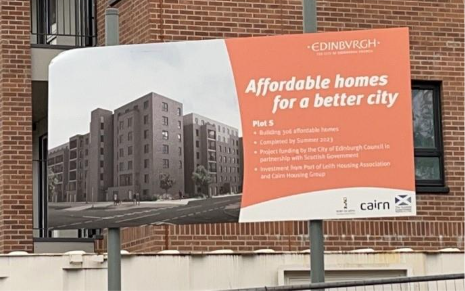
Walking closer towards the Forth, along the coast towards Leith and alongside various rubbish littered patches of empty land, you may come across one of the large housing developments being constructed by the council. The sign in front of the building site (Figure 3.2) states “affordable homes for a better city” and “completed by Summer 2023”, yet the there is no indication of these homes becoming available any time soon (Figure 3.1). The lack of funding and transparency is unfortunately made hugely prevalent on this walk. It seems strange that there are no hoardings that state the actual price of these ‘affordable’ flats. Additionally, the distance from completion suggests that a lack of sufficient planning and funding has been present to see through this project. Whilst money is put into empty, contaminated and unmarketable plots of land, and construction continues on these new, tenure-blind flats, the contrast between the current housing is ironically emphasised, and the vast empty landscape looks more out of place with “notable success stories… they are dwarfed in scale by the amount of land that remains empty” (Kallin, 2021, p.621).
‘Community-led’ is a term that is thrown around wilfully, but the lack of consideration of the current community and its housing indicates that the council’s meaning of this term has resulted in unproductive solutions and disheartening results. Critical urban theory must be applied to Granton’s situation due to it being a location being transformed by means of power which is consequently leaving some behind. Brenner (2009) explains “critical urban theory emphasizes the politically and ideologically contested and therefore malleable character of urban space” (ibid, p.198) resulting in the need for “critique of power, inequality, injustice and exploitation” (ibid). This need for critique by the resident community and increased participation of local people is becoming more and more applicable as due to “fragmented land ownership” and “overly optimistic assumptions” (Edinburgh Council, 2018, p.102) this regeneration seems palpably no longer grounded in reality.
Recommendations for the Granton Community
The reality of economic gain being the Edinburgh council’s driving force means that the matter of the arising housing challenges requires the community to become more involved. The council’s focus on finance has begun to produce a soulless and inconsiderate environment that the Granton community should have the opportunity to have a say upon. Therefore, some suggestions will be made as to what can be done to improve housing in currently overlooked areas, how support can be given to those with difficult housing situations, and also as to what can be done to ensure the general environment surrounding housing caters to the current community as well as incomers.
A Representative Group for Housing Concerns
A recognised representative body made up of local people to communicate both social and private housing problems to authorities is a necessity if the Granton community is to be heard by the council. The lack of transparency by the council surrounding funding and plans could be excused by the fact there is no current formal, cohesive community group to discuss and share with. This group, which the council would have the requirement to include in meetings and other communications, would take away the council’s ability to make decisions solely based on what only they deem as advantageous. Two groups in the past, the Granton Improvement Society and Community Action North, hosted a conference which consulted the North Edinburgh community about concerns they had. In the report, many of the concerns surrounded energy efficiency and improvements in insulation and green energy needed for existing homes (GIS and CAN, 2016). Unfortunately, neither of these groups are active anymore, but their findings indicate the need for their presence. Despite this conference taking place many years ago, recent research with Granton residents has found that these issues are still present (Henderson et al., 2023, p.13), demonstrating that there has been a missing driving force in community action groups of the past. This time, a group with a stronger emphasis on working with the council could ensure that issues go beyond discussion, and solutions are actually carried out. What Works Scotland, which was an “initiative that worked from 2014 to 2020 to improve the way local areas in Scotland use evidence to make decisions about public service development and reform” (WWS, 2020), explains that meetings concerning community planning projects are too ‘council heavy’ which subsequently creates an authoritative barrier and therefore prevents fair opportunities for deliberation on behalf of the community (Weakley and Escobar, 2018), further emphasising the need for increased local representation. Ideally it would be large enough, perhaps around twenty to thirty members, to ensure that a small number are not burdened with an overwhelming amount to do, as the balance of family, work and leisure is already a struggle for many.
How could this we make this happen?
For a recognised community body to function well, it is important that there are appropriate means provided for it to work. Firstly, funding could be provided by the government, the council and through community activities. The Scottish Government’s ‘Investing in Communities Fund’ for example has targets which interlink greatly with the goals of the Granton community and the regeneration project. These include “tackling poverty and inequality”, “developing and sustaining place-based approaches”, “community led regeneration” and “ensuring a just transition to net zero” (Scottish Government, 2023) and the grants given so far have ranged from £22,050 to £350,000 (ibid). Additionally, Edinburgh Council have a ‘Community Grants Fund’ which provides up to £5,000 to support community projects. The financial support of these bodies would hopefully validate this community housing group, and therefore justify their participation in formal processes. For further funding, this could also be an opportunity for consolidation of this community through fun social events to raise money, such as ceilidhs, live music, football matches and quiz nights.
It is a necessity that members of this group would understand the financial matters and policies that they would be involved with. To ensure that it is as representative as possible, the necessary education could be provided to open participation up to more than those with previous experience. As Edinburgh College is a part of this community and a ‘strategic partner’ of the waterfront regeneration project (Edinburgh Council, 2021, p.3), it would be ideal if classes on the required basic skills in finance and leadership to be given and to be covered by funding. The local nature of the group is also to be emphasised, as they may have an insight through lived experience and naturally built relationships. Research which has consulted with community members has found that ‘consultation fatigue’ is an issue which arises from regular discussions and gathering of opinions, as it becomes repetitive with results continually not being delivered (Henderson et al., 2023, p.27). The group should therefore be formed of community members willing to carry messages forward through both participant observation and through casual conversations with community members, unlike local councillors. The members of the group should be happy to be approachable to ensure that informal, and therefore more honest, discussions can take place. Communication of upcoming meetings and updates is also important to allow for the much-needed transparency, meaning an easily accessible community newspaper or newsletter could be produced, alongside the use of social media. This would also be an excellent place for residents to advertise their local businesses to fund the paper and increase their number of clients, and it could be shared both online and in local public spaces for a wider outreach.
Utilisation of an Existing Project
Community projects already taking place should also be expanded to further extend their benefits. An example of this is the ‘Granton Community Gardeners’, which bring locals together to “create and cultivate community gardens, host community meals and events, support anyone in the area who wants to grow food and think creatively about how best to make sure everyone in our area is fed well” (GCG, 2023). The community could offer the council their services to improve some of the still derelict patches of land surrounding their new developments to give this project more places to carry out their gardening, and grow more food. The council places much emphasis on ‘placemaking’ alongside housing in their Waterfront Prospectus (Edinburgh Council, 2020, p.6), however a place should be made and defined by the people who live in it and not by the council, making projects such as this a both useful and much needed opportunity to improve the currently unwelcoming new apartment buildings, which have a sense of ‘placelessness’ as they ‘lack distinctiveness’ (Relph, 2016, p.20). When people move into the newly built homes, a gardening project in their development would allow them to meet new people and join the community. Not only does it form friendships, but new skills could be engendered that could be an asset to improving the community, bringing new ideas and contacts.
Concluding Thoughts
The power of the existing Granton community should be ignored by the Council no longer, and the implementation of community-led approaches could be revolutionary for this currently disjointed area, not just economically, but environmentally and socially too. Whilst these brief recommendations are coming from a situated academic perspective and are perhaps daunting and time-consuming processes, there is hopefully the potential for them to rouse discussions that will either put these recommendations, or alternative ones which emerge, into motion. The most crucial, and undeniable, consideration is that Granton has the privilege of being a place filled with wonderful, community-conscious people, and no matter how difficult somebody’s housing situation is, or any situation for that matter, their community should be there for them. The Edinburgh Council need to understand this power which can allow for this regeneration project to be more successful for all stakeholders. They must acknowledge that Granton is not just a collective of residents that can be pushed around. Granton has the opportunity to be an exemplary case of the beginning of a truly sustainable, inclusive and just city of Edinburgh, but local communities must keep pushing for the recognition to facilitate this and ensure their ‘right to the city’, which is “far more than a right of individual access to the resources that the city embodies – it is a right to change the city more according to our heart’s desire” (Harvey, 2010, p.18).
Appendix
Figure 1.1 showing location of Granton on map of Edinburgh (Google Maps, 2023)
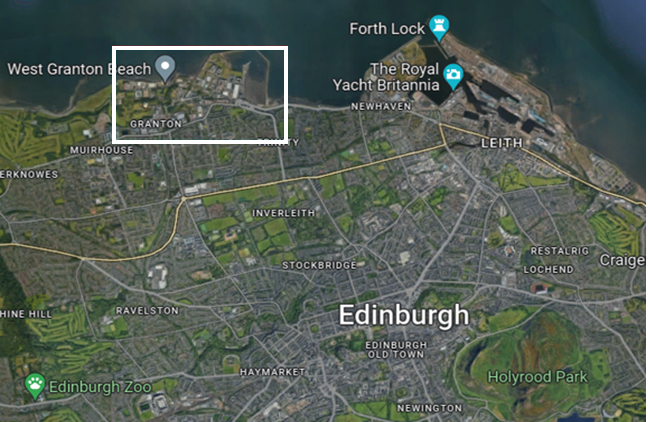
Figure 1.2 showing the area of Granton proposed for regeneration (Edinburgh Council, 2021)
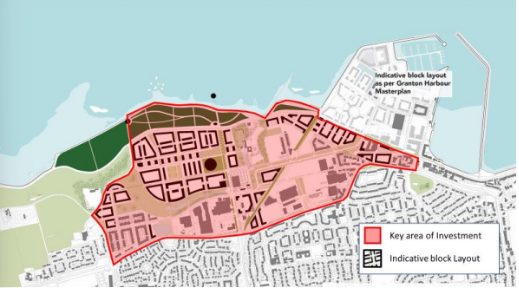
Figure 2.1 showing a visualisation of what the rejuvenated Granton Station Square would be like (Edinburgh Council, 2020, p.22)

Figure 2.2 showing the Granton Station redevelopment in the present day (Author’s own, 2023)

Figure 3.1 showing the incomplete Plot S housing development at the waterfront (Author’s own, 2023)
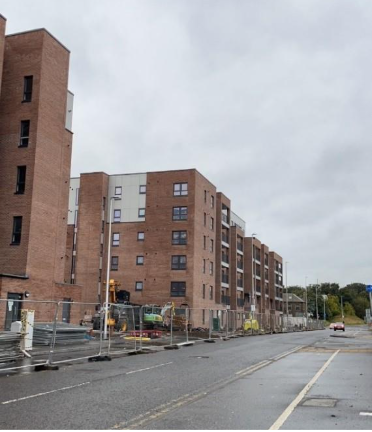
Figure 3.2. showing the sign in front of the Plot S development (Author’s own, 2023)
References
Brenner, N. (2009) ‘What is critical urban theory?’. City. Vol. 13, No. 2-3, pp. 198-207
Campbell, S. D. (2013) ‘Sustainable Development and Social Justice: Conflicting Urgencies and the Search for Common Ground in Urban and Regional Planning’. Michigan Journal of Sustainability. Vol. 1, pp. 74-91
Edinburgh Council (2018) ‘Granton Waterfront Regeneration Strategy’. Full Meeting Papers – Housing and Economy Committee. pp. 100-109
Edinburgh Council (2020) ‘Introduction’. Granton Waterfront Development Prospectus. pp.6-7
Edinburgh Council (2020) ‘A place to live, work, visit, love, enjoy…and be inspired’. Granton Waterfront Development Prospectus. p. 15
Edinburgh Council (2020) ‘Pioneering a climate-conscious place to live’. Granton Waterfront Development Prospectus. pp. 17-19
Edinburgh Council (2020) ‘People-led local development’. Granton Waterfront Development Prospectus. p. 31
Edinburgh Council (2021) ‘Introduction’. Granton Waterfront Regeneration – Outline Business Case’. pp. 1-7
Edinburgh Council (2021) ‘Management Case’. Granton Waterfront Regeneration – Outline Business Case’. p. 70-81
Google Maps (2023) ‘Granton, Edinburgh’. [online] Available at: https://www.google.com/maps/@55.9677636,-3.213009,8201m/data=!3m1!1e3?entry=ttu (Accessed 22/10/23)
Granton Improvement Society and Community Action North (2016) ‘Housing Action Group’. North Edinburgh Community Conference. p. 11
Harvey, D. (2008) ‘The Right to the City’ in The City Reader. UK: Routledge, 6th Ed., pp. 271-278
Harvey, D. (2010) ‘The Right to the City: From Capital Surplus to Accumulation by Dispossession” in Accumulation by Dispossession: Transformative Cities in the New Global Order. USA: Sage, pp. 17-32
Henderson, J., Galanos, V., Escobar, O., Mcfall, L., McGowan, A., Bassett, K. and Earl, S. (2023) ‘Weaknesses and frustrations’. Community Leadership in North Edinburgh: Report from the Knowledge Exchange Labs 2022. p. 13
Kaika, M. (2018) ‘Between the frog and the eagle: claiming a ‘Scholarship of Presence’ for the Anthropocene’. European Planning Studies. Vol. 26, pp. 1714-1727
Kallin, H. (2021) ‘Chasing the rent gap down on Edinburgh’s waterfront’. City. Vol. 25, pp. 614-733
Pearsall, H. and Pierce, J. (2010) ‘Urban sustainability and environmental justice: evaluating the linkages in public planning/policy discourse’. Local Environment. Vol. 15, No. 6, pp. 569-580
Relph, E. (2016) ‘The Paradox of Place and the Evolution of Placelessness’ in Place and Placelessness Revisited. UK: Routledge, Ch. 1, pp. 20-34
Scottish Government (2020) ‘Granton’. Scottish Index of Multiple Deprivation 2020. [online] Available at: https://simd.scot/#/simd2020/BTTTFTT/13.56071820073593/-3.2269/55.9777/ (Accessed 20/10/23)
Scottish Government (2023) ‘Empowering Communities Programme’. Policy: Community empowerment. [online] Available at: https://www.gov.scot/policies/community-empowerment/empowering-communities-fund/ (Accessed 23/10/23)
Scottish Government (2023) ‘Investing in Communities Fund – round 2 2023 to 2026: approved awards’. Publication – Transparency data. [online] Available at: https://www.gov.scot/publications/investing-in-communities-fund-round-2-approved-awards-2023-2026/ (Accessed 23/10/23)
Wasps (2023) ‘Discover Granton Station’. Developments. [online] Available at: https://www.waspsstudios.org.uk/project/granton/ (Accessed 22/10/23)
Weakley, S. and Escobar, O. (2018) ‘Partnership and deliberative quality in CPPs’. Community planning after the Community Empowerment Act: The second survey of the Community Planning Officials in Scotland. p. 2
What Works Scotland (2020) ‘About us’. What Works Scotland. [online] Available at: https://whatworksscotland.ac.uk/the-project/ (Accessed 22/10/23)
Williams, K. (2009) ‘Sustainable Cities: Research and Practice Challenges’. International Journal of Urban Sustainable Development. Vol. 1, No. 1-2, pp. 128-132