
To Feel Mighty Real: Queer Joy as Resistance during the 1980s AIDS Epidemic
By Zoe Bremner
In the early 1980s, silence killed. As the AIDS epidemic swept across America, it devastated already marginalised people, particularly those in the LGBTQ+ community. Amid the fear, stigma, and government inaction, joy became more than a coping mechanism; it became a political act. Songs like Sylvester’s 1978 disco anthem, “You Make Me Feel (Mighty Real),” took on renewed meaning, not just as dancefloor classics, but as declarations of life and self-love. This article explores how a 1978 disco track became a symbol of defiant survival during one of the darkest periods in queer history and what it tells us about the enduring, transformative power of queer joy.
The Early Years of AIDS
The turn of the 1980s was a time of growing visibility for LGBTQ+ people in cities like New York and San Francisco. After decades of activism, many gay men began to experience a new sense of freedom, finding community in clubs, bars, and pride events (Queens of Disco 2016).
That fragile optimism shattered in 1981 when a mysterious illness began killing otherwise healthy people. Initially labelled GRID (Gay-Related Immune Deficiency), AIDS quickly became sensationalised as the “gay plague” in the media (King 2020). Misunderstood and heavily stigmatised, the virus spread while the government were wilfully negligent. President Ronald Reagan did not publicly address the crisis until 1985, by which time thousands had died (King 2020). LGBTQ+ individuals, particularly gay men, people of colour, and those living in poverty, were scapegoated, denied care, and left to die. The mainstream press mocked the crisis or ignored it altogether, reinforcing the message that queer lives were expendable. But amid this void, resistance emerged, not only through marches and protests, but through art, performance, and especially music. From pop icons like Madonna and Elton John to grassroots activism by collectives like ACT UP (AIDS Coalition to Unleash Power) music became a platform for memorialization and celebration (San Francisco Gay Men’s Chorus 2024).
Sylvester’s life
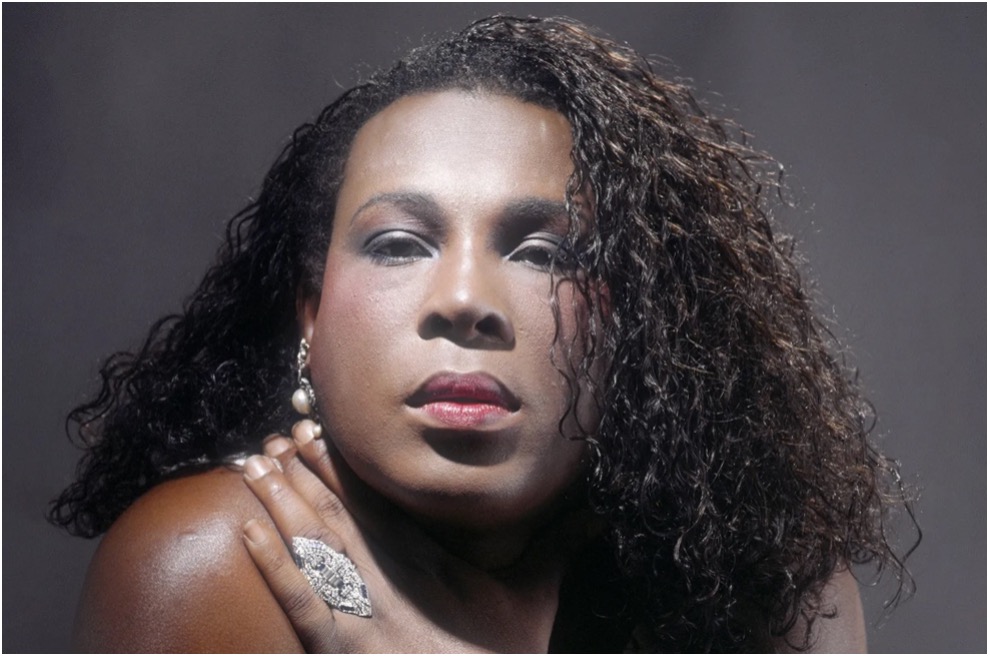
Before he became a disco icon, Sylvester James Jr. was a Pentecostal choirboy in South Central Los Angeles. Born in 1947, he was raised in a strict church community that rejected his gender nonconformity (Mighty Real 2016). By 15, Sylvester had left home and eventually found his way to San Francisco, where he discovered a vibrant queer culture (Queens of Disco 2016).
With his gospel-trained falsetto, glamorous style, and unapologetic genderfluidity, Sylvester stood in bold contrast to the other pop stars of his time. His breakout hit, “You Make Me Feel (Mighty Real),” co-written with James Wirrick and produced with Patrick Cowley, soared to the top of the Billboard dance charts in 1978 (Baume, 2020). However, the song’s legacy extended far beyond commercial success. At first listen, it is euphoric: a mix of synthesisers, pulsating beats, and Sylvester’s signature high-pitched voice soaring over the top. The lyrics are deceptively simple: “You make me feel mighty real.” But in that phrase lies something more profound: a radical affirmation of identity, connection, and desire. Sylvester reportedly improvised the words during a rehearsal, later saying: “They said exactly what was going on – to dance and sweat and cruise and go home and carry on and how a person feels.” (Gamson 2005a, 142)
As Joshua Gamson, biographer of The Fabulous Sylvester, writes, this was a turning point in gay pop music. Rather than coding queer life in metaphors, Sylvester sang about it openly. “This is my life,” Gamson paraphrases him. “I go out on the dance floor, and within 10 seconds, I’ve identified someone—and by the end of the song, you’ve made me feel God.” (Petridis 2018). In doing so, “Mighty Real” didn’t just describe gay liberation, it enacted it.
Disco and Resistance

Sylvester doesn’t abandon the spirituality of his church upbringing; instead, he reclaims it – as one critic notes, “He queers it.” (Petridis 2018). He channels the emotional release of gospel into high-energy disco, fusing a churchlike transcendence with unapologetically queer aesthetics. His collaborator Patrick Cowley’s synth-heavy production added another layer to this; as scholar Louis Niebur points out, electronic music in 1970s America was often coded as queer, feminine, and foreign, antithetical to the masculine ideal represented by the electric guitar (Petridis 2018) The repeated declaration “real” carries weight in a society that criminalised and attempted to police queer intimacy. Sylvester sang that he felt most himself, most real, in the act of queer erotic connection. It was fearless and without apology.
While “You Make Me Feel (Mighty Real)” predates the AIDS crisis, it became inextricably tied to it in memory and meaning. In the 1980s, the dancefloor transformed into a sacred space for a grieving community. Clubs became places where queer people could experience release, connection, and joy amidst loss (Queer as Pop 2015).
As writer and activist Dan Savage later recalled:
“During the darkest days of the AIDS crisis, we buried our friends in the morning, we protested in the afternoon, and we danced all night… The dance kept us in the fight because it was the dance we were fighting for.” (Savage 2025)
Sylvester’s Activism and Legacy

By the early 1980s, disco’s popularity had begun to decline, dismissed by the “Disco Sucks” movement, a racist and homophobic backlash against music associated with Black, queer, and female artists (Herzog 2020). However, Sylvester never retreated; he left his mainstream label, Fantasy Records, and joined Megatone Records, a smaller label that created music by and for gay audiences (Mighty Real, 2016). Megatone gave him the creative freedom to craft explicitly queer, sexually liberated tracks aimed directly at the dance floors of gay clubs.
At the same time, the AIDS crisis ravaged the city Sylvester lived in. San Francisco saw an overwhelming number of cases (Mighty Real 2016). and Sylvester watched friends, lovers, and colleagues fall ill. Nevertheless, through this despair, he performed at countless benefit concerts, distributed safe-sex information at shows, and spoke openly about the epidemic, making him one of the first prominent gay performers to do so (Karr 2018).
His personal losses were immense as his longtime partner died of AIDS-related
complications, and in 1988, Sylvester himself succumbed to the virus (Gamson 2005b). In one of his last public appearances, he rode in a wheelchair through the San Francisco Gay Pride Parade, frail and emaciated, which as Gamson wrote:
“This is mighty real… people, knowing that they’ve seen this icon of their freedom, they see him as a symbol of the devastation AIDS took on the community.” (Karr, 2018)
Even in death, Sylvester refused erasure. In his will, he directed the future royalties from “You Make Me Feel (Mighty Real)” to two San Francisco-based organisations: the AIDS Emergency Fund and Project Open Hand, which still serve people living with HIV/AIDS today (Herzog 2020).
Today, Sylvester’s voice still echoes in clubs, parades, and queer spaces around the world. “You Make Me Feel (Mighty Real)” is featured on countless Pride playlists, remixed for new generations, and lip-synced on groundbreaking shows like RuPaul’s Drag Race (Season 8, ep. 8.). Not only was it selected for preservation by the Library of Congress (Library of Congress 2019), but Billboard ranked it among the “100 Greatest Dance Songs of All Time.” (Billboard 2011). Its enduring power lies in its message: that joy, especially queer joy, is not frivolous – it is vital. Today, as queer rights face renewed threats of drag bans, anti-trans legislation, and censorship (American Civil Liberties Union 2025), Sylvester’s anthem remains an important reminder that to dance, to love, to feel mighty real, is in itself, an act of resistance.
Bibliography
American Civil Liberties Union. 2025. “Mapping Attacks on LGBTQ Rights in U.S. State Legislatures in 2025.” ACLU. https://www.aclu.org/legislative-attacks-on-lgbtq-rights-2025?state=&impact=school__facilities.
Baume, Matt. 2020. “How Sylvester’s ‘You Make Me Feel (Mighty Real)’ Became an Eternal Pride Anthem.” Them, June 25, 2020. https://www.them.us/story/sylvester-you-make-me-feel-remaster.
Billboard. 2011. “The 100 Best Dance Songs of All Time.” Billboard, December 1, 2011. https://www.billboard.com/lists/best-dance-songs-all-time/86-benny-benassi-cinema-feat-gary-go-skrillex-remix-2011/.
Gamson, Joshua. 2005. The Fabulous Sylvester: The Legend, The Music, The 70s in San Francisco. New York: Henry Holt.
2005. “Fabulous Sylvester: Chronicles of a Disco Icon.” NPR, May 3, 2005. https://www.npr.org/2005/05/03/4628621/fabulous-sylvester-chronicles-of-a-disco-icon.
Herzog, Amy. 2020. “Sylvester, ‘You Make Me Feel (Mighty Real).’” ASAP Journal, April 2, 2020. https://asapjournal.com/feature/sylvester-you-make-me-feel-mighty-real/.
Karr, Rick. 2018. “Bigger Than Disco, ‘You Make Me Feel (Mighty Real)’ Is a Celebration of Self.” NPR. https://www.npr.org/2018/10/08/651794925/sylvester-you-make-me-feel-mighty-real-american-anthem-disco-celebration.
King, J. 2020. “The Drama That Raged against Reagan’s America.” BBC Culture. https://www.bbc.co.uk/culture/article/20201019-the-drama-that-raged-against-reagans-america.
Library of Congress. 2019. “New National Recording Registry Class Is ‘Superfly.’” Press Release PR 19-018, March 19, 2019. https://www.loc.gov/item/prn-19-018/new-national-recording-registry-class-is-superfly/2019-03-20/.
Mighty Real – McAlmont Sings Sylvester. 2016. BBC Radio 4, June 23, 2016. 30 mins. https://learningonscreen.ac.uk/ondemand/index.php/prog/0CBE1871?bcast=121923222.
Petridis, Alexis. 2018. “‘What a Star He Would Be Today’: The Extraordinary Musical Legacy of Sylvester.” The Guardian, July 6, 2018. https://www.theguardian.com/music/2018/jul/06/what-a-star-he-would-be-today-the-extraordinary-musical-legacy-of-sylvester.
Queens of Disco. 2016. BBC4 England, December 23, 2016. 60 mins. https://learningonscreen.ac.uk/ondemand/index.php/prog/3BBA20C1?bcast=137322217.
Queer as Pop: From the Gay Scene to the Mainstream. 2015. Channel 4, January 11, 2015. 55 mins. https://learningonscreen.ac.uk/ondemand/index.php/prog/06361254?bcast=114906166
San Francisco Gay Men’s Chorus. 2024. “The Soundtrack of Resistance: Music and the 1980s AIDS Crisis.” SFGMC Blog, March 7, 2024. https://www.sfgmc.org/blog/the-soundtrack-of-resistance-music-and-the-1980s-aids-crisis.
Savage, Dan. 2025. “Savage Love: Trump and Dump.” Portland Mercury, January 21, 2025. https://www.portlandmercury.com/savage-love/2025/01/21/47609318/savage-love-trump-and-dump.